
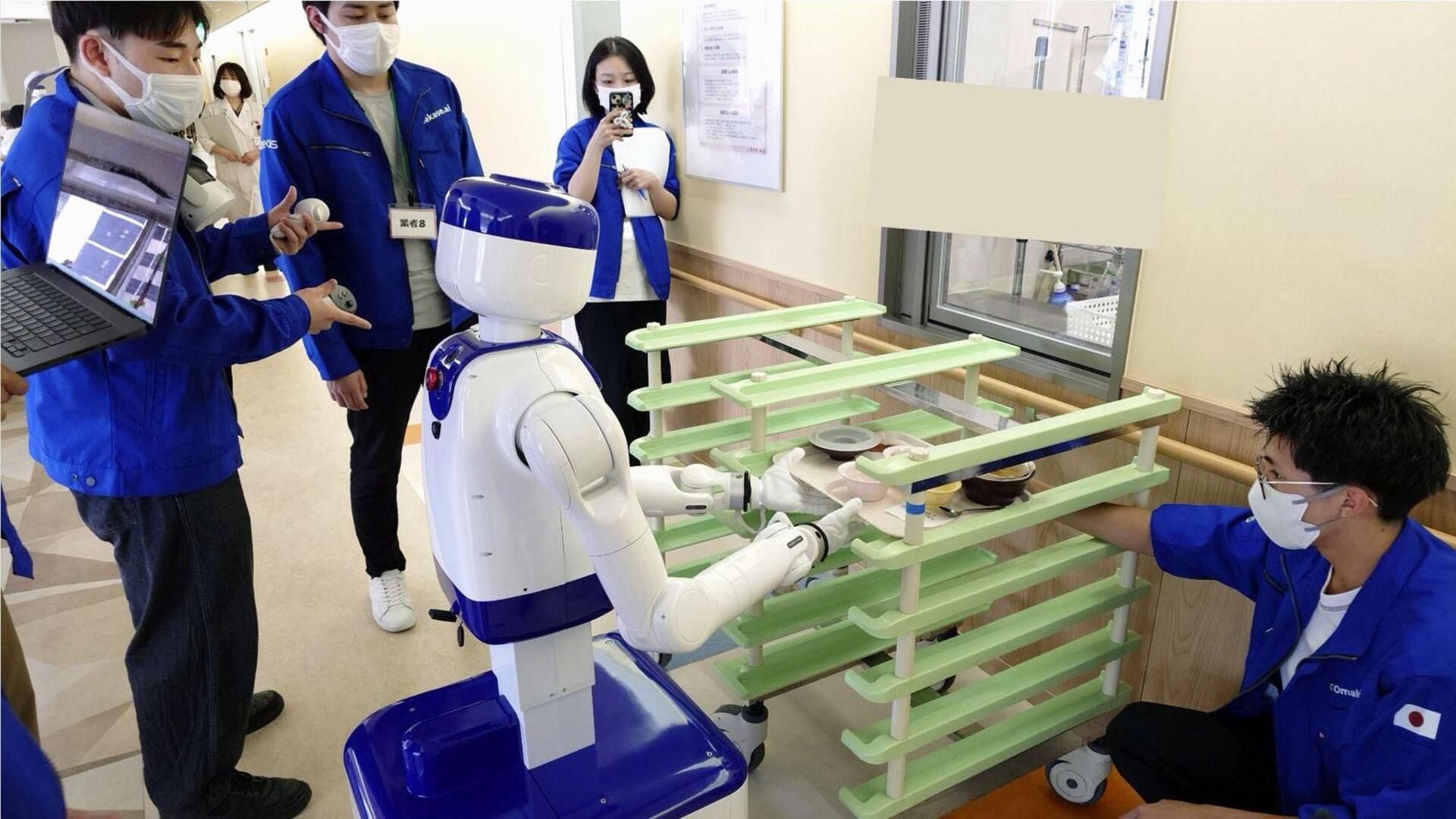
Japan plans to hire millions of AI robots as its working population shrinksOne domestic startup plans to build 100 workplace robots by 2027Japanese insurers are preparing for accidents involving increasingly capable workplace robotsThe Japanese government has set a goal of placing 10 million robots driven by artificial intelligence into workplaces before 2040, hoping to offset a rapidly thinning workforce in its aging population.By 2040, United Nations medium-variant estimates place Japan's population at 112,158,304, which is 6.2% lower than the 119,584,122 projected for 2030.The median age would reach 54.0 years, with 35.3% of people at least 65 years old and only 10.4% of them children below 15.Machines move into offices and wardsHospitals and factories in Japan already struggle to fill positions, which is why a growing number of employers are turning to machines for daily tasks.Startup Zeals recently introduced the D1 in Tokyo, a wheeled machine with a humanoid form that costs from 5 million yen (about $32,000).The indoor unit stands 129 cm tall, recognizes faces through a camera, and each of its two arms can lift a maximum of 5 kg.Zeals intends to build 100 units by March 2027 and accumulate 10,000 hours of running time, selling through dealers and leasing partners.Sign up to the TechRadar Pro newsletter to get all the top news, opinion, features and guidance your business needs to succeed!The company writes its own software and buys components from American and Chinese suppliers, but it eventually hopes to use only Japanese parts.In late August 2026, a hospital in Nagoya, Aichi Prefecture, trialed the robot for leading visitors and clearing tables in its dining space.“It is important to gather training data and ensure that it is actually useful in real-world settings,” said Masahiro Shimizu, CEO of Zeals.Kakuichi, a Nagano firm that sells steel and systems for managing energy, will onboard a humanoid machine among its new graduates in April 2027.Play Robotics, a firm that studies humanoids, is helping Kakuichi install and run the Chinese-built robot called Miyazawa Noah.Kakuichi intends to assign the robot to manufacturing, sales and other departments so that it builds skills by doing real work.“Developing a humanoid robot is also about fostering employees who will make full use of it,” said Riu Tanaka, CEO of Kakuichi.Insurers prepare for the dangers that the machines createMitsui Sumitomo Insurance has joined forces with Zeals to sell policies built for D1 users, counting on demand from hotels, hospitals, factories and logistics firms.It acknowledges that the use of these robots will be associated with some mishaps, whether physical or cyber-related."There are risks of causing harm to people or property, as well as concerns about data breaches in cyber-attacks," said Masaki Oshiro, manager of the 1st Branch Office at the insurer's Tokyo East Branch.In July, Mitsui Sumitomo Insurance acquired shares in a Japanese firm developing physical AI, which lets robots learn new tasks on their own.The purchase was meant to give the insurer a closer look at how such systems behave and what could go wrong with them.Buying into a developer while already selling policies suggests the insurer is still learning what these robots can do and how often they fail.So, while Japan makes moves to boost its workforce with robots, the performance and impact of these robots on its economy is uncertain.Via Japan Today Follow TechRadar on Google News and add us as a preferred source to get our expert news, reviews, and opinion in your feeds.
Japan desperately wants 10 million AI robots by 2040 to save its economy — by which time its human population is expected to drop by almost 11 million
Full Article
Original Source
Read the full article at Techradar →KhanList aggregates and links to publicly available news content. We do not host full articles from third-party sources. Always verify important information with original sources.