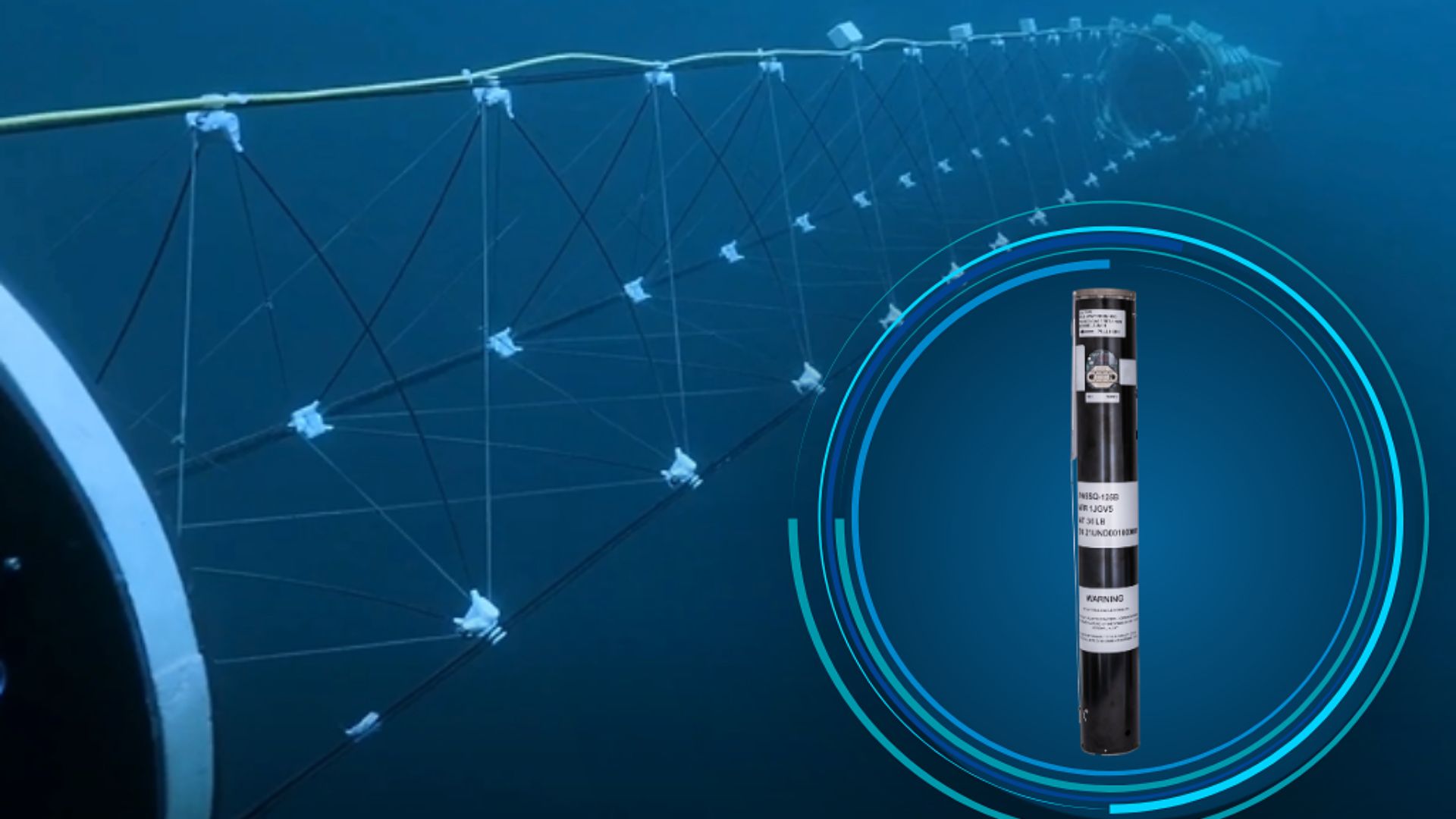
Ultra Maritime showed off a new underwater surveillance system at the U.S. Navy’s 2026 Lanternfish exercise. The demonstration highlighted how the company’s Sea Spear passive sonar and SSQ-125B active sonobuoy can work together to find unmanned underwater vehicles (UUVs). The demonstration focused on the use of autonomous systems for counter-UUV and anti-submarine missions. Sea Spear continuously listened for underwater activity without sending out signals, while the SSQ-125B used active sonar to help locate targets. The company said this exercise was an important step in proving their acoustic system for ongoing monitoring in challenging maritime areas. This setup could help naval forces keep track of underwater activity over wide regions. Sea Spear provides the passive sensing element of the architecture. It is designed to remain deployed and monitor underwater areas for acoustic signatures associated with potential targets. The SSQ-125B brings active sensing to the sys. Its sonar can help pinpoint where an underwater object is once the passive sensors detect activity. Ultra Maritime describes the SSQ-125B as its latest generation of active sonobuoy technology. The company said it is the only active sonobuoy of its kind and is designed and manufactured exclusively by Ultra Maritime. Pairing the two systems gives operators access to different forms of acoustic information. Passive sensing can support persistent monitoring, while active sonar can provide more information needed to localize a target. Built around a distributed underwater network This demonstration is part of Ultra Maritime’s “Ocean of Things” concept. The plan is to use a network of underwater sensors that can be launched from both manned and unmanned platforms. Rather than using just one sensor, this system spreads sensors across the area. Many underwater nodes can work together to give a full picture of what is happening below the surface. The company believes this method is helpful for missions where underwater threats are hard to spot and track for long times. Adding more sensors can also expand the area covered by the network. Designed for wider maritime missions Ultra Maritime is building this system for different maritime security uses. It could be used to monitor ports, guard important infrastructure, and watch over key waterways. The system could also help monitor busy sea routes and support special operations. It is also meant for long-term monitoring, especially where underwater activity needs to be tracked all the time. The autonomous nature of the concept could reduce the need for crewed platforms to remain directly over a surveillance area. Sensors deployed from different platforms could instead contribute information to a broader underwater monitoring network. Lanternfish puts the concept to the test At the 2026 Lanternfish exercise, the firm tested Sea Spear and SSQ-125B as parts of a networked detection system. The test examined how passive and active methods could work together to detect UUV targets. The exercise gave a real-world setting to test this combined approach. It also showed how each sonar system could be part of a bigger, self-running surveillance network. Ultra Maritime sees this combined system as the base for future undersea missions. By using both ongoing passive monitoring and active tracking, the company aims to improve its ability to detect and track underwater threats in challenging maritime environments.Get the latest in engineering, tech, space & science - delivered daily to your inbox.A versatile writer, Sujita has worked with Mashable Middle East and News Daily 24. When she isn't writing, you can find her glued to the latest web series and movies.
Hunting submarines, underwater drones with two paired sonars showcased by Ultra Maritime
Full Article
Original Source
Read the full article at Interestingengineering →KhanList aggregates and links to publicly available news content. We do not host full articles from third-party sources. Always verify important information with original sources.