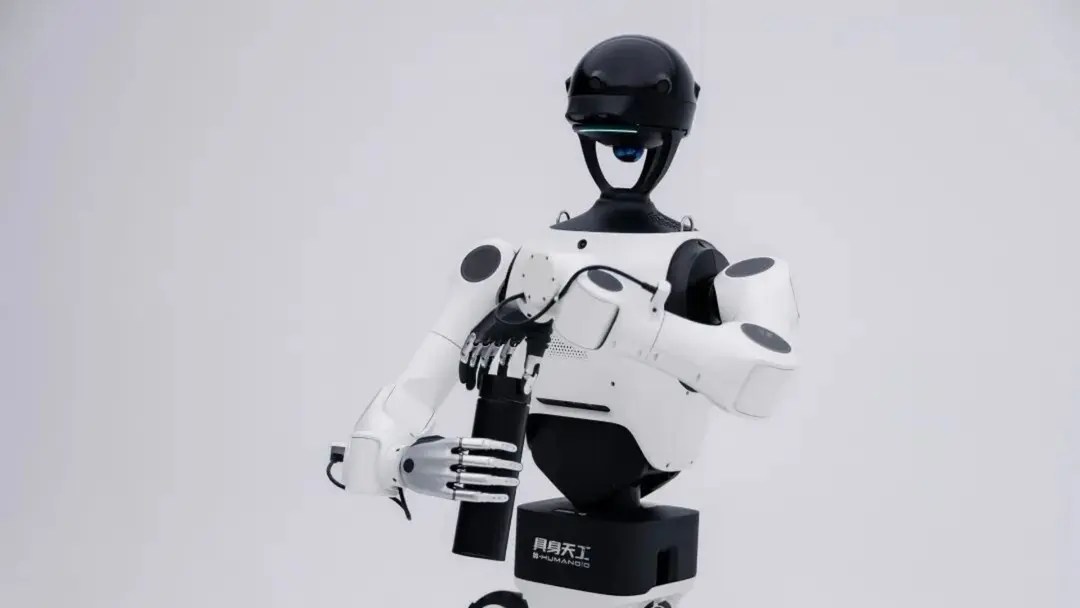
Robots had 30 minutes to deliver luggage, restock supplies, remove linen and make beds.X-Humanoid Humanoid robots are being tested in places that look less like sporting arenas and more like workplaces and homes, as China’s robot competitions put machines through hotel, library, and household tasks. The scenario-based events are part of the second World Humanoid Robot Games (WHRG), offering a test of how robots handle practical work in less standardized environments. Robots were scored out of 300 points for three tasks: tidying a living room, folding clothes in a bedroom, and washing and hanging laundry in a bathroom and on a balcony. An unexpected parcel-delivery task required robots to respond to a voice command, bring a package indoors, and then resume their previous chores. Humanoid robots face the messiness of real life The scoring system was designed to penalize mistakes that could matter in a real household. Robots lost points for collisions, dropped objects, and crossing boundaries. If a human intervened during a run, the attempt was treated as remote-controlled, and the scoring weight was reduced to 0.5, according to the report. TianYi 2.0, developed by Beijing-based humanoid robot maker X-Humanoid, is competing in the scenario events. The wheeled robot can adjust its torso height between 130 and 165 centimeters and operate for more than two hours on a charge, Global Times (GT) reported. The company said its robots use the Huisi Kaiwu operation platform, with conventional competitions focused on being “higher and faster” and scenario events aimed at being “better at working.” The practical testing began Sunday with a hotel-service competition at the Beijing Continental Grand Hotel. Robots had 30 minutes to transport guests’ luggage to assigned rooms, replenish towels, slippers and bottled water, remove used linen and make beds. Simply completing the assigned tasks within the time limit was not enough for a high score. Neatness was also assessed, while autonomous operation received a higher weighting than teleoperation. The real buildings present machines with challenges including unstructured spaces, deformable soft goods, difficult-to-balance loaded trolleys and long sequences of tasks that can expose instability. Analysts highlighted another practical obstacle: narrow hotel corridors and maneuvering luggage through those confined spaces tested a robot’s ability to operate in limited space. A separate library-shelving competition also took place Sunday. Robots operating inside a working library had 30 minutes to collect returned books, shelve them and correct misplaced volumes. The WHRG said the challenge tested precision, visual recognition and reasoning. The real test is autonomy The games also include six events based in real-world settings and eight dexterous-hand “micro-manipulation” contests, including tasks such as picking up beans and driving screws. AGILINK, spun off from Chinese humanoid robot maker AgiBot in January, says winning the dexterous-hand competition demonstrates a product’s capability and indicates it has passed a “demonstration-grade” threshold for real-world use, as reported by GT . According to experts, moving robots from standardized courses into hotels and homes tests the combined performance of their mechanical components, algorithms, and ability to adapt to specific scenarios. Autonomy is an important direction for the sector, because teleoperation still requires another person to operate or assist the robot. The second WHRG is scheduled for August 22–26 at Beijing’s National Speed Skating Oval. The event has attracted 666 teams and 2,056 robots from 16 countries, while the World Robot Conference is also scheduled to open in Beijing this week, putting several aspects of the country’s robotics development on display at the same time. Get the latest in engineering, tech, space & science - delivered daily to your inbox.Jijo is an automotive and business journalist based in India. Armed with a BA in History (Honors) from St. Stephen's College, Delhi University, and a PG diploma in Journalism from the Indian Institute of Mass Communication, Delhi, he has worked for news agencies, national newspapers, and automotive magazines. In his spare time, he likes to go off-roading, engage in political discourse, travel, and teach languages.
Humanoid robots compete in China by making hotel beds, delivering parcels to rooms
Full Article
Original Source
Read the full article at Interestingengineering →KhanList aggregates and links to publicly available news content. We do not host full articles from third-party sources. Always verify important information with original sources.