
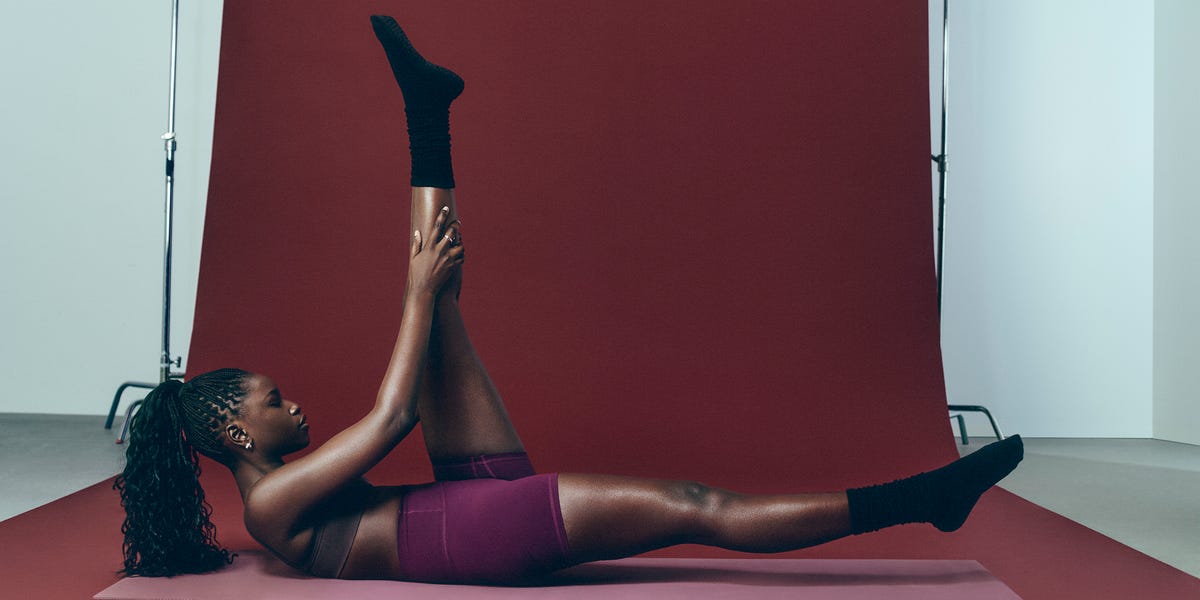
Women's Health may earn commission from the links on this page, but we only feature products we believe in. Why Trust Us?Lian Benoit9 min readBy definition, the term sculpt means making something by carving stone or molding clay. It’s an art form, a manipulation of material to achieve a desired end result that’s aesthetically appealing.Over the years, however, the term has also become ubiquitous in fitness culture. We talk about sculpting one's back or legs, implying some kind of crafting of muscles, as if treating the human form like a sculpture. In fact, check the group class schedule of any gym these days, and you’ll likely spot the term “sculpt” appear somewhere on the lineup—directing toward some variation of a Pilates mat or strength training class, often involving lower weights and higher reps.Now, the term is prolific in fitness classes and social media alike, that the meaning is a bit murky—which begs the question, what does “sculpt” really mean in the context of exercise? Is it a legitimate term or nothing more than strategic marketing language?The Origins of “Sculpt” The exercise term actually dates back decades, with the first mentions appearing in fitness publications in the late 1970s. “It comes out of bodybuilding culture, which became more prominent in that period […] and you started to see the term ‘body sculpture,’” says Natalia Mehlman Petrezela, PhD, a historian and author of Fit Nation: The Gains and Pains of America’s Exercise Obsession. And while there’s no clear record of who coined the term in a fitness context, there is speculation that it may have been inspired by German strongman Eugen Sandow (often called the "father of modern bodybuilding"), who referenced Greco-Roman sculptures as examples of the “ideal” physique in the late 19th century.In the 1980s, the idea of sculpting your muscles started to become much more mainstream, with the rise of aerobics, toning workouts, and fitness videos, says physical therapist and trainer Shannon Ritchey, PT, DPT, founder of Evlo Fitness. As instructors began using the term to describe and market workouts designed to shape and define specific muscles, “sculpting” became part of the everyday fitness vocabulary.The term also taps into something more personal: this idea that we have the power to change the shape of our own physiques. “I think that it really gained momentum because one, it kind of speaks to the artistry of the body or the artistry of fitness. Also, there's so much individual agency in this,” says Petrezela. “It isn't about you just having the right genetics. Instead, you as an artist have the power to sculpt your own body.”In the 1990s, however, the revered muscular look brought about by ’80s fitness culture made way for a celebration of thinner, more waifish bodies. “There was—and this is still the case—a lot of fear around getting too bulky,” says Petrezela. The term sculpting, however, molded into a promise of strength training without gaining too much muscle, which felt more palatable to women who feared such a physique.“What's interesting is that we've changed the language over the years, but we're still selling women a very similar idea: that certain exercises will create a long, lean, toned appearance, while others will make them bulky,” says Ritchey.The Rise of Sculpt EverythingIf you worked out in the 2010s, you probably remember “sculpt” becoming a fixture of the boutique fitness boom. Still, while studio culture has waxed and waned over the last 20 years, the term has only gained traction, popping up across social media and on class schedules everywhere (think Pilates sculpt, yoga sculpt, and seemingly endless variations), notes Laura Girard, CPT, a NASM personal trainer and co-host of the Fit Literate podcast.Girard speculates that the popularity of sculpt classes may be buoyed by the widespread craving for more community in a post-pandemic world. After all, group fitness can be a fantastic third space. But there's another reason “sculpt” makes for such an appealing class name: It signals a particular kind of workout experience. Girard has observed “sculpt” used “almost like a dog whistle that [suggests] this class is going to be friendly for women and not scary, but still intense,” she says.There's an aesthetic appeal, too. Petrezela believes the term’s resurgence of sorts has to do with how weightlifting and building muscle are very much having a moment, yet longstanding fears around getting “bulky” haven’t entirely disappeared. “It doesn't hurt that we are in a very, very image-driven moment in fitness culture,” she says. “We're not just looking at the images in magazines that come out once a month, but our [social media] feeds are nonstop bodies all day—many of which are shared by influencers who have their own plans for how you can sculpt a body that looks just like theirs, or so they say.”Does Sculpting Really Sculpt? If you were to ask 10 different people on the street what a “sculpt class” is, you may get 10 different answers. To some, sculpt is synonymous with a mat Pilates routine, to others it might be a strength-training session, and to others it might be a yoga practice involving light dumbbells. So, can all of these workouts really fall under the same umbrella? And when a class promises to “sculpt,” is that an actual measurable result your muscles can deliver—or a feeling the name is designed to sell?According to the experts, it’s largely the latter. “In a world where two things are popular—strength training and being very thin—’sculpting’ seems to be an appealing middle ground from a marketing perspective,” says Ritchey. “It promises ‘long, lean muscle tone’ without the perceived risk of building too much muscle.”She adds that “sculpt” is often used interchangeably with “toning,” which she describes as a “made-up term” that typically refers to changing your body composition (a.k.a., reducing fat and building muscle).Because there's no single definition, what you actually do in a sculpt class can vary considerably. Still, Girard notes many sculpt classes share certain characteristics: lighter weights, choreography-inspired movements, and a lot of mat work. She also notes that while exercises are often fatiguing (think: that familiar muscle-burning sensation), they’re not necessarily pushing you to muscle failure via progressive overload (which is necessary for hypertrophy, or muscle-building).Ritchey, who taught a sculpt class years ago, recalls using dumbbells and bodyweight for high reps. “We would do an entire three- to four-minute song of squats and lunges. That’s likely over 100 squats in a row, which burns and feels hard,” she says. Of course, it’s certainly possible to promote muscle-building with a low-weight, high-rep range, granted the programming is intentional. “But we know that if you could physically do more than about 30 reps in a row, the load is too light to build muscle.”It’s important to note that a workout doesn't have to maximize muscle growth to be worthwhile. Certain sculpt classes can offer other benefits, from muscular endurance to simply providing motivation and enjoyment of exercising, often in a group setting. But if your primary goal is to significantly increase muscle size or change your body composition, not every sculpt class will provide the progressive resistance training needed to make that happen.That’s where experts say the “sculpt” terminology can get confusing or misleading for some people. Girard fears that the language surrounding sculpt workouts reinforces misconceptions about women's bodies and what exercise can realistically change. “Sculpt as a verb is not a thing we can do to our bodies,” she notes. “We can gain or lose muscle. We can gain or lose fat, but that's more the role of nutrition. But we can't control how those muscles look.”In other words, there's no special exercise technique that creates “long, lean” muscles instead of so-called “bulky” ones. Your genetics influence your muscle shape, while your training can affect how much muscle you build. And the workout's name doesn't change those underlying principles.What’s more, at a time when there’s seemingly no consensus on how to talk about bodies or fitness in an empowering, nonoffensive way, Girard sees the term “sculpt” as potential coded language. While we may have mostly done away with, say, “bikini body shred” language in 2026, she fears that this nebulous term may be subliminally hinting at the same idea.And while there's absolutely “nothing wrong with having aesthetic goals,” Ritchey stresses, “women deserve accurate information about how to achieve them.” If body recomp is their goal, they would have more success lifting close to failure and focusing on diet.”Ultimately, your muscles don’t know whether you’re in a sculpt class or a traditional strength workout. Instead, they respond to the resistance, effort, and progression involved.“It’s funny because while all these trends come and go—and we will see sculpt come and go, too—the science never changes,” Ritchey says. “People just aren’t patient enough with the basics, so they jump on the latest trend thinking it will finally be the golden ticket to seeing results.”Because “sculpt” has no one definition, the quality, intensity, and overall experience of classes bearing the name can vary widely, too.Beyond the workout itself, Girard points out that some sculpt classes can come with an unspoken expectation about who belongs in the room. As she’s observed: “These classes tend to be a self-selecting in-group. You may only see one type of body, or one specific outfit [...] That doesn’t mean it’s wrong or bad to be in a different outfit or in a different body, but it sure can feel that way.”Of course, there are also plenty of classes with “sculpt” in the name that are fantastic, inclusive workouts. This all boils down to the instructor, methods, and specific exercises they choose to incorporate—along with the type of community they cultivate. And, in many cases—particularly with larger studios or gyms—instructors have no say in what their class is actually called. “A lot of times, they're just doing what's trending to get people in the door,” says Girard.The Name Isn't the PointSo if you’ve been curious to try a new sculpt class at a local studio—by all means, go for it. Just be sure to go into it with eyes wide open, and give yourself permission to stop or pause or walk away if it doesn’t feel like a productive or positive environment for you. Pay attention to how the workout feels, how the instructor coaches, and whether the environment makes you feel welcome. One potential red flag? Aggressive “bikini body” messaging or marketing that frames building muscle as something to avoid. As Girard emphasizes, “It is definitely, definitely is not.”As the experts agree: Finding a form of movement you enjoy is the most important ingredient for establishing a healthy, consistent fitness routine. “My advice would be to ask yourself why you're doing these classes. Is it because you genuinely enjoy them? Or is it because you believe the burning sensation means you're toning and sculpting your muscles? Because those are two very different things,” says Ritchey.Have a sculpt workout you absolutely love? That’s wonderful, too. Finding movement you genuinely enjoy is one of the best ways to build a fitness routine you'll actually stick with. The important thing is understanding what you're getting out of it—and whether that aligns with what you're hoping to achieve.“I want women to feel empowered to choose exercise based on what they enjoy and what actually works,” says Ritchey.For someone primarily focused on building muscle, Ritchey recommends treating sculpt classes as opportunities for cardio or simply enjoyable movement, rather than as a replacement for progressive strength training.They can even be great options for off days from lifting. “I don’t want to discourage anyone from moving,” she says. “But at the same time, we deserve to understand what is marketing and what our bodies actually respond to. We are all busy and tired and stressed [and] I want women to know how to best use their efforts to match their goals.”Appreciate the workout for what it is, understand what it isn't, and choose what works for you. That, in fact, is the true artistry of exercise.Meet the ExpertsNatalia Mehlman Petrezela, PhD, is a professor of history at the New School and author of Fit Nation: The Gains and Pains of America’s Exercise Obsession. Shannon Ritchey, PT, DPT, is a physical therapist, fitness instructor, and founder of Evlo Fitness. Laura Girard, CPT, is a NASM-certified personal trainer, founder of The Energy Academy, and co-host of the Fit Literate podcast.Find the Perfect Women’s Health Training Program for YouKristine Thomason is a writer and editor with over a decade of experience creating content for print and digital publications. Previously, she was the health and fitness director at mindbodygreen, and the fitness and wellness editor at Women’s Health. Kristine's work has appeared in Men's Health, Travel + Leisure, Health, and Refinery29, among others. She holds a journalism degree from New York University, and is certified in personal training by the National Academy of Sports Medicine (NASM).
How Sculpt Became the Fitness Space’s Buzziest—and Vaguest—Workout
Full Article
Original Source
Read the full article at Womenshealthmag →KhanList aggregates and links to publicly available news content. We do not host full articles from third-party sources. Always verify important information with original sources.