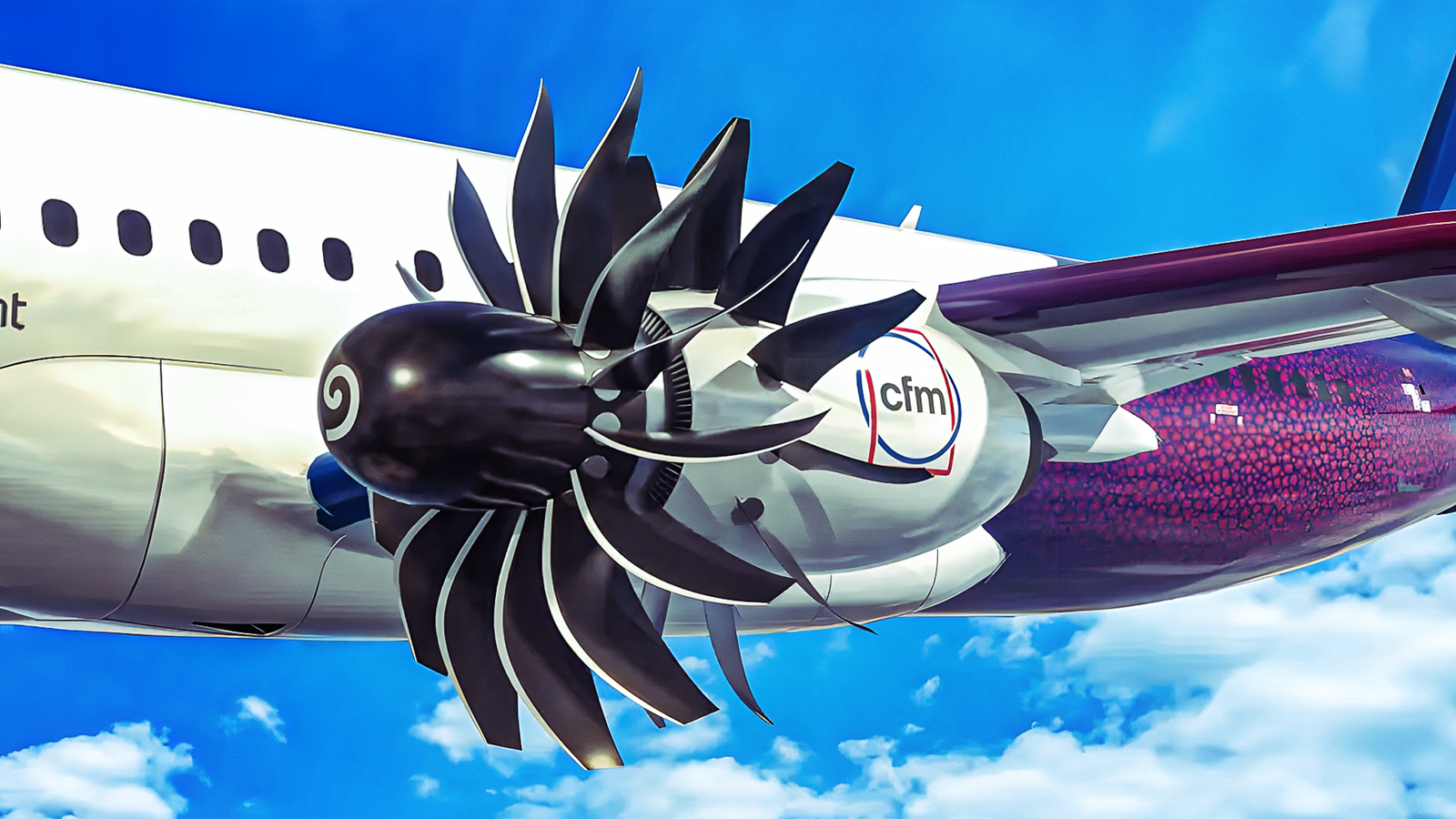
Published Aug 19, 2026, 7:00 AM EDT Based in the UK, Josh is a keen writer with a degree in Military History. Having worked previously as a financial journalist, he has covered the aviation industry extensively, reporting on airlines' results and monthly passenger statistics in the aftermath of the pandemic, alongside the likes of regulation around sustainable fuels, and the prospects for hydrogen-powered commercial flight. He joins Simple Flying with a lifelong love of all things aviation. Boeing is said to have begun planning for its next single-aisle aircraft. Set to succeed its Boeing 737 MAX series, the plane is slated to be a clean-sheet design aimed at directly rivaling the so-far dominant Airbus A321neo and its long-range variants. Even in spite of this, the jet ultimately designed to follow on from the 737 MAX will have large shoes to fill as the successor to Boeing’s all-time bestseller. To pull off the move, the US manufacturer will have to deliver technological leaps, namely in efficiency. To do that, it will have to carefully select the correct engines for the fresh model. Indeed, talks of such nature have reportedly already taken place with Rolls-Royce. However, Boeing is not yet setting any plans and agreements in stone, so time will tell which supplier is eventually selected. Conveniently, CFM International and Pratt & Whitney are already developing new technology that promises to improve the economics of flight for their operators. So which designs are really in contention for the future jet, and what do we know so far? Boeing 737 MAX Successor: What We Know So Far Credit: Shutterstock Details of Boeing’s new narrowbody are naturally few and far between given the project’s infancy. That said, a string of reports in recent months have helped to paint a picture of the behind-the-scenes happenings at Boeing. These flag discussions have in fact got underway, and the jet, its purpose, design philosophy, and so on are currently being evaluated. The Wall Street Journal last September revealed work had begun on the 737 MAX’s successor. In the form of a new narrowbody, the aircraft would represent a long-term bid by Boeing to regain business lost to rival Airbus after several years plagued by safety and quality issues. A new senior product leader has been placed in its commercial division, per the Journal; the person's former role involved developing a new type of aircraft. To this day, nothing has been confirmed by Boeing. Subsequent reports have added to the picture, though, offering clues about the thought processes of those in the know at Boeing. According to a Bloomberg article from May this year, the design will somewhat mirror the conventional tube-and-turbofan make-up that has come to dominate the commercial market. A more efficient wing design is expected. However, as engineers work towards a product that is more evolutionary than groundbreaking, risk-taking is kept to a minimum. The plan is said to target a gap between narrow and widebodies, with preparatory work slated to begin as early as next year, before the project's official launch at the decade’s end. All of this goes to say, the groundwork appears to have been laid, but the real specifics are yet to come. Boeing Had Already Reached Out To Engine Makers Credit: Shutterstock Notably, questions remain over where Boeing will source power units for its latest addition. Talks have reportedly already taken place between the plane maker and Rolls-Royce, as flagged by the Journal. That does not mean that the British firm will necessarily prevail, with Boeing having actually sent out feelers to multiple major engine manufacturers over a year ago. Through the June 2025 request for information, a formal process to collate and consider concepts from across the industry was launched. This called for systems rated at around 30,000 pounds of thrust for the future single-aisle jet. Boeing also used the request to highlight a preference for ducted propulsion systems rather than open-rotor systems. That said, any firm decisions looked to remain up in the air at the time. As Boeing chief executive Kelly Ortberg told Aviation Week: “We’re not ready on any of those work streams today, but we need to be when the market is ready for a new aircraft.” Rolls-Royce, P&W, And CFM Could All Offer Options Credit: Shutterstock This meant the doors were officially open for engine manufacturers to begin trying to win Boeing over with their proposed technology. Importantly, they had the opportunity to argue how their future products would fit an airliner that was, and still is, little more than an idea. Unsurprisingly, major players such as Rolls-Royce, Pratt & Whitney, General Electric, and the Safran-led CFM International joint venture were all expected to throw their hats in the ring for the clean-sheet jet. Simply put, all stood to benefit. What is more, all had concepts backed by years of research that could ultimately prove applicable. For Rolls-Royce, this would come in the form of its UltraFan technology. Tipped as the frontrunner for the latest Boeing single-aisle, success would see Rolls-Royce’s reentry into the narrowbody market after more than a decade of focus on long-haul operations. Rolls-Royce is currently targeting ground testing of such an UltraFan 30 demonstrator in 2028. It is itself a scaled-down counterpart to the UltraFan 80 and aims to cut fuel burn by 20% compared with existing engines in service today. That said, on this promise of improved efficiency, UltraFan no doubt faces competition from both CFM International and Pratt & Whitney. CFM International’s RISE Program And Open-Fan Offering Credit: Shutterstock Where Rolls-Royce has looked to build on conventional technology with its UltraFan engines, a different approach from CFM International could well offer Boeing some food for thought. Through the Revolutionary Innovation for Sustainable Engines (RISE) program, the manufacturer has promised an open fan concept. Boeing is said to have questioned the viability of such unducted engines in favor of more established architectures. But nothing has been publicly signed yet, and CFM International’s future offering is set to target narrowbodies much like those currently being mulled by the plane maker. As such, RISE cannot be written off as a candidate for the 737 MAX’s successor just yet. Per CFM International, dropping traditional outer casings is the “most efficient option to improve the propulsive efficiency” of engines going forward, given the increased bypass ratios allowed. A 20% improvement in efficiency on today’s engines is being targeted by the program, with the power unit also set to boast a noise signature aligned with “anticipated future regulations." Testing has long been underway, with a full-scale prototype due to be run on an Airbus A380 test bed by the end of the decade. Whether this can help to change opinions at Boeing, we will have to wait and see. Either way, there could well be another option for the new narrowbody. Pratt & Whitney Is Also Studying Advanced Engine Technology Credit: Shutterstock Pratt & Whitney, like CFM International, is developing new technology with the aim of delivering a “step-change” in aviation propulsion. The American firm’s XA103 is poised to be its offering for the US Air Force’s Next Generation Adaptive Propulsion program. Here, the nature of the adaptive engine means components can be actively adjusted for optimized fuel efficiency or power, for instance. According to Pratt & Whitney, the concept passed assembly readiness review earlier this year, leaving the team "working with its supply base to procure the components needed to assemble the XA103 for testing." Thus far, the research has centered on military applications, specifically next-generation US fighter jets. Nonetheless, a commercial engine built around a similar three-stream philosophy could make for a compelling project in the future. Pratt & Whitney already specializes in geared turbofan (GTF) engines, allowing the fan and low-pressure turbine to operate at different speeds to boost efficiency. Combined with the adaptive technologies being explored for military uses, this could, in theory, give Pratt & Whitney the foundations for an engine unlike anything currently available to Boeing as it mulls options for its next narrowbody. Pratt & Whitney has made no public indication of such a project, mind, with a second-generation GTF currently in the works. As a spokesperson from parent company RTX told Simple Flying: "Pratt & Whitney is at the forefront of adaptive engine technology with the development of the next generation XA103 [...] For the next generation of single-aisle aircraft, the second-generation ducted GTF engine architecture is the right path forward. It delivers step-change efficiency improvements while offering the durability, noise reduction and maturity our customers need [...] We’re investing in a range of technologies including advanced materials, cutting-edge aerodynamics enabled by high-performance computing, a small high-speed core and hybrid-electric propulsion. With more than 300 million flight hours expected by the mid-2030s, the GTF will provide unmatched real-world experience — positioning Pratt & Whitney to offer the lowest-risk solution." For Pratt & Whitney, any deal with Boeing for its latest aircraft project would mark a significant win after a tough few years with the GTF. Redemption For Pratt & Whitney After Engine Issues? Credit: Shutterstock Airlines and Pratt & Whitney alike have been grappling with the fallout after a “rare condition” was flagged back in July 2023 in powder metal used in several variants of the manufacturer’s geared turbofan engines. Potential contaminants in components manufactured between 2015 and 2021 made them susceptible to microscopic cracking. Well over a thousand engines have had to be inspected as a result, leaving airlines forced to cope with lengthy groundings of the Airbus A320neo family. Such groundings continue to this day, with Airbus A220 and Embraer E2 jets also affected, while the issue has cost Pratt & Whitney billions of dollars. A sales charge of $5.4 billion related to the “powder metal matter” was recorded by RTX in 2023 alone, for example. Come this year, the saga was still expected to see it face a $0.7 billion annual cost. Needless to say, Pratt & Whitney has faced a challenging stint recently. A new single-aisle from Boeing could well offer a chance to put the episode behind it, therefore. A victorious campaign to get its engines on a new Boeing jet would signal a solid bet at redemption, especially if the company were to trump competition from peers such as Rolls-Royce and CFM International in the process. Boeing and CFM International were also approached for comment.
How Pratt & Whitney's Military Adaptive Cycle Engine Could Answer CFM RISE On Boeing's 737 Successor
Full Article
Original Source
Read the full article at Simpleflying →KhanList aggregates and links to publicly available news content. We do not host full articles from third-party sources. Always verify important information with original sources.