
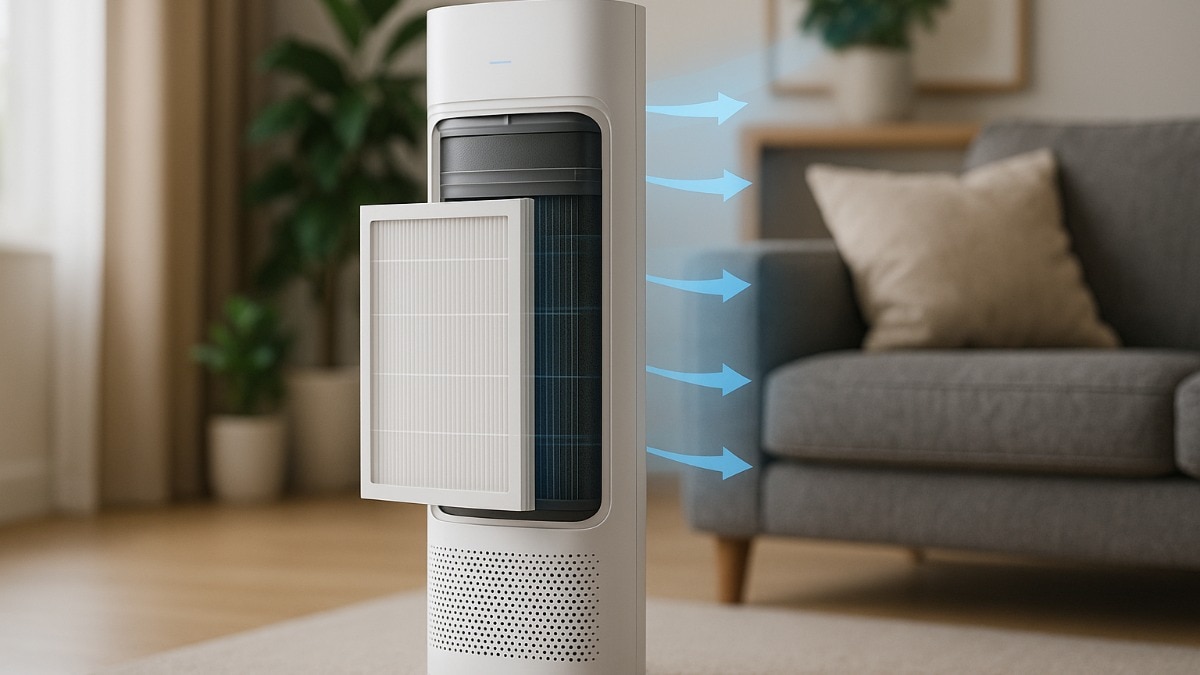
Running an air purifier every day does not necessarily mean your indoor air is clean. If its filter is clogged, saturated or past its recommended lifespan, the appliance may not work as effectively as it should.Air purifier filters collect dust, pollen, pet dander, smoke particles and other airborne pollutants. Over time, this accumulation can restrict airflow, while certain filters may also lose their ability to capture or absorb pollutants effectively.But how do you know when a filter has reached the end of its life? Can you wash an old HEPA filter and use it again? And does living in a highly polluted city mean you need to replace it more frequently?We spoke to Dr Vikas Mittal, Director and Pulmonologist, CK Birla Hospital, Delhi, who verified this article. Here's what you should know about air purifier filter replacement and maintenance. HOW OFTEN SHOULD YOU CHANGE YOUR AIR PURIFIER FILTER?Not every air purifier filter needs to be replaced at the same time. Its lifespan depends on the filter material, the manufacturer's recommendations, pollution levels and how frequently you use the appliance.Here is a general guide: 1. HEPA FILTERS: GENERALLY EVERY 6–12 MONTHSHEPA (High-Efficiency Particulate Air) filters trap fine airborne particles, including dust, pollen, mould spores and other particulate pollutants.They generally need replacement every 6–12 months, although some models are designed to last longer. If you run your purifier for several hours every day, particularly during periods of high pollution, the filter may need attention sooner.2. ACTIVATED CARBON FILTERS: GENERALLY EVERY 3–6 MONTHSDoes your air purifier still seem to let smoke or unpleasant smells linger? Its activated carbon filter may have become saturated.These filters help adsorb odours, smoke and certain gases and volatile organic compounds (VOCs). However, their ability to absorb these substances reduces as the carbon becomes saturated.Depending on usage and indoor air quality, replacement may be needed every 3–6 months.3. PRE-FILTERS: CLEAN EVERY 2–4 WEEKSUnlike HEPA and activated carbon filters, many pre-filters are designed to be cleaned and reused.They capture larger particles such as hair, lint and visible dust before these reach the main filter. Check them every 2–4 weeks and clean them according to the manufacturer's instructions.A damaged pre-filter or one that cannot be cleaned properly may need replacement.5 SIGNS YOUR AIR PURIFIER FILTER MAY NEED REPLACINGYou don't always have to wait for the filter replacement indicator to light up. These signs may suggest that your air purifier needs maintenance:Reduced airflow: Is your purifier blowing out less air than usual? A clogged filter may be restricting airflow.Lingering odours: If smoke or unpleasant smells persist, the activated carbon filter may have lost some of its adsorption capacity.Excessive dust accumulation: A visibly dirty filter may need cleaning or replacement, depending on its type.Filter replacement alert: Some purifiers have indicator lights or digital notifications that track filter life.Unusual operating noise: A change in noise levels, particularly when accompanied by reduced airflow, may indicate a blockage or maintenance issue.Remember, these signs are not a substitute for the manufacturer's replacement schedule. A filter can lose effectiveness without looking visibly dirty.DOES DELHI-NCR POLLUTION MEAN YOU NEED TO CHANGE YOUR FILTER MORE OFTEN?It can.Air purifier filters collect airborne particles as the appliance operates. In areas with high particulate pollution, filters may accumulate pollutants faster, particularly when the purifier runs for extended periods.A few factors can shorten filter life:Continuous usage: Running an air purifier for several hours every day increases the amount of air passing through its filters.High outdoor pollution: Homes near busy roads, construction sites and industrial areas may experience a greater influx of dust and particulate matter.Pets at home: Pet hair and dander can quickly accumulate on pre-filters.Cooking and indoor smoking: Cooking emissions and smoke can add to the filtration load, particularly for activated carbon filters.This is why following a fixed calendar schedule alone may not be enough. Check the filters regularly and follow the maintenance instructions for your specific model.CAN YOU WASH A HEPA FILTER AND USE IT AGAIN?Not necessarily. Whether an air purifier filter can be washed depends on the type of filter.Many pre-filters are washable and reusable, provided they are cleaned and dried as instructed by the manufacturer.However, most conventional HEPA and activated carbon filters are not washable. Water or improper vacuuming can damage their filtration material and affect their performance.Some manufacturers offer washable or reusable filter designs, but these are exceptions. Always check the product manual before cleaning a filter.HOW TO KEEP YOUR AIR PURIFIER WORKING EFFECTIVELYReplacing filters on time is important, but a few other habits can help maintain your applianceCheck filters regularly for visible dust accumulation or damageClean washable pre-filters at the recommended intervalsKeep the air intake and outlet free from furniture, curtains and other obstructionsReplace non-washable filters according to the manufacturer's instructions.Reset the filter replacement indicator after installing a new filter, if requiredKeep track of when you last replaced the filterSwitch off and unplug the appliance before removing a used filter. Consider wearing a suitable mask and placing the used filter in a sealed bag for disposal.An air purifier cannot maintain its intended performance if its filters are neglected. While HEPA filters may generally last 6–12 months and activated carbon filters around 3–6 months, actual replacement intervals vary by model, usage and pollution levels.Don't wait for your air purifier to stop working or for unpleasant smells to appear. Check the filters, follow the manufacturer's instructions and replace them when required.- Ends
How often should you change your air purifier filter?
Full Article
Original Source
Read the full article at Indiatoday →KhanList aggregates and links to publicly available news content. We do not host full articles from third-party sources. Always verify important information with original sources.