
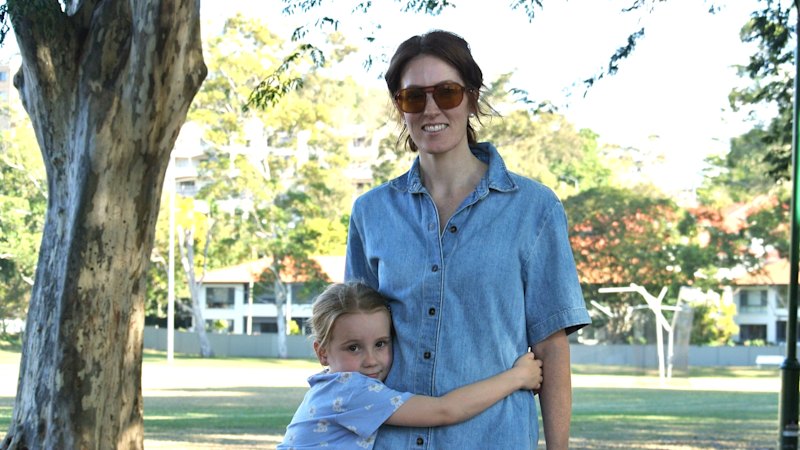
September 3, 2026 — 5:00amKrystle Bridges says she has access to four channels of communication with her school on any given week.“There’s something for everyone, no matter how you like to communicate,” the Brisbane mum-of-two said.“I don’t think you could say you’re not finding out about things – it’s there, you just have to pay attention.”Krystle Bridges said there was something for everyone when it came to communicating with her daughter’s school.Catherine StrohfeltWestern suburbs dad Paul Symes said he and his wife were signed up to different channels, in particular when it came to parents’ groups.“There’s a bit of a juggle,” he said.“We’ve obviously both got jobs as well, [and] there’s only so much storage space in my brain.”Across Brisbane and Queensland, schools use a range of methods to send information home, including apps, emailed newsletters, parent class representatives and parent group chats, individual emails, or speaking face-to-face via appointment, conference, or casual encounters.Facing this wealth of access and increasing variation in families’ expectations, schools are threading a needle with a shrinking eye when it comes to what information they send home, Australian Catholic University Associate Professor Paul Kidson said.A former principal and expert in educational leadership, Kidson said while some families were content to be hands-off in their children’s education, parents who wanted to be involved were more time-poor than ever before.Paul Symes said it was “a bit of a juggle” managing information about his children’s schooling.Catherine Strohfelt“Partly that’s because the demands of their workplace,” he said. “It’s literally an impossibility for them also to be able to spend huge amounts of time at the school.”Kidson said families of a single cohort more often crossed generational lines.“You’re getting some parents who are now quite old when they’re having children, [and] you’re getting a new breed of people who are coming through in their 20s and 30s having children,” he said.“They are of a quite different mindset than some of those families that might be into their 40s, or even in their 50s if you’re talking about secondary schools.”Kidson said whether a school could successfully engage with parents boiled down to its culture.“If there is a leadership that embraces the idea that parents are active partners, wants to work with the community, [and] wants to positively engage them – that’s the beginning point,” he said.The Lakes College, north of Brisbane, rolled out a new strategy in 2024, aiming to bring parents closer to their children’s learning without peppering them with newsletters or sausage sizzle sign-ups.The school is among the first of almost 50 independent schools across the state – including St Margaret’s Anglican Girls School and Clayfield College in Brisbane – involved in the Queensland Independent Schools Parents Network state-sponsored engagement program.QIS Parents Network executive director Amanda Watt said the program gave schools a slightly different playbook for interacting with parents, including more opportunities for parents to reach out to the school and build a relationship.Renee Cairns-O’Neill (left) has two daughters at The Lakes College.The Lakes College.The Lakes College deputy principal Anna Dore said the Moreton Bay school sometimes folded parents’ expertise into lessons.Renee Cairns-O’Neill was one such parent.“It was just using the Cricut machine, like the vinyl-cutting machine,” she said. “I put my hand up, and we went in.”Cairns-O’Neill said teachers would reach out to parents once or twice a year with call-outs for similar opportunities.In other instances, she said, a parent in the medical field taught hygiene, while another taught students receiving their P plates how to change a tyre.Kidson said once families were invited into classrooms, the dial for school messaging shifted, and schools needed to be careful making sure parents understood the full context of what students were learning.“I only see certain behaviours and practices when I’m in the classroom,” he said.“If I draw conclusions about that, that has the potential to become quite a difficult situation to manage.”Start the day with a summary of the day’s most important and interesting stories, analysis and insights. Sign up for our Morning Edition newsletter.More:SchoolsFor subscribersHigh schoolBrisbanePrimary schoolFrom our partners
How often should schools contact families? These schools might know
Full Article
Original Source
Read the full article at Smh →KhanList aggregates and links to publicly available news content. We do not host full articles from third-party sources. Always verify important information with original sources.