
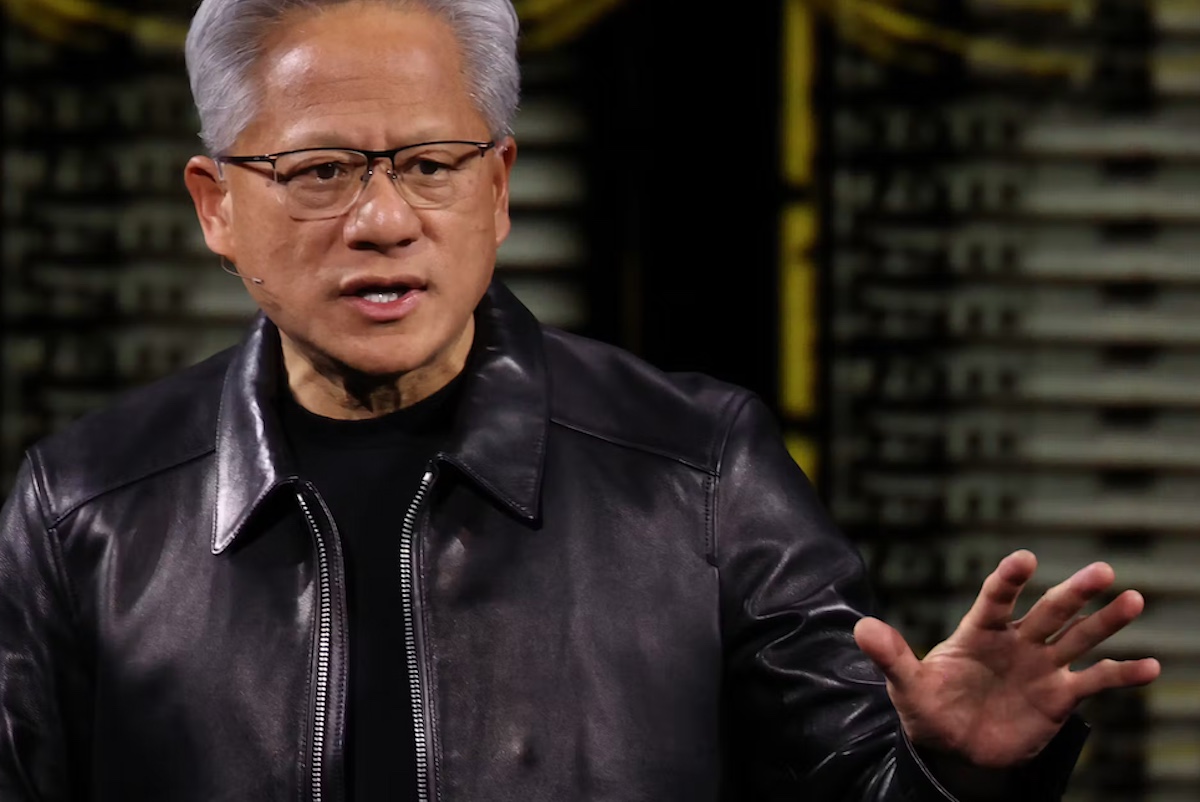
Jensen Huang, the chief executive and co-founder of chipmaking company Nvidia, recently admitted to an extramarital affair. However, it’s not just a tabloid story: the woman involved, Alice Huang, has been accused of being a Chinese intelligence agent. Computer chips – specifically the chips used to produce and run artificial intelligence (AI) systems – have become a key front in the United States’ rivalry with China for geopolitical power and influence. The most powerful chips are needed for the most advanced AI, and the US has tried to maintain its edge over China by restricting access to those chips. While the Chinese government rejects claims of espionage, Alice Huang has reportedly been under investigation by the US for years. So what’s so special about Nvidia? What’s in it for China? And if Jensen Huang goes down, what else could go down with him? The world’s biggest AI chip company Nvidia is the world’s biggest supplier of the high-end chips used for AI and data centres, with some estimates putting its market share over 80%. The now multi-trillion-dollar company got its start making chips called graphic processing units (GPUs), used largely for video games. However, these chips – and their successors – turned out to be ideal for the kind of number-crunching needed for training and using AI models. Other companies such as Google and AMD have tried to make chips that can compete with Nvidia for speed and efficiency, however neither has been able to displace Nvidia from its dominance of the AI market. Why China may be interested As a consequence, Nvidia has played a key role in the US government’s strategy to stall China’s development of AI. Sales of Nvidia’s most powerful chips to China have been restricted since 2022 – though the restrictions were somewhat relaxed last year. However, Chinese enterprises have repeatedly tested the boundaries of US sanctions. Southeast Asian companies including Megaspeed, Alice Huang’s former employer, have been accused of buying up Nvidia chips and exporting them into China. Jensen Huang has lobbied intently for a relaxation of US chip export restrictions, which is being seen in a new light after the revelation of his relationship with Alice Huang. Trade records indicate over US$3 billion in chips crossed from Singapore to China in a single year, alongside similar volumes from Malaysia. Selling access to banned Nvidia chips to Chinese companies has also become a growth industry. Nvidia’s value has soared with the AI boom. However, its share price has fallen after the disclosure of the Huang incident, with some analysts asking whether the company propped up sales figures by ignoring sanctions. It has also been reported that an Nvidia executive leaned on US officials to halt an investigation into the firm’s relationship with Megaspeed. Regulatory impact Nvidia’s share price tumbled after the affair was revealed. Now the company is reportedly under criminal investigation. At the same time, US technology regulators are mobilising, with Congress requesting Jensen Huang explain his interactions with Alice Huang, and how Nvidia protects itself against foreign espionage. If Nvidia is forced to guarantee its chips don’t enter China, its sales pipeline may grind to a halt. And if Nvidia hits trouble, the financial impacts could be much wider. The AI sector is notorious for the amount of circular financing going on – where companies invest in their own suppliers or customers. Nvidia is a key player in this loop. Investors are already fretting over whether the enormous amounts of money sunk into AI can ever return profits. While leading AI model builders Anthropic and OpenAI are moving toward public listings or fresh funding rounds, both face harsh reality checks. OpenAI has delayed its own planned stock market listing, while Anthropic’s expected share market listing is rumoured to face a “junk bond” rating, meaning it’s a high-risk investment. Data center firms too are losing value as they face community pushback and soaring energy costs. Governance crisis So what now? Clearly, Nvidia faces a crisis, with a backlash against AI and data centers sweeping the US, US investigators looking at it closely and the company’s own board of directors investigating its chief executive. On top of this, Nvidia has been inseparable from Jensen Huang’s personal brand for decades – and that brand is now somewhat tarnished. Until now, investors have supported the company, and Jensen, as visionary underwriters of the entire AI ecosystem. If that changes, or the company otherwise loses its way, a shortage of GPUs may be the least of the AI industry’s problems. Andrew Cullen is guest research fellow, School of Computing and Information Systems, The University of Melbourne
How much will Jensen Huang’s scandal ultimately cost?
Full Article
Original Source
Read the full article at Asiatimes →KhanList aggregates and links to publicly available news content. We do not host full articles from third-party sources. Always verify important information with original sources.