
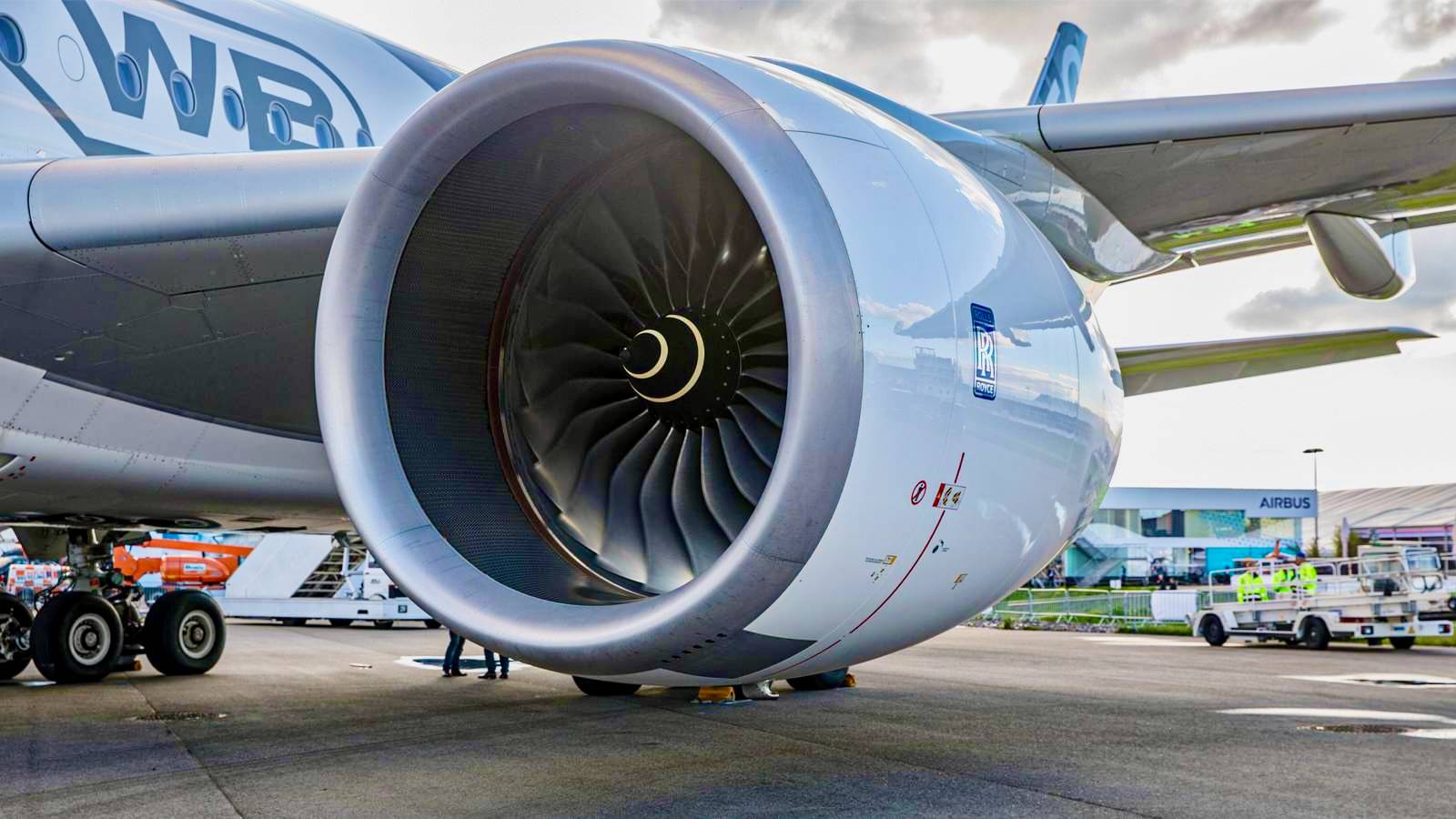
Published Nov 7, 2026, 10:01 AM EST Brandon's passion for aviation started at a young age. He became involved in the flight simulator and VATSIM communities, which sparked his interest in aviation and eventually led him to earn his private pilot license. Outside of work, he continues to build flight hours, explore new airports, and stay involved in the aviation community. A single Rolls-Royce Trent XWB carries a list price of approximately $25 million, which places it below the General Electric GE90 at $30 million and the GE9X at $42 million. Reported contractual figures on some Airbus A350 orders have run toward $35 million per engine. Neither number is what an airline pays. List prices are published valuations rather than transaction prices, and widebody engines are almost never bought as standalone items. They arrive bundled into an aircraft order alongside a long-term support agreement negotiated at the same time. That support agreement is the more consequential half of the deal. Rolls-Royce sells the Trent XWB with TotalCare, a program under which the airline pays a dollar-per-engine-flying-hour rate and Rolls-Royce performs overhauls at its own cost. The company owns the Power-by-the-Hour trademark and dates the concept to 1962. The arrangement transfers maintenance risk from the operator to the manufacturer, which worked in Rolls-Royce's favor for years and then did not. When large-engine flying fell to 43% of 2019 levels during 2020, the company's free cash flow moved from an inflow of £873 million to an outflow of £4.2 billion. The List Price Is Around $25 Million Per Engine Credit: Matheus Obst | Shutterstock A single Rolls-Royce Trent XWB carries a list price of approximately $25 million, according to Simple Flying's comparison of the most expensive jet engines in commercial aviation. That places it below the General Electric GE90 at $30 million, the engine powering the Boeing 777, and well below the GE9X at $42 million, built for the 777X. Reported contractual figures on some A350 orders have run higher, toward $35 million per engine, which reflects how list pricing varies between general industry valuations and individual contracts. The Trent XWB is the sixth member of Rolls-Royce's three-shaft Trent series and the only engine developed specifically for the A350 family, which removes any comparison against a competing powerplant on the same airframe. The cost comes from materials and precision rather than size. Operating temperatures inside the engine reach 2,700°F (1,500°C), which rules out conventional metals in the hot section. Critical components use nickel-chromium-based superalloys costing close to $50,000 per ton, against roughly $500 per ton for carbon steel, a difference of two orders of magnitude before any machining happens. The tolerances required make manufacturing time-intensive, adding substantial labor cost on top of the materials bill. What the engine does with those materials explains why they are necessary. The Trent XWB ingests up to 1.3 tons of air every second at takeoff, which Rolls-Royce has compared to the volume of a squash court. High-pressure turbine blades rotate at 12,500 rpm with tips reaching 1,200 mph (1,931 km/hr), twice the speed of sound, and each of the 68 blades generates around 900 horsepower, roughly a Formula One engine apiece. The force on a single fan blade at takeoff is close to 90 tons, which Rolls-Royce has likened to nine London buses hanging off each one, and at full power, air leaves the nozzle at almost 1,000 mph (1,609 km/hr). Published Order Values Tell You More Than List Prices Rolls-Royce announces the value of its engine orders, and those figures describe what an airline actually commits to. They also bundle engines with long-term support, which is how the business is structured rather than an optional extra attached afterward. The pattern holds across two decades. Ethiopian Airlines ordered Trent XWB engines worth $480 million at list prices to power 12 A350s, a deal that took sales of what Rolls-Royce called its fastest-selling Trent engine past 1,000 units. In November 2018, China Eastern signed an engine and long-term TotalCare agreement covering 20 A350-900s worth over $1.1 billion, described at the time as one of the largest deals announced at the first China International Import Expo. In 2007, US Airways agreed terms at the Paris Air Show for 22 A350s, worth over $1.8 billion at list prices with TotalCare included, for delivery from 2014. Every announcement pairs the engines with support, and that is the point. Mark King, then Chief Commercial Officer for Civil Large Engines, framed the US Airways deal around total cost of ownership rather than acquisition price, saying that with the backing of TotalCare the airline could be confident its cost of owning the fleet would be extremely competitive. By late 2018, three years after the first A350 entered commercial service in 2015, Rolls-Royce had sold more than 1,700 Trent XWBs to 46 customers. What the published values cannot tell you is the net price anyone paid, because list and realized prices diverge substantially on orders of this size. What TotalCare Actually Is Credit: Casimiro PT | Shutterstock TotalCare is Rolls-Royce's long-term engine support program, replacing the conventional arrangement where an airline owns its engines and pays for overhauls as they fall due. The airline instead pays a dollar-per-engine-flying-hour rate, and Rolls-Royce performs overhauls at its own cost. The concept is not new. Rolls-Royce owns the Power-by-the-Hour trademark and dates its origin to 1962, when operators were offered a complete engine and accessory package paid for by the hour flown. Silk Way West Airlines, which signed a TotalCare agreement covering Trent XWB-97 engines for two Airbus A350 freighters, described the arrangement in terms of what it removes. The agreement gives the airline a secured cost of operating and maintaining its engines through the dollar-per-flying-hour mechanism, alongside enhanced aircraft availability drawn from Rolls-Royce's engine health monitoring. Rolls-Royce describes TotalCare as more than a maintenance plan, calling it a service concept built on predictability and reliability. Ewen McDonald, Chief Customer Officer for Civil Aerospace, framed the agreement as supporting the engines through entry into service and for many years beyond. Published figures for the support alone are rare, but one exists. Vietnam Airlines awarded Rolls-Royce a $580 million TotalCare contract covering Trent XWB engines for 14 A350s, the clearest public indication of what the support side costs across a fleet. Rolls-Royce does not publish per-hour rates, which are negotiated individually and remain commercially confidential, so no public figure exists for what an airline pays per flying hour. Why The Airline Chooses It Anyway Credit: Rolls-Royce The appeal is converting an unpredictable expense into a known one. An engine overhaul is a large, lumpy cost arriving on a schedule set by cycles and condition rather than by an airline's budgeting calendar. Under TotalCare, that becomes a rate scaling with how much the aircraft flies, which an airline can forecast against its own schedule. The mechanism changes who holds the risk and when money moves. Rolls-Royce invoices by the hour, so cash arrives years before the repair bills it covers and is held on the balance sheet as a liability against future work. When the overhaul falls due, parts and labor are the manufacturer's bill. If an engine runs longer between shop visits than the pricing assumed, Rolls-Royce benefits. If it runs shorter, Rolls-Royce absorbs the difference. The arrangement also pays partly for a result rather than purely for usage, since time on wing is what determines how often the manufacturer incurs the cost of a shop visit. One structural factor applies to the A350 that does not apply elsewhere. Rolls-Royce is the sole engine supplier for the aircraft, so an airline cannot play engine manufacturers against each other during negotiation as it can when ordering a 787 or 777. Simple Flying noted that the reduced leverage often leads to fixed, high-value power-by-the-hour agreements that add to the long-term financial commitment. An A350 operator is buying into a single-supplier relationship covering both the engine and the support behind it, and that relationship typically runs for the life of the airframe rather than a fixed term it can shop around at the end of. What That Risk Transfer Cost Rolls-Royce In 2020 Credit: fifg | Shutterstock The clearest demonstration of who carries the risk came when aircraft stopped flying. Across 2020, large-engine flying fell to 43% of 2019 levels. Because airlines on TotalCare pay by the hour flown, that collapse translated directly into fewer payments reaching Rolls-Royce, regardless of how many engines it remained contracted to support. The model requires utilization to function, and utilization was the one thing nobody could deliver that year. The financial effect was severe. Rolls-Royce's free cash flow, an inflow of £873 million the previous year, became an outflow of £4.2 billion. A model built on billing by utilization generates very little revenue when utilization collapses, while the obligations on the other side do not reduce in proportion. There is a currency dimension too, since TotalCare is priced in US dollars per engine flying hour, meaning an airline earning in another currency carries exchange rate exposure on top of utilization exposure. Rolls-Royce has since rebuilt, and the Trent XWB is central to that recovery. The engine's exclusive position on the A350 guarantees production volume on an aircraft with a substantial backlog, and the exclusivity agreement with Airbus runs to 2030. Every A350 delivered adds two engines and, usually, a support agreement alongside them. That is the context for reading the $25 million list price. It describes the opening transaction in a relationship measured in decades, and for Rolls-Royce the engine itself has never been the point.
How Much Does An Airbus A350 Rolls-Royce Trent XWB Engine Cost?
Full Article
Original Source
Read the full article at Simpleflying →KhanList aggregates and links to publicly available news content. We do not host full articles from third-party sources. Always verify important information with original sources.