
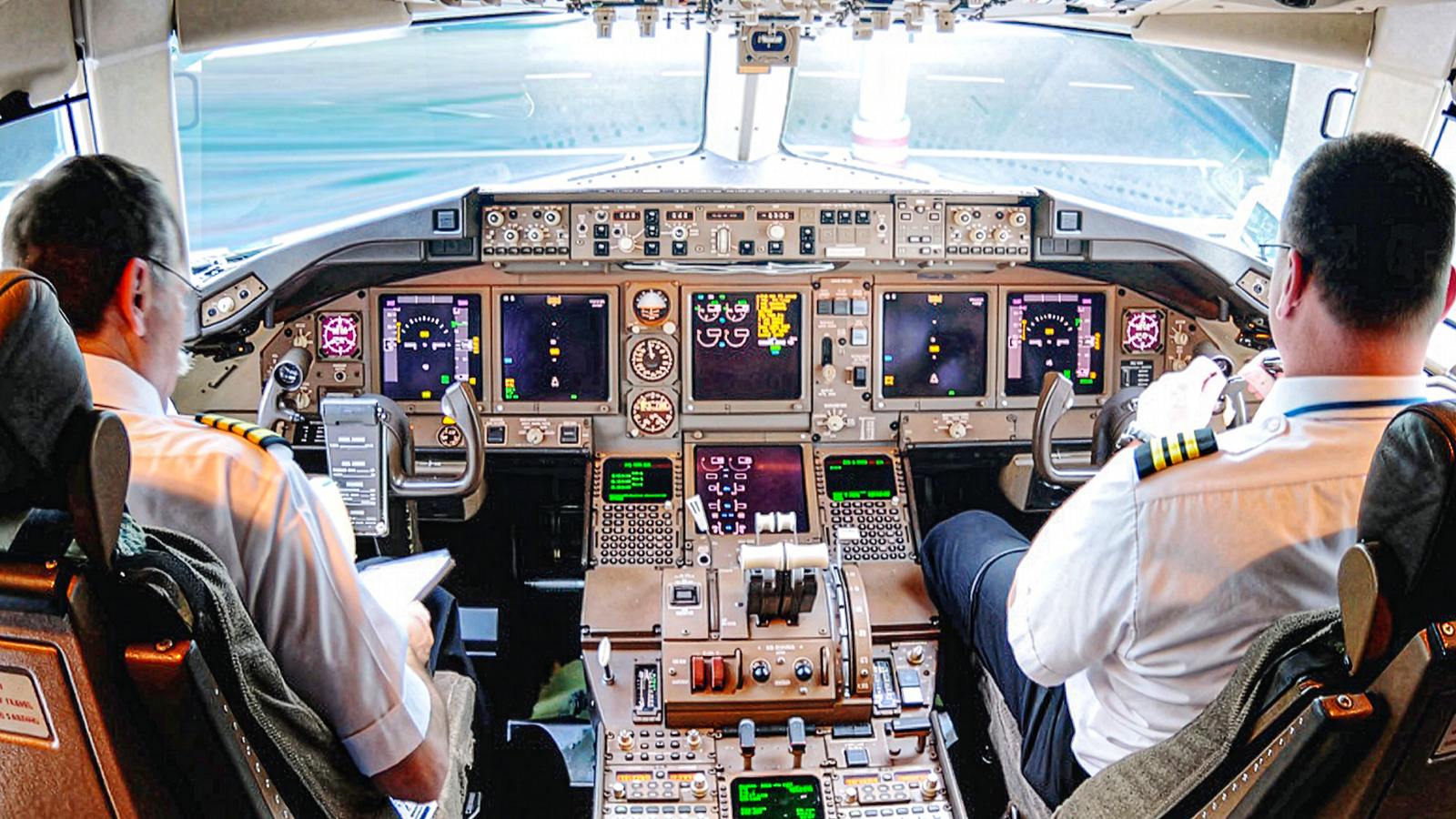
Published Nov 28, 2026, 4:00 PM EST Aaron is an aviation enthusiast and world traveler with a deep interest in aerospace history and technology. He has traveled around the world numerous times, often incorporating visits to aviation museums and historic aircraft collections into his journeys. A native of New Zealand, he is an expert in aviation and maintains a broad interest in a variety of other subjects. The Boeing 767 is unusual as it sits astride some classifications, depending on its variant. The aircraft was built as a narrower widebody to occupy a market segment above the very long Boeing 757 narrowbody airliner and below larger widebodies such as the Boeing 777. As discussed below, some airliners can become associated with specific regions or even airlines that operate them. For example, the A380 is inseparable from Emirates, and the upcoming 777X may be defined by its Gulf State operators. Discussing how much pilots flying those aircraft earn will not include US-based pilots. The Boeing 767, including those variants used as a commercial passenger airliner, as a freighter, and as a military air tanker, is overwhelmingly based in the United States. These are overwhelmingly flown by American pilots based in the United States, earning US wages. Airlines need to pay these pilots in the context of the industry in the United States. With that being said, some Boeing 767s are flown in other countries (notably Japan), but those are outside the scope of this article. An Aging Small Widebody Credit: Michael Derrer Fuchs | Shutterstock The Boeing 767 is one of the smallest widebody Boeing or Airbus airliners in scheduled passenger service today. The airliner typically only seats seven abreast in economy, configured 2-3-2, or only one more row than narrowbody airlines, including its related Boeing 757 cousin. The aircraft remains in production as the Boeing 767-300F Freighter. However, Boeing is working through its final backlog for UPS, after which production of the civilian aircraft will shut down by the end of 2027. The Boeing 767-2C will stay in production through the 2030s as the KC-46A Pegasus aerial tanker. While the United States Air Force is that variant's biggest customer, it has some export orders. Starting in 2011, Boeing replaced the 767 in the scheduled passenger role with the clean-sheet Boeing 787 Dreamliner. The last passenger variant of the 767 was delivered in 2014. Today, the Boeing 767-300ER and 767-400ER variants remain in service as regular passenger airliners with mainline carriers, but they are rapidly aging and struggling to compete with current-generation aircraft. The last of the passenger 767-300s have been retired from scheduled service, while the 767-300ER is being phased out. The 767-400ER fills a very specific niche that makes it more difficult to replace. However, while the best of its passenger days are behind it, it remains a very popular freighter. The Boeing 767's Remaining Operators Credit: kamilpetran | Shutterstock 751 commercial 767s remain in service of all variants around the world, out of almost 1,400 delivered over the lifetime of the program. Of these, 179 are passenger 767-300ERs, and 37 are passenger 767-400ERs, meaning that around 28% of the total fleet remain in scheduled passenger service. The remainder are overwhelmingly freighters. United and Delta are currently tied as the top passenger operators, with their 767-300ER fleets having 37 units remaining in service. The next two main operators of the 767-300ER are Japan Airlines and All Nippon Airways (ANA). LATAM Airlines also operates a fleet of nine examples, while other airlines operate smaller fleets. Top five Boeing 767 operators (per Planespotters.net) 767-200 freighter 767-300ER 767-300F 767-400ER Total FedEx n/a n/a 145 n/a 145 UPS Airlines n/a n/a 99 n/a 99 Delta Air Lines n/a 37 n/a 21 58 United Airlines n/a 37 n/a 16 53 Air Transport International 7 n/a 38 n/a 45 Amazon Air (operated by ATI, Atlas Air, 21 Air, etc) n/a n/a 62* n/a 62 *Amazon-branded, not operated/owned Additionally, Delta operates 21 Boeing 767-400ERs, and United operates 16 examples. No other commercial airline operates the -400ER variant. The Boeing 767-300ER freighter's two largest fleets are FedEx (145) and UPS (99). The next three largest operators are also US-based freight airlines. Air Transport International operates 38 (plus seven 767-200 freighters), Atlas Air operates 25 (plus five charter passenger 767-300ERs), and ABX Air operates 25 (and eight 767-200 freighters). At this stage of its life cycle, the 767 has become an overwhelmingly American-operated aircraft. The Complications Of Pilot Pay Credit: Markus Mainka l Shutterstock The discussion of how much pilots make flying the Boeing 767 in the United States as a commercial passenger airliner is mostly a conversation about Delta and United. The discussion about cargo pilots flying the aircraft is mostly concerned with FedEx and UPS. United and Delta have some of the best-paid pilots in the industry. These pilots, like other pilots, are paid primarily on seniority, with more senior pilots bidding for widebody aircraft and trunk routes. How much a pilot is paid also varies depending on what is included. In addition to their base pay, pilots receive a range of allowances, bonuses, pension pay, and profit sharing (particularly with the big airlines), and this can materially influence what is reported as the pilot's 'pay.' As another note, this also makes it complicated when comparing US pilot salaries to those of international pilots. A distinction should always be made between base pay and total remuneration. The ATP Flight School writes that: "In 2026, major airline First Officers typically earn about $98,680 to roughly $130,000 in year one, depending on carrier and monthly credit-hour guarantees. Year-12 Captains commonly earn in the $270,000–$390,000+ range, and senior widebody Captains can approach $450,000 annually when pay rates, guarantee hours, and per diem stack. The comparison table below shows First Officer (Year One) and Captain (Year Six and Year 12) pay by airline under each carrier’s noted monthly-hour assumption." The Boeing 767 Is Two Aircraft Tiers Credit: Markus Mainka l Shutterstock But while pilot pay is mostly based on seniority, it is not exclusively based on seniority. Both United and Delta split the Boeing 767 into two distinct pay tiers under their respective 2026 collective bargaining agreements. Earlier, this article noted that the 767 is a smaller widebody, and that is important here. The Boeing 767-300ER is classified as a midsize aircraft along with large narrowbodies like the Boeing 757 and the A321neo. Meanwhile, the stretched Boeing 767-400ER is classified as a widebody. According to Pilot Airline Central, these pilots can expect the top-tier widebody rates alongside the Boeing 777, 787, A330, and A350. Captains flying these aircraft will tend to be relatively senior. A Captain with twelve years of experience flying a Boeing 767-400 for United can expect around $483,000 annually, while a Captain with comparable experience flying a 767-300ER can expect $405,000. Base hourly flight pay typically accounts for 70% to 80% of a senior pilot's total compensation. Adding on everything and the total compensation rises significantly. Meanwhile, Boeing 767-400ER First Officers can expect base pay of around $330,000, and Boeing 767-300ER FOs receive 276,000. These numbers are for United, but Delta is broadly similar. Boeing 767 Pay With Big Two Cargo Airlines Credit: Matheus Obst l Shutterstock When it comes to the big freight airlines, UPS and FedEx, the distinction between larger and smaller categories of 767s with corresponding pay tiers is redundant. The stretched 767-400ER only exists as a passenger airliner (and VIP transport in Bahrain). UPS and FedEx exclusively operate the standard 767-300F and its converted passenger counterparts. Both FedEx Express and UPS Airlines place the Boeing 767-300F on their top-tier widebody pay scale alongside the 777F, MD-11, and 747-8F. One note on the McDonnell Douglas MD-11 trijet is that, following the deadly November 2025 (N259UP) crash, UPS retired all its MD-11s. FedEx is now the only major operator of the type and is working to retire them in the coming years. UPS and FedEx use a 15-year longevity scale and typically guarantee 75 to 81 credit hours per 28-day bid period. According to American Flyers, a FedEx Captain with 12 years of experience earns around $300,000 annually. Meanwhile, a UPS Captain with 12 years of experience can expect to earn around $387,000. Pay can increase significantly with bonuses and other factors. UPS pays less than FedEx at the start of a pilot's career, while top-end pay is very close depending on various factors. The 767 Was Always A Sort Of Middle Ground Credit: sorao.211 | Shutterstock The Boeing 767 has long sat in an unusual position between being a mid-size or big aircraft. This comes through in Delta and United's pay classifications, where it is variously classified as narrowbody/midsize or widebody for pay purposes by its stretch. The Boeing 767-300ER's main competitor was the Airbus A330-200: today it is mostly being replaced by the Boeing 787-9, 787-10, and Airbus A330-900. At the high end, some are being replaced by A350-900s. Notably, Delta has recently announced it is purchasing a fleet of Boeing 787-10s to help phase its 767-300ERs out. However, the aircraft is also being partially replaced by the Airbus A321neo (including XLR), which now has the range and capacity to fill some of its roles. The A321neo is replacing some of Japan Airlines' domestic 767s. Something similar is happening at United Airlines, where A321XLRs may replace some of the 767-300ERs on select lower-demand transatlantic routes. The niche Boeing 767-400ER is more difficult to replace. Its closest modern equivalents are the 787-8, the Airbus A330-800neo (not really a viable option), and the A330-900neo. Currently, neither Delta nor United has announced plans to replace these aircraft. It appears both airlines are content to keep them in service for as long as feasible, as they fill specific niches that other aircraft struggle to fill. This is somewhat ironic, as the 767-400ER's sales were disappointing for Boeing, and it was one of the most unpopular modern variants it has produced.
How Much Do Boeing 767 Pilots Make In 2026?
Full Article
Original Source
Read the full article at Simpleflying →KhanList aggregates and links to publicly available news content. We do not host full articles from third-party sources. Always verify important information with original sources.