
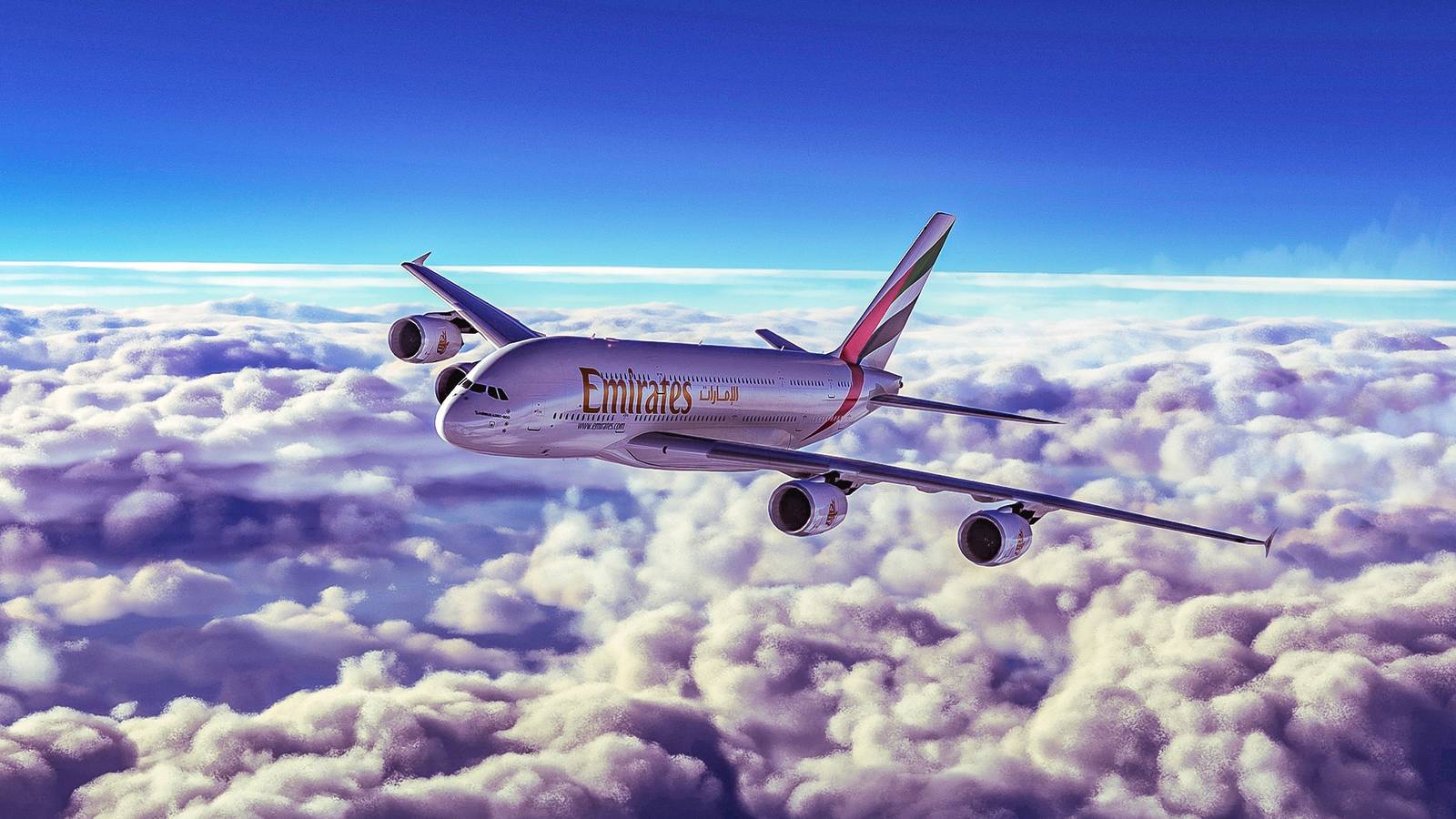
As one of the world's largest airlines, Emirates flies to all corners of the world, connecting millions of passengers every year from its hub at Dubai International Airport (DXB). There is, however, a possibility to travel on the Gulf carrier between two countries outside the United Arab Emirates without routing through Dubai at all. It is all thanks to fifth-freedom traffic rights, which allow an airline to fly from its home hub to a second country and carry local passengers and cargo onward to a third country, provided the flight starts or ends in the carrier's home state. This article takes a look at how Emirates utilizes these rights, how those links operate across the Atlantic and the Americas, and why such routes are highly integral to Emirates' global route network. Where Are These Flights Operating To? Emirates operates fifth-freedom flights touching the United States between New York (JFK) and Milan Malpensa (MXP), between Newark Liberty (EWR) and Athens (ATH), and between Miami (MIA) and Bogotá (BOG). The airline can sell standalone tickets on those beyond-Dubai segments, so travelers can fly the carrier across the Atlantic or between North and South America without ever setting foot in the United Arab Emirates. Those three links are made possible by two distinct flight structures and widebody aircraft types, the Airbus A380 and Boeing 777 variants. Two of the routes link the New York metropolitan area to Southern Europe as extensions of Dubai services, while the third uses South Florida as a stopover on the way to Colombia. On the European side, JFK and MXP operate as EK205 and EK206, alongside EWR and ATH operating as EK209 and EK210). These flights are designed to capture both local transatlantic demand and connecting traffic to and from Dubai. By contrast, the MIA–BOG leg (EK213/EK214) operates as an onward tag from Dubai via Miami across a 1,513-mile (2,435-km) Americas sector. Emirates' US fifth-freedom count has shifted as routes launched, paused, or resumed rather than remaining frozen at two. EWR–ATH debuted in March 2017 alongside established MXP–JFK service, while a 2024 launch brought MIA–BOG into the lineup before 2026 Middle East airspace disruptions forced temporary schedule adjustments ahead of its May 2026 resumption, as detailed in Simple Flying coverage. Working Just Right For Operations Emirates is able to operate these three fifth-freedom routes because of geography, aircraft performance, fleet utilization, and point-to-point passenger demand. Fifth-freedom legs do not get added wherever demand looks promising, and Emirates only turns an intermediate stop into a standalone ticketed route when the economics and limits of the flight line up just right. In practice, that filter explains why JFK–Europe and MIA–BOG exist when other city pairs never make the cut. Aircraft range, airport elevation, and ground-turn efficiency weigh heavily on how each route is built. Bogotá's El Dorado International Airport sits at 8,360 feet (2,548 meters) above sea level, as per Road Genius, where thinner air and hot-and-high conditions limit takeoff payload over ultra-long distances, making a route through Miami practical on a Boeing 777 across a 1,513-mile (2,435-km) leg. By contrast, Milan Malpensa and Athens serve as European stepping stones on DXB–JFK and DXB–EWR flights, letting Emirates pair long-haul sectors with local transatlantic traffic and not leave widebody jets sitting idle on the ground. A 777 arriving in Miami (MIA) from Dubai (DXB) can use daytime ground time to fly a quick 1,513-mile (2,435-km) round-trip down to Bogotá (BOG) and back before its return leg east, squeezing extra block hours out of a single airframe. On the JFK–Europe links, by contrast, Emirates balances transatlantic sector lengths (~3,989 miles / 6,413 km between JFK and MXP) and local point-to-point demand against through-flight punctuality, so an intermediate stop strengthens the network as opposed to dragging down schedule reliability. Pushback From US Rivals Emirates' fifth-freedom flights into the United States sit right in the middle of a long-running clash over Open Skies aviation policy and competitive fairness. While Emirates frames fifth-freedom flying as a lawful commercial tool that boosts connectivity and consumer choice, the Big Three US legacy carriers of American Airlines, Delta Air Lines, and United Airlines have lobbied hard against Gulf carrier expansion, as reported by NPR. As a result, the US fifth-freedom count has stayed at three core routes, yet to expand into a sweeping US network. Through the Partnership for Open & Fair Skies, US legacy carriers and labor groups accused Gulf airlines of receiving tens of billions of dollars in state support and distorting competition on transatlantic and international lanes, as per Business Travel News. Emirates and UAE officials pushed back sharply against those claims, arguing that Emirates operates on a commercial footing, pointing to past dividend and profit-sharing payouts, and noting that US carriers themselves benefited from bankruptcy protections, slot protections, and federal assistance over the years. Meanwhile, Emirates leadership has acknowledged that adding more US fifth-freedom routes is still tempting when market opportunities arise, even as political and bilateral sensitivities make every new proposal closely watched. In practice, that standoff has turned fifth-freedom approvals into more challenging negotiations, having to watch out for bilateral treaty rights and political pushback in Washington. Even when route economics look attractive on paper, adding a new US fifth-freedom leg invites immediate scrutiny from domestic rivals and unions claiming home-market turf is at stake. As a result, Emirates has tended to focus on sustaining and optimizing its existing three US fifth-freedom links rather than testing every possible city pair at once. Not The Only Airline Offering These Flights Comparing Emirates' three US fifth-freedom routes (JFK–MXP, EWR–ATH, and MIA–BOG) to nonstop Dubai flights or rival fifth-freedom carriers comes down to trip duration, cabin appeal, and redemption value. For travelers who want to experience Emirates without committing to a 12 to 16.5-hour flight to or from Dubai (DXB), those shorter regional and transatlantic legs offer a direct way into its widebody cabins. At the same time, other foreign carriers operate competing fifth-freedom links from the US, such as Singapore Airlines on JFK–Frankfurt (FRA) or Los Angeles (LAX)–Tokyo Narita (NRT), giving flyers distinct cabin products and loyalty partners to decide on. Booking through Emirates Skywards or transfer partners can make these three routes attractive on points, though fees and availability vary by program and cabin. Published award guides show Skywards redemptions starting around 17,000 to 17,500 miles one-way in economy, 87,000 miles in business, and 102,000 miles in first on JFK–Europe sectors, while partner programs like Aeroplan can offer lower mileage tiers on certain routes alongside different surcharges. Conversely, nonstop US or European carriers often win on schedule frequency, alliance connections, or lower cash/fee totals when award seats are tight. Ultimately, the three-route count matters most when a traveler's origin and destination line up with JFK–MXP, EWR–ATH, or MIA–BOG. If you are flying from the US to a different European city or connecting onward beyond the gateway, a domestic or European carrier with denser daily frequencies may beat a single daily fifth-freedom flight on timing and flexibility. Where those three routes shine is giving travelers a clear shortcut to sample Emirates on point-to-point or short-hop trips. Being Affected By Delays Thousands Of Miles Away The flights originate in or route through Dubai (DXB) at some point, so regional airspace disruptions, seasonal schedule trims, and cabin-retrofit rotations can alter how a route runs or even temporarily pause operations. As seen when 2026 Middle East airspace disruptions affected MIA–BOG before its May 2026 resumption, and as seen in periodic frequency or aircraft adjustments across the network, a static route count only captures a snapshot in time. Travelers also face practical drawbacks that do not apply on point-to-point domestic flights. Delays or airspace detours thousands of miles away in the Gulf or Europe can end up affecting an inbound jet, while single-daily or reduced-weekly frequencies leave fewer same-day rebooking seats if something goes wrong. Aircraft swaps between A380 frames and 777-300ER or 777-200LR variants can also change seat layouts, first class availability, or cabin refurbishment status between booking and departure. Even on paper, a route operating once a day or as a tag onto a long-haul rotation leaves far less margin than a multi-frequency domestic corridor. What looks like a straightforward seat map or fixed mileage tier when booking can change entirely as fleet assignments rotate, seasonal demand fluctuates, or regional airspace conditions force timetable adjustments. For a fifth-freedom flight, the schedule published months in advance is less a guarantee of exact hardware or timing than a starting point shaped by everything happening upstream along the route. Could We See More Routes In The Future? Emirates flies three fifth-freedom routes touching the United States, including New York-JFK to Milan Malpensa, Newark Liberty to Athens, and Miami to Bogotá, with each serving a distinct operational purpose. Whether linking New York-area hubs with Southern Europe or linking Miami with Bogotá as an onward leg from Dubai, those routes reflect how Emirates balances fleet utilization, local demand, and competitive realities. Emirates' ongoing A350-900 deliveries and widebody cabin retrofit program will gradually reshape how the airline allocates aircraft and cabins across its US network. Even as Emirates evaluates selective growth opportunities alongside future fleet additions, those three routes are still the core benchmark for where travelers can book standalone fifth-freedom flights between the United States and another country.
How Many Fifth Freedom Routes Does Emirates Fly Into The United States?
Full Article
Original Source
Read the full article at Simpleflying →KhanList aggregates and links to publicly available news content. We do not host full articles from third-party sources. Always verify important information with original sources.