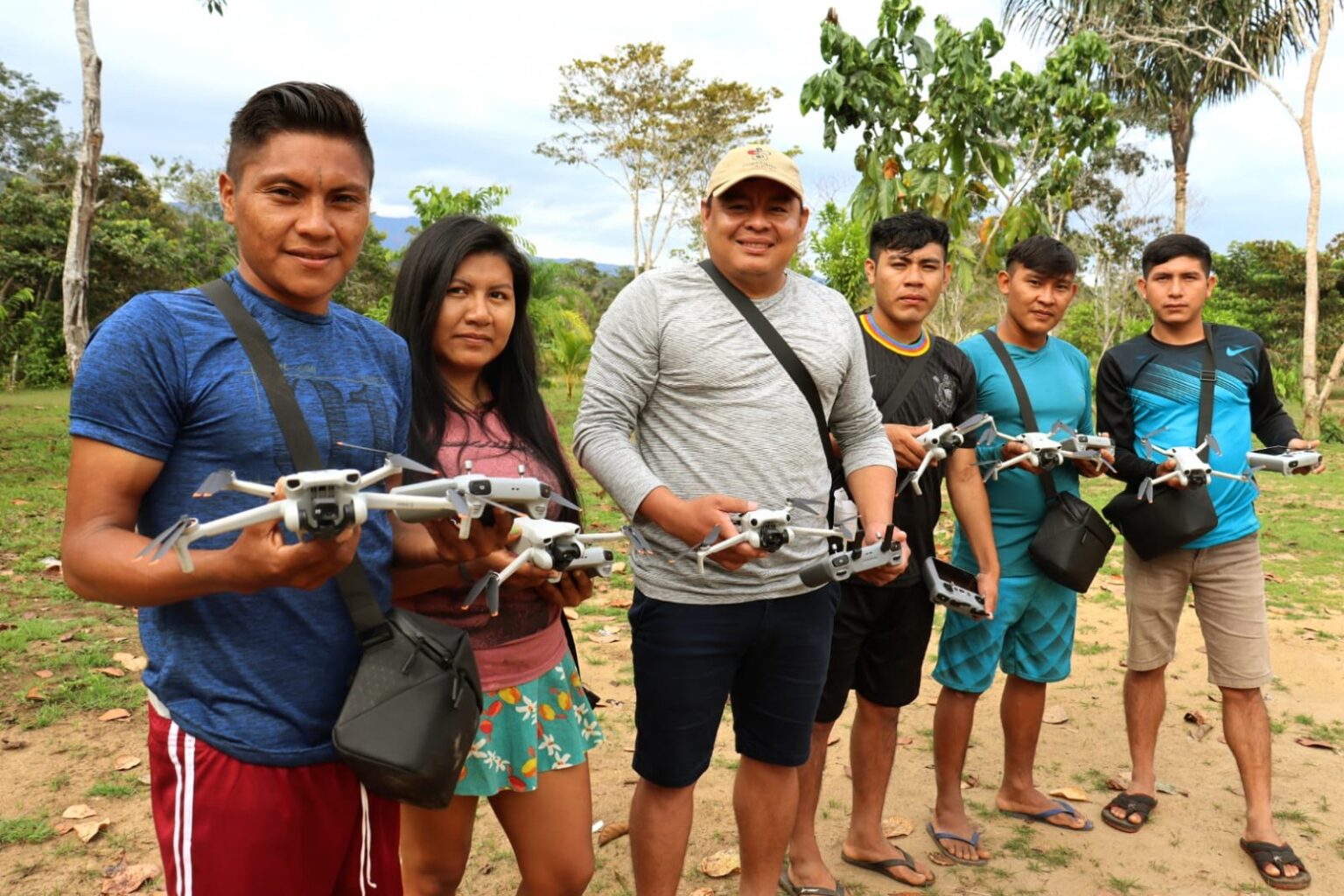
As artificial intelligence increasingly becomes a part of ecological monitoring, a growing body of research suggests integrating Indigenous ecological knowledge (IEK) into ethical frameworks for AI governance to prioritize environmental reports contributor Shradha Triveni for Mongabay. Researchers in a recent study published in the journal AI and Ethics examined how the Navajo philosophy of Hózhó, meaning balance and harmony, and the Māori concept of Kaitiakitanga or guardianship, could reshape AI development. They argue that these Indigenous values emphasize collective responsibility and reciprocity, offering a basis for questioning the environmental costs of large-scale AI models. AI tools are already being used in partnership with Indigenous communities to track illegal mining in the Amazon and causes of deforestation in the Congo Basin and Indonesia. But AI infrastructure often poses significant risks. Data centers, for instance, can place immense stress on local water resources. In another study, Sebastián Lehuedé, a researcher at King’s College London, observed that Indigenous resistance to such infrastructure, such as efforts that recently halted a Google data center in Chile, views natural resources as enabling a way of being rather than as commodities to be owned. In both studies, researchers noted that when AI tools, infrastructure or value chains exclude the values of Indigenous and local communities, they often face backlash. However, non-Indigenous engineers and developers writing Indigenous values into academic frameworks is a form of digital colonialism, said to Karaitiana Taiuru, an independent expert in Indigenous data sovereignty, referring to the study published in AI and Ethics. Taiuru also heads Taiuru and Associates Ltd, a New Zealand-based consultancy that provides services to AI projects in the Māori context. He added that reducing complex, distinct systems into a generic category of “Indigenous knowledge systems” strips them of their meaning. “The specific, irreducible, culturally grounded content of both systems is precisely what gets lost in this process,” Taiuru told Mongabay. Navajo environmental activist Nicole Horseherder also expressed doubt that thousands of years of human observation can be translated into an evolving technology. “AI is a great technology and has an astounding learning rate,” she told Mongabay. “Maybe it can provide information on Indigenous communities, but it will never be an extension of our existence.” Taiuru said despite these challenges, Indigenous participation is essential to ensure communities have meaningful control over how AI is designed and deployed, rather than just being represented within it. Read the full story by Shradha Triveni here. Banner image: Equipped with drones and other technologies, people from the Yanomami Indigenous Territory in northern Brazil actively monitor their territory, which has faced a serious humanitarian and environmental crisis due to illegal gold and cassiterite mining. Image courtesy of Evilene Paixão/HAY. Credits Topics
How can Indigenous knowledge reshape AI development?
Full Article
Original Source
Read the full article at News →KhanList aggregates and links to publicly available news content. We do not host full articles from third-party sources. Always verify important information with original sources.