
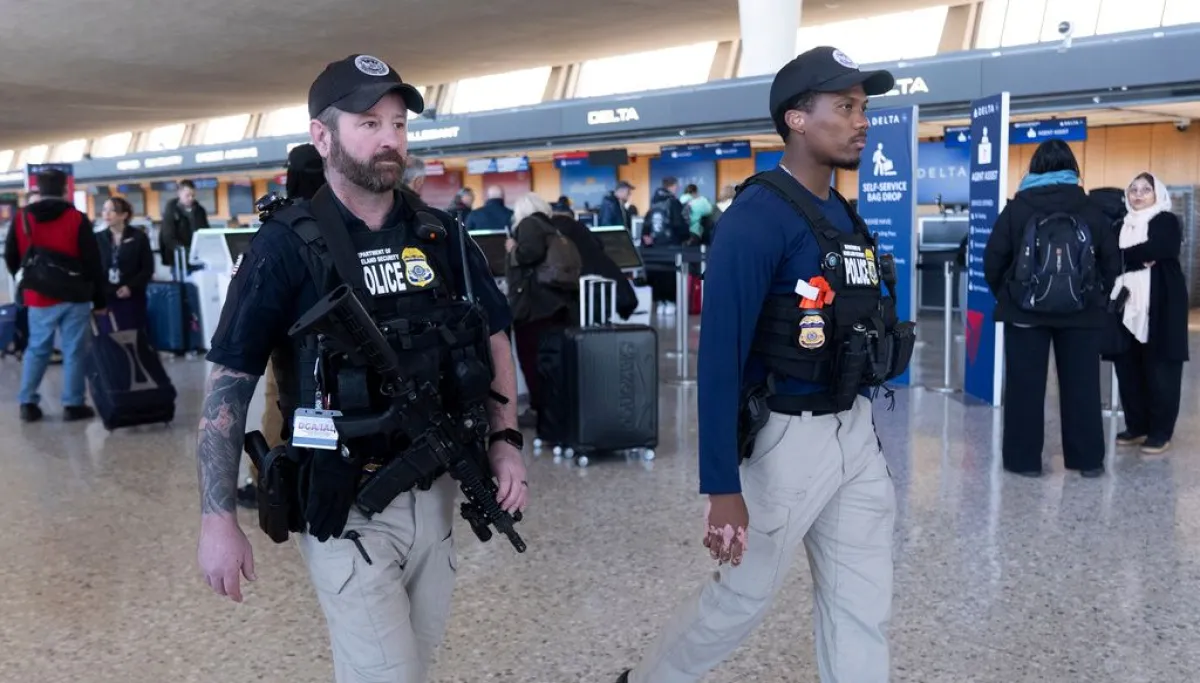
In the 25 years since hijackers took control of four commercial aircraft and turned them into weapons, the air travel process has been overhauled in ways that few other industries have.From federalizing airport security to hardening cockpits and vetting passengers to screening baggage, the process in no way resembles the one that existed at the turn of the century. It has evolved repeatedly over the past two and a half decades to meet and counter emerging threats as technology improves and new types of aviation-aligned attacks are thwarted.Prior to 9/11, the airlines operating out of an airport were responsible for hiring private security firms to staff and manage security checkpoints. Security was lax compared to today in various ways. The 9/11 hijackers were legally permitted to carry small knives and box cutters on their bodies through the checkpoint and onto the planes. They used the weapons to prevent passengers from attempting to fight back. Back then, even friends of airline passengers could walk to a terminal gate to bid someone goodbye, no boarding pass or driver’s license necessary to make it that deep into the airport.Two months after the terrorist attacks, then-President George W. Bush signed the Aviation and Transportation Security Act, which brought the responsibility of screening airline passengers and checked baggage under the federal government’s purview. The government created a new agency called the Transportation Security Administration to do this. The Federal Air Marshal Service was also expanded for more specialized security officials to fly on select flights.By April 2002, Baltimore/Washington International Thurgood Marshall Airport became the first airport in the United States to have all security and baggage screening operations run by the TSA.Later that year, TSA deployed explosives detection systems at bagging screening centers at airports. Before 9/11, just 5% of bags underwent explosive detection screening.In 2003, Congress created the Department of Homeland Security, which brought various federal law enforcement, immigration, national security, and emergency management agencies under one roof. TSA has grown to more than 65,000 employees nationwide, making up nearly one-quarter of the DHS workforce.In addition to the TSA, airline and airport employees were also required to undergo stricter screening to obtain jobs.Security checkpoints tighten rules Incidents in the aftermath of TSA’s creation have spurred the agency to implement new rules aimed at preventing another tragedy.A terrorist plot to detonate liquid explosives during a flight from the United Kingdom to the U.S. in August 2006 prompted the TSA to ban all liquids, gels, and aerosols in passenger carry-on luggage. By September, the TSA loosened the no liquids policy to limit liquids, gels, and aerosols to 3.4 ounces in a single, clear bag. That policy is still in place, though passengers may bring liquids in any type of packaging now.Government intelligence led the TSA to require passengers to remove shoes during screening for explosives checks starting in 2006.By the end of the Bush administration, the TSA had deployed canine teams to aid in screening airline passengers and baggage at airports nationwide.The government continued to foil terrorist plots to attack commercial flights to the U.S. during the Bush and Obama administrations, including the underwear bomber and cargo planes bomb plots. The incidents spurred TSA to roll out additional screening measures capable of giving its officers a better look at passengers and their possessions as they pass through checkpoints.The agency rolled out advanced imaging technology in 2010. The full-body scanners were designed to detect nonmetallic weapons and explosives that were capable of hiding from other types of X-ray machines.TSA goes on offense TSA debuted the “PreCheck” process in 2013 as a way to get more information about future airline passengers ahead of their travel date. It allowed the government to divide the public into known and unknown travelers, thus alleviating the burden of focusing on everyone as a threat and instead prioritizing a focus on unknown travelers, or those who had never flown or otherwise had limited interaction with the government.The agency’s decision in 2010 to roll out the advanced imaging machines proved smart. In 2014, an al Qaeda publication published an article that talked about using nonmetallic explosives in plane attacks, but it was a threat that the government stood ready to detect.A few years later, computed tomography imaging machines were brought into airports because they provided 3D images of passengers and personal belongings.Starting in 2017, TSA began requiring passengers to place all personal electronics, such as laptops and tablets, in a bin to go through screening outside of bags. The only change to that policy was that PreCheck customers were later permitted to leave their electronics in their bags while moving through the checkpoint.Cockpit doors were reinforced years ago, and even this year, some airlines have added secondary doors between the flight attendant crew area and business class. Select pilots may also carry firearms in the cockpit.During the Biden administration, mobile driver’s licenses became acceptable forms of identification at select airports and facial recognition systems were phased in to capture images of passengers’ faces and screen them against government databases in a matter of seconds.AIR TRAFFIC CONTROLLERS TURN ON FAA CHIEF AS TENSIONS BOIL OVERBoth types of improvements took the traveler verification process out of employees’ hands and make it more difficult to use a fake ID to slip through security.Twenty-five years after 9/11, the systems in place will continue to be improved, but primarily in a way that streamlines the security process to being seamless and contactless. But those bans on large bottles of shampoo and pocket knives are likely here to stay.
How airport security has transformed in the 25 years since 9/11
Full Article
Original Source
Read the full article at Washingtonexaminer →KhanList aggregates and links to publicly available news content. We do not host full articles from third-party sources. Always verify important information with original sources.