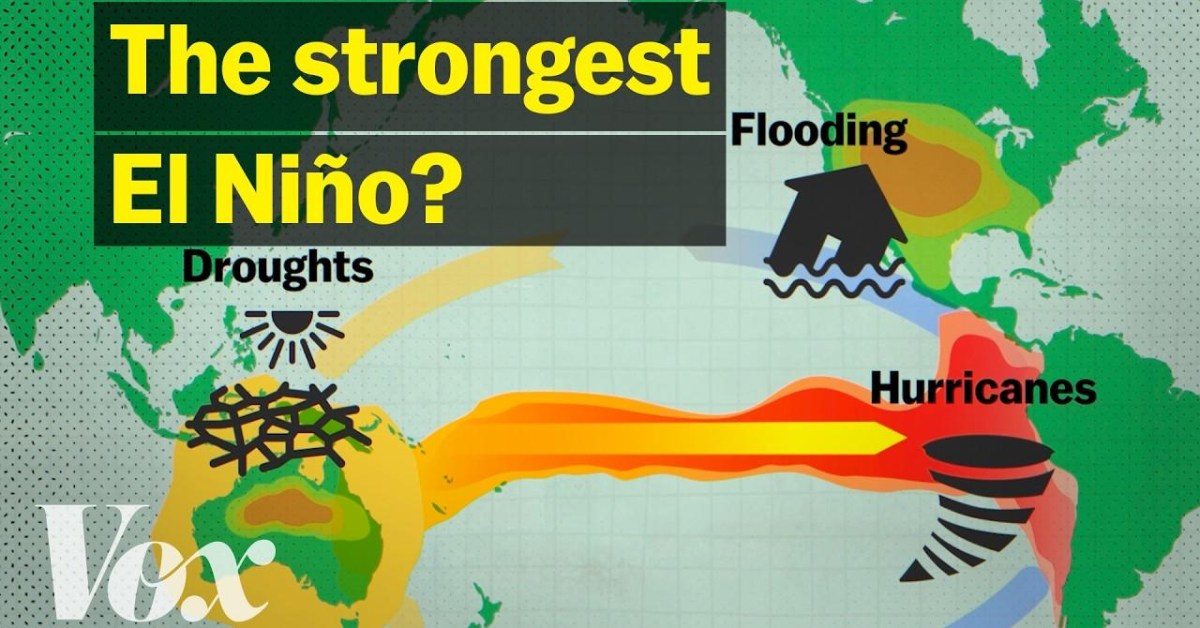
On June 11, the National Oceanic and Atmospheric Administration issued an El Niño advisory after temperatures in the equatorial Pacific Ocean remained higher than average for several months. Declaring an El Niño isn’t out of the ordinary, as they happen in cycles every two to seven years. But this one could be extraordinary.Some are calling it a “super” or “Godzilla” El Niño, and the NOAA predicts an 81 percent chance that it could develop to a “very strong” level, rivaling the historic and devastating El Niños of 1982-1983 and 1997-1998. Experts are predicting it will likely reach its peak this winter and into 2027, bringing heat, rainfall, and other potential extreme weather events.But even with that foresight and climate models that can confidently predict what might be in store, we still face a test of what could potentially be the strongest El Niño ever recorded and the wild weather that comes with it. We spoke with atmospheric scientists and meteorologists to find out how a super El Niño forms, why it changes global climate, and what we should expect in the coming months.Read more about El Niño:
How a super El Niño affects the global climate
Full Article
Original Source
Read the full article at Vox →KhanList aggregates and links to publicly available news content. We do not host full articles from third-party sources. Always verify important information with original sources.