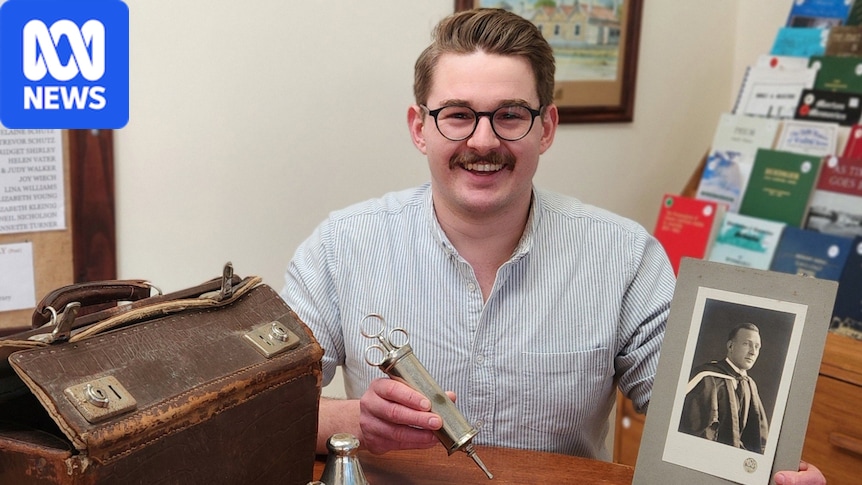
Explosive donation to museum brings bomb squad to Eudunda Family Heritage GalleryPosted Fri 31 Jul 2026 at 9:01amFri 31 Jul 2026 at 9:01amHistorian Samuel Doering made an explosive discovery when sorting through donations at the Eudunda Family Heritage Gallery. (Supplied: Samuel Doering)In short:Historian Samuel Doering was going through the backlog of donations to the Eudunda Family Heritage Gallery when he found a highly explosive acid. Bomb technicians attended the gallery to dispose of the acid, which had been driven from Victoria to regional South Australia some months previously.Historically used for a range of medicinal purposes, picric acid is classed in the top division of Class One Explosives in Australia, ruled a "mass explosion hazard".A regional museum needed to call in the bomb squad after discovering a highly explosive acid among its donated items.Historian Samuel Doering was sorting through a "backlog" of donations at the Eudunda Family Heritage Gallery in South Australia's mid-north when he came across an old doctor's bag. "In one of the boxes that we brought forward was this odd-looking brown bottle with a gauze sort of label on it that said picric acid," Mr Doering told ABC Radio's North & West Breakfast.The highly explosive picric acid was historically used for several medicinal purposes. (Supplied: Samuel Doering)"I looked it up and quickly discovered it's a highly volatile and very explosive material."The donation had been living in the chilly archive room for "several months" before being moved to the warmer reception area. Historically used for a range of medicinal purposes, picric acid is classed in the top division of Class One Explosives in Australia, ruled a "mass explosion hazard".The dried acid can combust if exposed to heat or friction, and is considered more explosive than trinitrotoluene (better known as TNT).Mr Doering had called local police to the scene, but it was a while before reality really sank in. "This donation had come from Victoria in the back of a car and nothing had happened, and it had sat in the archive room for several months and, again, nothing had happened, and then I carried it to the front of the gallery to be sorted and still nothing happened," he said."The penny dropped after she [the police officer] said the bomb response unit was required."A police spokesperson confirmed they were called to the Bruce Street building around midday on July 24."SAPOL's bomb technicians attended to safely remove and dispose of the chemical, identified as picric acid," the spokesperson said."It is believed an old bottle of the substance, which was historically used for medicinal purposes, was inadvertently included in a larger donation."While police would not comment on how or where they disposed of the substance, Mr Doering said one local told him about hearing a blast that "echoed through the hills".Dentist's detonating donationThe donation had once belonged to Fred Leditschke, who graduated in medicine from the University of Adelaide in 1924.Mr Doering suspected Dr Leditschke used picric acid to sterilise his dental tools, though it had many uses throughout the history of medicine.Friedrich "Fred" Leditschke had owned the acid. (Supplied: Samuel Doering)"[It was] quite often used in the First World War; they would just pour this acid onto burns to cauterise them," Mr Doering said. "It was used as the explosives in hand grenades and artillery shells, so it's quite a diverse material but still highly dangerous."It was definitely the most dangerous donation the Eudunda gallery had ever seen. "It's certainly not every day that you have the bomb response unit coming to dispose of material," Mr Doering said. "When donations come through, you do sort through them to make sure that there's nothing poisonous ... so this was a bit of a surprise that this had managed to get through the cracks."Thank goodness it didn't go up anywhere where people were, or especially in the gallery. It would have been catastrophic."
Historian discovers explosive while searching through museum donations
Full Article
Original Source
Read the full article at Abc →KhanList aggregates and links to publicly available news content. We do not host full articles from third-party sources. Always verify important information with original sources.