
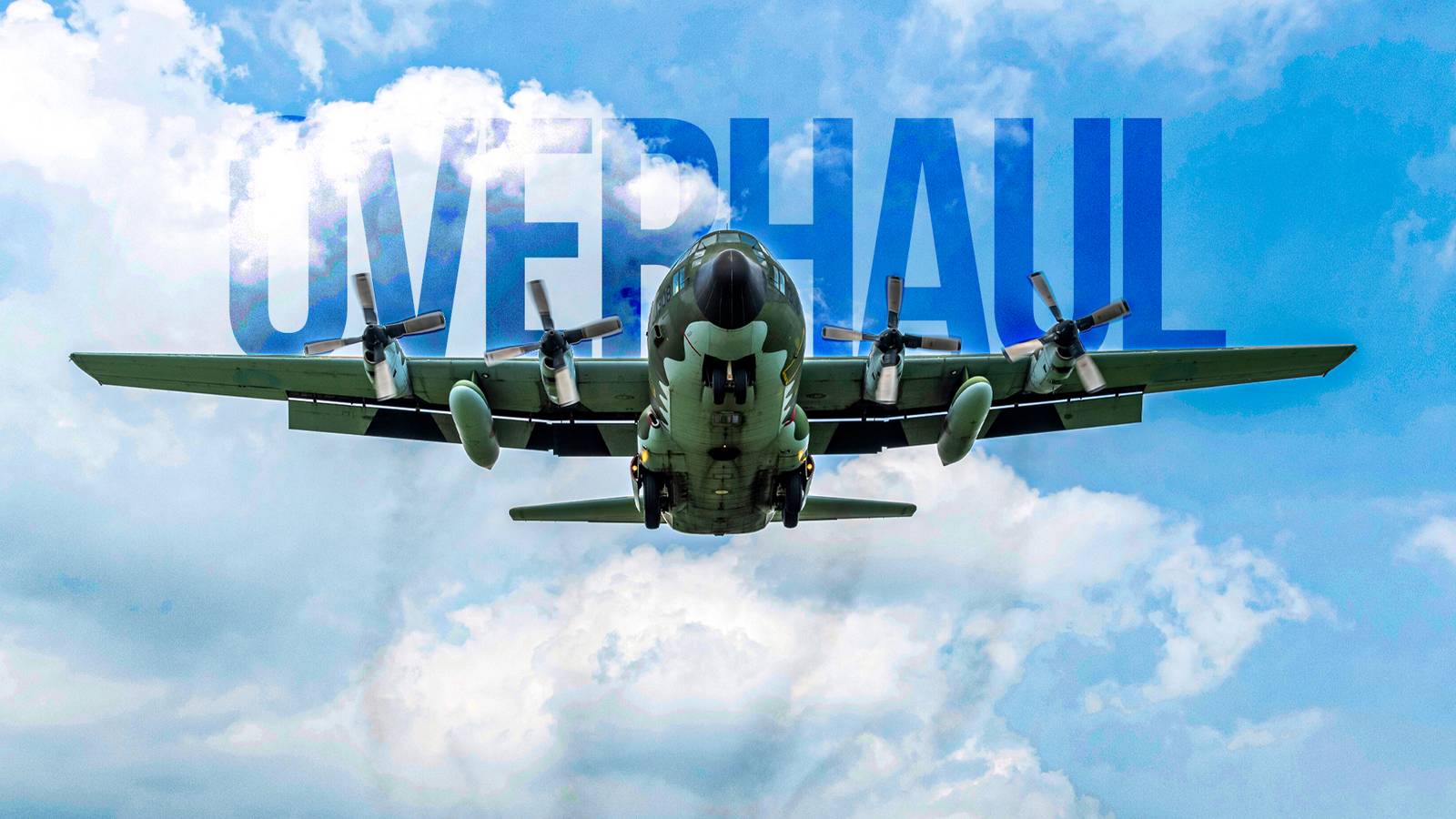
Published Sep 6, 2026, 2:00 PM EDT Aaron is an aviation enthusiast and world traveler with a deep interest in aerospace history and technology. He has traveled around the world numerous times, often incorporating visits to aviation museums and historic aircraft collections into his journeys. A native of New Zealand, he is an expert in aviation and maintains a broad interest in a variety of other subjects. The United States Air Force's 133rd Airlift Wing completed its final C-130H-based deployment in 2026 and is now transitioning to the C-130J-30 Super Hercules. Transitioning to the Super Hercules from the legacy Herk is more than a letter change; it is effectively a new aircraft. As of 2026, it appears that active units no longer operate the legacy Hercules and now fully operate the Super Hercules. The legacy Hercules continues to serve with some Air National Guard and Reserve units, but they are being phased out. For example, the Air Force's 109th Airlift Wing is currently exploring and preparing for a potential transition to ski-equipped C-130J Super Hercules aircraft to replace its aging legacy LC-130H 'Ski Bird' fleet with Super Hercules. Simple Flying has previously reported how the less-powerful LC-130Hs sometimes need externally mounted rockets to provide an extra kick to get airborne. The 133rd's Final Legacy Herk Deployment Credit: US Air Force In February 2026, the state of Minnesota reported that the 133rd Airlift Wing hosted a departure event for more than 100 airmen with their aging C-130H3 Hercules. At the time, this was understood to be the final deployment of these aircraft. In early June, the US Air Force airmen and the C-130H3 Hercules assigned to the 133rd Airlift Wing returned home from the deployment. They returned from the US Africa Command area of responsibility Airmen from the US Air Force Reserve's 815th Airlift Squadron (the 'Flying Jennies') took the standard for the next rotation. After arriving home, the 133rd (specifically the 109th Airlift Squadron) set about deactivating the legacy Herks. The Flying Jennies already operate the new C-130J-30 Super Hercules, and the aircraft has allowed the unit to expand its airlift capabilities. In August 2026, the Minnesota National Guard posted to its Facebook account, "For 30 years, the C-130Hs have been a defining part of the 133rd Airlift Wing’s mission. Generations of Airmen have flown, maintained and supported this aircraft. Now the Wing is preparing to transition to the C-130-J-30 Super Hercules. Six C-130 recently took to the skies for a large flight formation, bringing together generations of Airmen and three decades of history. One formation. Thirty years of history. One final flight together." The Upgraded C-130J Super Hercules Credit: US Air Force The Lockheed Martin C-130J Super Hercules is a medium-sized four-engine turboprop transport that is a comprehensive upgrade of the legacy Lockheed C-130 Hercules, which first flew in 1954. While it can be argued that the C-130 is the world's longest-running continuously in production military aircraft, that is also misleading, as the Super Hercules is essentially a new aircraft. As of mid-2026, Lockheed Martin claims to have delivered over 570 Super Hercules to 27 countries around the world with a total of 28 operators. The aircraft has a maximum takeoff weight of 164,000 lb (74,389 kg), a zero-fuel weight of 129,000 lb (58,513 kg) (C-130J-30), and an operating empty weight of 88,252 lb (40,030 kg) (C-130J-30). The C130J-30's max payload is 46,700 lb (21,183 kg). Specifications (per Lockheed Martin) C-130H C-130H3 C-130J Super Hercules Powerplant Allison T56-A-15 T56-A-15, with later upgrades on some aircraft Rolls-Royce AE2100D3 Propellers 4-blade Modernized 8-blade NP2000 on upgraded H3s 6-blade composite Dowty R391 Cockpit Mostly analog Hybrid glass cockpit Fully digital glass cockpit Crew 5 5 3 Payload 42,000 to 45,000 lb (19,000 to 20,400 kg) 42,000 to 45,000 lb (19,000 to 20,400 kg) 46,700 lb (21,183 kg) Stretched version None None C-130J-30 (+ 15 feet/4.6 meters) Lockheed Martin claims, "One aircraft, many missions ... no aircraft in history or operation today can match the C-130J’s 20 certified, diverse, multi-mission capabilities." The US Air Force and other service branches are transitioning from the legacy C-130H to the C-130J, along with many of the United States' allies and partners. That said, it faces competition from the Embraer C-390, while Singapore is surprisingly 'upgrading' from ancient C-130Bs to still-old C-130Hs. A Generational Leap To Super Hercules Credit: US Air Force The 133rd's C-130H3s are a late H-series refinement over the older C-130H, with some upgrades to the Allison T56-A-15 engines, modernized eight-bladed NP2000s (replacing four blades), a hybrid/partial cockpit, upgraded navigation, and other incremental improvements. While the C-130H was becoming increasingly difficult to modernize, the Super Herk is designed for continuing block upgrades. The C-130J Super Hercules is a generational redesign with the aircraft rebuilt 'from its bones.' It is powered by four modern Rolls-Royce AE2100D3 engines and propelled by six-blade composite Dowty R391s. It comes with a fully digital glass cockpit, a reduced crew of three (from five), integrated digital navigation, substantially improved performance, and more. The C130J-30 is another major improvement by stretching the aircraft. The C-130J-30 extends the fuselage by 15 feet (4.6 meters), resulting in significantly more usable cargo space. Lockheed Martin claims the variant has around 30% more passenger/cargo capacity, 50% more CDS bundles, and 44% more paratroopers, compared with the shorter variants. Credit: US Air Force The Air Force is planning to retire two legacy KC-130T tankers in Fiscal 2027, saying, "The KC-130T is being retired at the end of its service life, consistent with planned force-structure modernization and the transition to more capable platforms that better support current and emerging mission requirements." When it comes to legacy cargo Hercules C-130H airlifters, the Air Force is requesting to retire 16 more in Fiscal 2027. Looking forward, its proposals call for retiring four more in Fiscal 2028 but none in Fiscal 2029, 2030, or 2031. It explains, "The U.S. Air Force is recapitalizing its tactical airlift fleet by replacing older models with C-130J models as they are delivered. Consequently, all cost savings will be reinvested into the C-130J program." The Air Force says that it is committed to sustaining the required fleet size of 271 tactical airlift aircraft. The Air Force is also seeking to retire two Commando Solo EC-130Js in Fiscal 2027 as it transitions to the MC-130J. The legacy EC-130Js have already reached or exceeded their expected service life, despite being based on the Super Hercules airframe. The Air Force requested the retirement of 14 legacy cargo Herks in Fiscal 2026. Congress did not oppose these retirements; instead, it required a minimum inventory that can be filled by C-130Js. The USAF's Remaining Legacy Herks Credit: US Air Force Going into 2025, it seems the Air Force had a remaining fleet of around 106 C-130Hs. It seems all of these were operated by the Air National Guard and Air Force Reserve, while the active-duty force has already transitioned to the C-130J. From budget documents, it appears the Air Force purchased 20 C-130Js in 2022 (including 16 standard C-130J-30s), another 16 in 2023, eight in 2024, one in 2025 (likely special mission), and seven in 2026. 2026's Herks appear to have been a special mission variant. Note that there is a multi-year delay between procurement/funding and actual deliveries by Lockheed Martin. The official budget justification lists the C-130J program at 234 aircraft through Fiscal 2026. The House NDAA adds another $260 million in funding to the Air Force's request to purchase another two C-130J aircraft. It is unclear how many are being purchased in 2027, but the Air Force needs to maintain its fleet size as it retires the C-130Hs. It is often difficult to disentangle exactly how many C-130Js the USAF is purchasing year by year, and how many are special mission and how many are standard C-130J-30 airlifters. But it seems the transition is ongoing, with the legacy C-130H fleet set to fall from 92 to 76 in Fiscal 2027. Note that tallies may differ due to the inclusion or exclusion of special variants or reserve units. Increasing International Competition From C-390 Credit: Department of Defense Lockheed Martin has been delivering its Super Hercules at a rate of around 20 to 25 in recent years although only two aircraft were delivered in 2025 due to certification issues. Deliveries resumed in 2026, and it expects to deliver 16 to 24 Herks in 2026. Going forward, its biggest likely sources of orders will be continuing to recapitalize the US forces and potentially winning a contract to supply India with 60 to 80 tactical airlifters. Its current backlog could be around 100 aircraft, although Lockheed doesn't release numbers as other programs do. Of these, 20 are C-130J-30s for Australia, with deliveries starting in 2028, and three more are for the Philippines. What is interesting is that while Lockheed has delivered 570+ Super Hercules to the Embraer C-390 Millennium's tiny 16 (including three prototypes), the backlog starts to even things. The Super Hercules may never be produced in the numbers of the legacy Hercules, which saw over 2,000 delivered. As of mid-2026, the C-390 (and KC-390) has a backlog of 47 aircraft with options and negotiations with another 30. The US Air Force is continuing to transition from the C-130H to the C-130J-30, with the 133rd being the most recent example. However, the C-360 is eating into some of its export market. For now, Lockheed Martin forecasts that C-130 (C-130J Super Hercules) production will continue through the 2030s and into 2040 or beyond.
How A C-130 Letter Change From H To J Forces A Full Guard Wing Overhaul
Full Article
Original Source
Read the full article at Simpleflying →KhanList aggregates and links to publicly available news content. We do not host full articles from third-party sources. Always verify important information with original sources.