
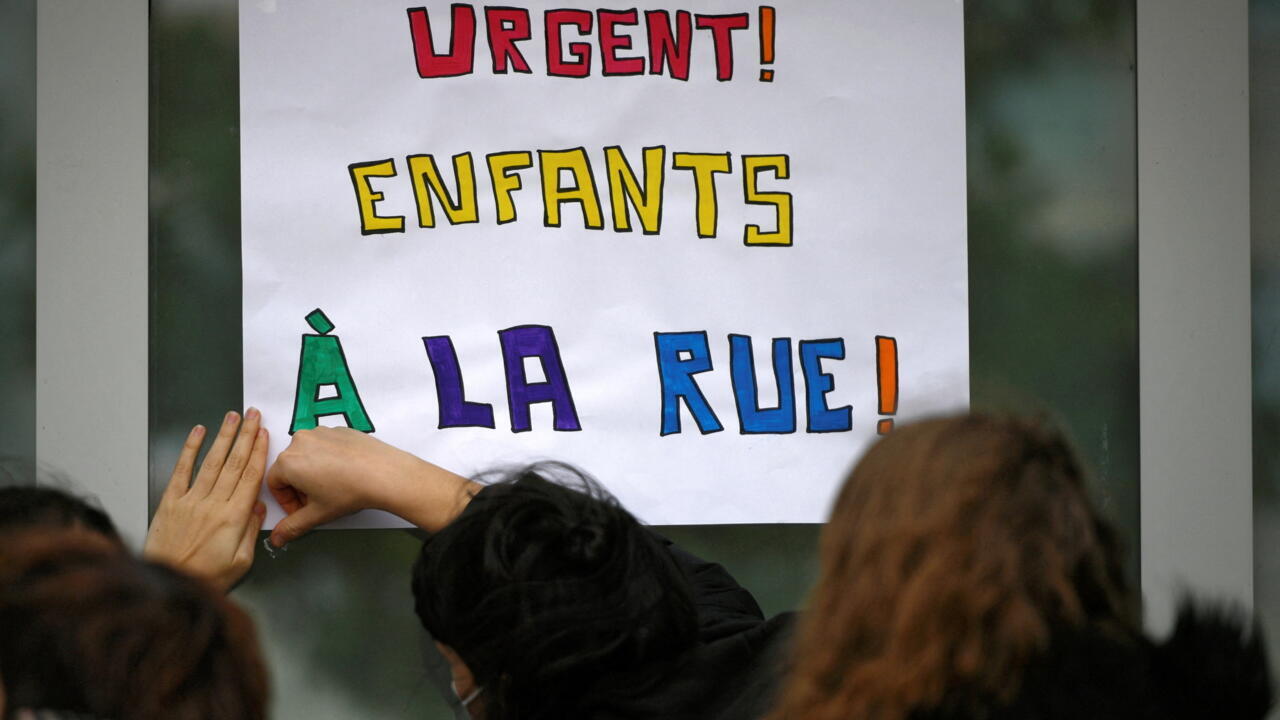
Finding somewhere to live is becoming increasingly difficult for many people in France, with rents rising and social housing hard to access – and yet some 3 million properties lie vacant. Sarah Coupechoux, a French housing rights expert and a member of the European Commission's Housing Advisory Board, explains the paradox. Issued on: 29/11/2026 - 09:28 4 min Reading time France's housing crisis has been described as “the worst since the post-war period” by Minister for Urban Affairs Vincent Jeanbrun. On Tuesday, MPs passed a bill that aims to see 2 million homes built or refurbished by 2030. RFI spoke to Coupechoux, who leads European-level advocacy at French housing charity the Fondation pour le Logement des Défavorisés, about the seeming contradiction between the large number of vacant properties in France and the ever-increasing demand for housing. Study shows extreme poverty and homelessness on the rise in France RFI: What explains why so many homes remain vacant when demand for housing is skyrocketing? Sarah Coupechoux : In France today there are around 3 million vacant homes, according to the National Institute of Statistics and Economic Studies. It varies from year to year, but the figure is relatively stable. And we know that just over 118,000 homes have been vacant for more than two years. The reasons for this are varied. Some causes are structural in nature, such as when inheritance issues cause delays. This happens when there are several owners of the same property and they cannot agree on how it should be used. When a vacant property is in a housing-stressed area, there are measures in place – some of which are incentives, whilst others are coercive – that encourage owners to take action, whether that means renovating or selling them. It is certainly more difficult to keep a property vacant in a housing-stressed area. Then there are properties in rural areas where there is, in fact, little pressure due to lower demand for housing. Homes for Europe: can the EU’s Affordable Housing Act deliver? RFI: Are all these vacant properties actually inhabitable and available to let? SC: No, some properties may be unfit for habitation and require costly repairs, which the owners do not necessarily have the means to carry out. It’s a question of getting an understanding of how long a property has remained vacant, so that we can try to understand the owner's circumstances. But this is a task that needs to be carried out with great care, it's complicated. RFI: What leads homeowners to leave their properties empty rather than letting them out or selling them? SC: Most of the time there are inheritance issues. For example, when a person dies and leaves their home to several people, those involved may disagree about whether to sell or let the property. Sometimes resolving this sort of dispute can take several years. So it's not a question of wanting to leave the property vacant, but rather a procedural deadlock. Perhaps there are incentives that could be introduced here. And then there is the issue of work that needs to be carried out. We know that there are requirements in place relating to building standards and energy efficiency. These can sometimes prove a stumbling block for property owners – but there is plenty of financial support available. Obviously if the owner has a financial incentive to let out their property they will certainly be more motivated to seek out information, access support, take advantage of the available grants and carry out the necessary work to make the property inhabitable. Spain’s housing crisis takes centre stage ahead of snap election RFI: Are there towns where mayors have put in place support for property owners? SC: There are some towns where mayors are offering incentives, but these are actually mainly at the national level, with support from the National Housing Agency – including the MaPrimeRénov scheme [a grant that helps fund energy-efficiency renovations]. There are also coercive measures, such as taxes on vacant properties. This tax will, at some point, put a strain on the owner’s budget and encourage them to do something with their property. Sometimes this means putting it up for sale, which benefits people looking to buy. And sometimes it means carrying out renovation work so that it can be let out. RFI: What type of measures should be put in place to bring these properties back on to the market? SC: We need to step up awareness-raising campaigns aimed at the owners concerned, while also providing sufficient support to encourage them to put their properties back on the market. Furthermore, mayors should be given greater powers to requisition properties when there is a significant imbalance between vacant properties and demand for housing in their area. There are areas of the country where the situation is extremely strained, and it is unacceptable that in France there are 2,000 children living on the streets while there are still vacant properties. Let's not forget too that making homes available by utilising those that are empty also means avoiding the need to build more, preventing urban sprawl across the country and helping to protect the planet. This interview has been adapted from the original version in French by Maëlle Viguerard.
Housing crisis: 'We have 2,000 children on the streets while homes are empty'
Full Article
Original Source
Read the full article at Rfi →KhanList aggregates and links to publicly available news content. We do not host full articles from third-party sources. Always verify important information with original sources.