
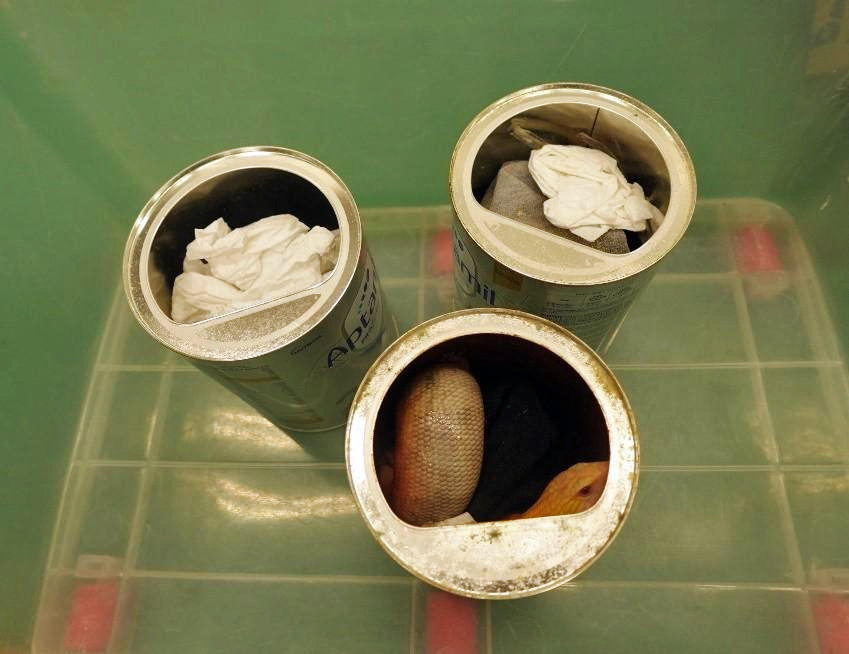
From lizards to snakes, Hong Kong is emerging as a primary trafficking center for native Australian reptiles, reports contributor Selina Cheng for Mongabay. In December 2025, customs authorities intercepted a consignment from Australia containing 13 live lizards stuffed inside winter boots. Hong Kong’s customs agency said the air cargo was falsely declared as snacks. This was the fourth such seizure of live native Australian reptiles by Hong Kong customs authorities between 2025 and 2026. Across the four seizures, officials confiscated at least 98 animals, including 74 lizards and 24 snakes, valued at more than HK$1.1 million ($141,100). Intelligence briefing papers from researchers at the Wildlife Crime Research Hub at Adelaide University in Australia confirmed that Hong Kong “functions both as a destination and a potential transit hub within broader trafficking networks.” In Australia, keeping native reptiles as pets is strictly regulated and requires a license. But Hong Kong and mainland China don’t require proof of legal origin or documentation for possession. This has allowed illegally smuggled wildlife to be “laundered” in Hong Kong’s legal trade. Australia has since 1982 also banned commercial exports of live native species. However, an estimated 15% of Australia’s endemic reptile species have entered illicit international trade, according to the Wildlife Crime Research Hub. Dylan Chadwick, from the research hub, told Mongabay that demand is high for skinks in the genus Tiliqua, including the shingleback (Tiliqua rugosa), nicknamed the “pine cone lizard” in China. “Reptiles gained immense popularity during Covid lockdowns as low-maintenance pets, with buyers drawn to unique color morphs and exotic features — almost like collecting Pokémon,” Chadwick said. Charlie Zhu, a reptile seller based in Changzhou, a city in eastern China, told Mongabay that there’s a growing market for breeding Australian reptiles in the country. But desirable species like shinglebacks are difficult to breed in captivity, driving market prices that start at around 20,000 Chinese yuan ($3,000). According to the ADM Capital Foundation (ADMCF), a Hong Kong-based environmental nonprofit that tracks wildlife crime, Hong Kong authorities made nearly 5,000 seizures of endangered species between 2015 and 2025, worth nearly HK$1.2 billion ($153,000). The organization also warned that smuggling operations in Hong Kong have attracted organized crime syndicates. The Australian government said these syndicates are increasingly recruiting international students to transport animals out of the country. One student from China was sentenced to 18 months in jail last year on wildlife trafficking charges. Hong Kong added wildlife trafficking to its Organized and Serious Crimes Ordinance in 2021. However, Sam Inglis of ADMCF said penalties imposed by courts remain far below the maximum legal limits. “What is missing is the systematic dismantling of these networks,” Inglis said. “Smugglers consider a one-year prison sentence just a cost of doing business.” Read the full story by Selina Cheng here. Banner image: Australian lizards concealed in powdered milk cans seized at Hong Kong International Airport in 2025. Image courtesy of Hong Kong Customs. Credits Topics
Hong Kong becomes key link in illegal trade of Australia’s native reptiles
Full Article
Original Source
Read the full article at News →KhanList aggregates and links to publicly available news content. We do not host full articles from third-party sources. Always verify important information with original sources.