
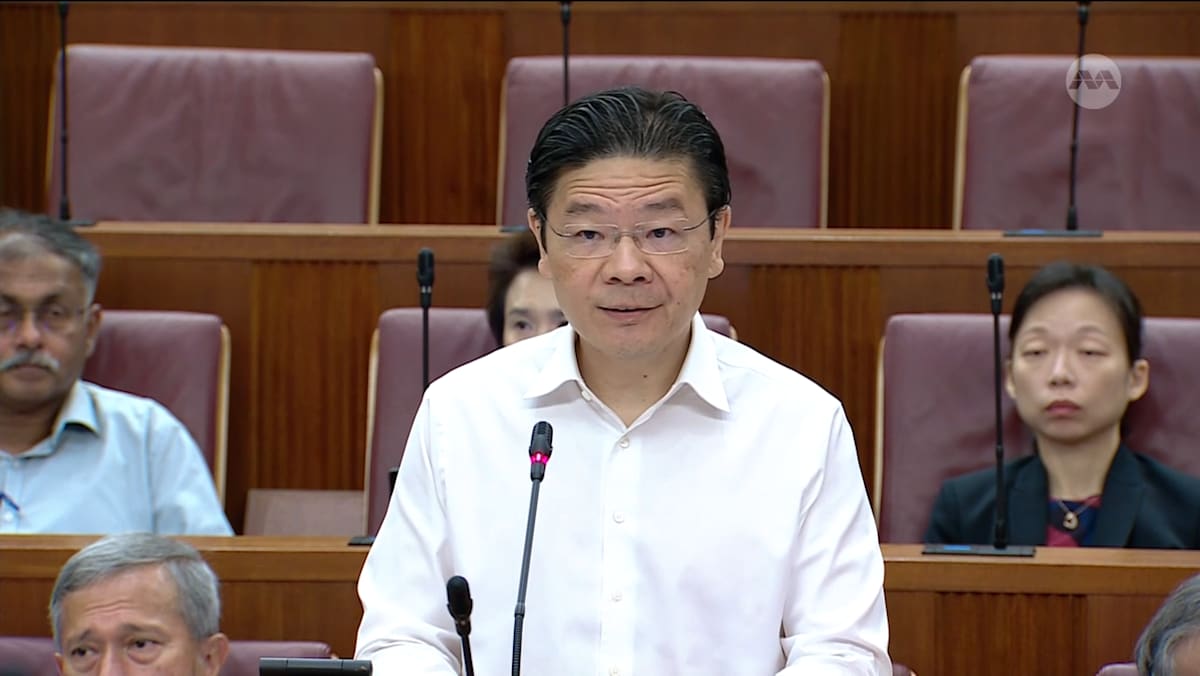
SINGAPORE: Singapore must raise political salaries to have a "better chance" of persuading capable Singaporeans to step forward, Prime Minister Lawrence Wong said on Tuesday (Sep 8), warning that the gap between political and private-sector pay risks making leadership renewal harder.Announcing adjustments to ministerial salaries following an independent committee review, Mr Wong told parliament he understood why Singaporeans scrutinise political pay closely, since the sums involved are more than what most citizens earn.“But we run an open system and believe in being transparent about ministerial salaries. We cannot avoid this issue simply because it is politically difficult,” he said.The changes would give him and future prime ministers a better chance of building the strongest possible team, added Mr Wong, who is also finance minister. Before the last General Election, he approached several senior permanent secretaries whom he thought had the temperament and potential for political leadership, noting that their experience would let them take on major portfolios quickly.“In the end, none were prepared to make the move. But I was able to bring in younger officers with strong potential and a longer runway ahead of them like Jeffrey Siow, David Neo and Jasmin Lau,” he said.On leadership transition, Mr Wong said Senior Minister Lee Hsien Loong had hoped to hand over the premiership earlier, but unexpected setbacks intervened, including former Deputy Prime Minister Heng Swee Keat's stroke and the COVID-19 pandemic.Taking over as prime minister, he was conscious that renewal was pressing, he said. “And the reduction in political salaries in 2012, followed by 15 years without adjustments to the benchmark, did not make the task any easier.”Cabinet's three most senior members, he noted, are Deputy Prime Minister Gan Kim Yong, Home Affairs Minister K Shanmugam and Foreign Affairs Minister Vivian Balakrishnan, all of whom head key ministries and will be 70 and above by the next term of government.“We should not plan on the basis that they will continue helming these ministries then. For the good of the team, and for the strength of our institutions, we need the next generation to take over,” Mr Wong said, adding that all three ministers had pressed him to put succession plans in place.Ready-made replacements for ministers at their level are very difficult to find, he said, adding that he faces the same challenge in finding a successor at the Ministry of Finance. Recruiting from the public service is becoming harder still, he said, and the challenge is even greater in the private sector.RECRUITING FROM PRIVATE SECTORWhen ministerial salaries were first raised in 1970, then-Prime Minister Lee Kuan Yew told parliament one reason was to enable him to appoint Hon Sui Sen, then head of the Development Bank of Singapore, as finance minister. Bringing in people with substantial private-sector experience has since grown harder, Mr Wong said.“That matters because we cannot build our political leadership from the public service alone. I want people in Cabinet who have spent substantial parts of their careers in business or other professional fields, especially in running large organisations and overseeing complex systems,” he added.Such candidates typically include CEOs of major listed Singapore companies in banking, telecommunications, aviation, engineering and other sectors, as well as people on track for similar roles, Mr Wong said. Their pay can run to several million dollars a year – still well above the revised political salaries, he said.“We are not trying to match what they earn. We never will. But when we approach people of that calibre, we cannot pretend that the opportunity cost does not exist,” said Mr Wong.Before the last General Election, he also spoke to several CEOs and senior business leaders earning several times a minister's salary whom he thought could make a real contribution. None cited pay directly as their reason for declining, he said, but that does not mean remuneration is irrelevant. Like the permanent secretaries, none were prepared to make the move.From their point of view, these individuals had spent years building successful careers, he said. “We are asking them to walk away from that. To take a substantial reduction in income, to contest an election with no certainty of success and to start again in a completely new environment.”The sacrifice extends beyond finances, Mr Wong added, noting that political life places real demands on families. No salary adjustment can compensate for that, nor is it meant to.“The purpose of remuneration is much more modest: to ensure that on top of all these other sacrifices, we do not make the financial hurdle unnecessarily high.”This, he said, is the issue confronting parliament in the debate on revising political salaries. “It’s not simply about what we pay ministers today. It’s about whether future prime ministers will continue to have a realistic chance of persuading capable Singaporeans, from the public service, the private sector and other walks of life, persuade them to step forward and build a first-rate team to serve Singapore and Singaporeans.”POLITICAL LEADERSHIP MATTERSIn the last debate on political salaries in 2012, the People's Action Party (PAP) and the Workers' Party (WP) proposed different formulas but the resulting salary levels were broadly in the same range, Mr Wong said. Both sides also agreed that political salaries should be transparent and competitive enough to recruit people of the necessary calibre, while reflecting a substantial discount for public service.Since then, the government has repeatedly held back on adjustments: an independent review committee recommended an increase in 2017, which the government did not act on, and a further review scheduled for 2023 was deferred. This is why the salary norms for political officeholders have not changed for 15 years, even as private-sector, civil service and judicial salaries moved upwards, said Mr Wong.Ministerial pay has fallen further behind as a result, he said. While the gap is most obvious when compared with the private sector, even some senior permanent secretaries now earn more than ministers.There were good reasons for holding back each time, Mr Wong said. "It would have been easier politically for me to leave things as they are. But that would not be the right thing to do."Some might argue that Singapore's first-rate civil service could keep the system running regardless, he said, but a strong civil service is no substitute for effective political leadership – and the quality of political leadership affects the civil service in turn.Ministers need character – integrity, values and commitment to serve – as well as competence, which is where remuneration becomes relevant, Mr Wong said. “It does not determine who is capable. But it does affect whether enough capable people are prepared to step forward and take on the responsibility.”Governments elsewhere often know what needs to be done but defer difficult decisions because of the immediate political cost, he said. Singapore has less room to do so, given its size and lack of natural advantages.The country has a strong team of ministers able to exercise judgment, hold their own and earn public trust, Mr Wong said, but such people are not easy to find. Building and renewing a strong political team therefore takes sustained effort, he said, and the system must keep giving future prime ministers the best possible chance of assembling one.SINGAPORE’S SYSTEMBuilding and renewing political leadership is not a challenge unique to Singapore, Mr Wong said. Because political salaries are highly sensitive, many systems keep official pay low while allowing other benefits and privileges to accumulate. Politicians elsewhere may supplement their income through outside interests or receive larger rewards after leaving office. "So the headline salary may look modest, but the overall picture is much more complicated," he said.Even so, many countries with larger talent pools still struggle to attract the people they need or form stable governments, Mr Wong said. Singapore has been an exception, held up as a model of effective government. "We have sustained these standards for so long that they can start to feel normal to Singaporeans. But they are not normal elsewhere, and they are certainly not guaranteed here either."Singapore achieved this through deliberate choices, including dealing with political remuneration openly, he said. The country recognises that highly able people have alternatives outside politics. "So we pay political officeholders salaries that are competitive, but with a substantial discount to reflect political service."In return, Singaporeans rightly expect a great deal from their political leaders – an expectation that extends to Members of Parliament, Mr Wong said. “If we want our political system to remain effective, we cannot allow its basic terms of service to drift further and further away from reality,” he said. “That applies to MPs' allowances. It applies even more importantly to political officeholder salaries.”
Higher political salaries give 'better chance' of persuading capable Singaporeans to step forward: PM Wong
Full Article
Original Source
Read the full article at Channelnewsasia →KhanList aggregates and links to publicly available news content. We do not host full articles from third-party sources. Always verify important information with original sources.