
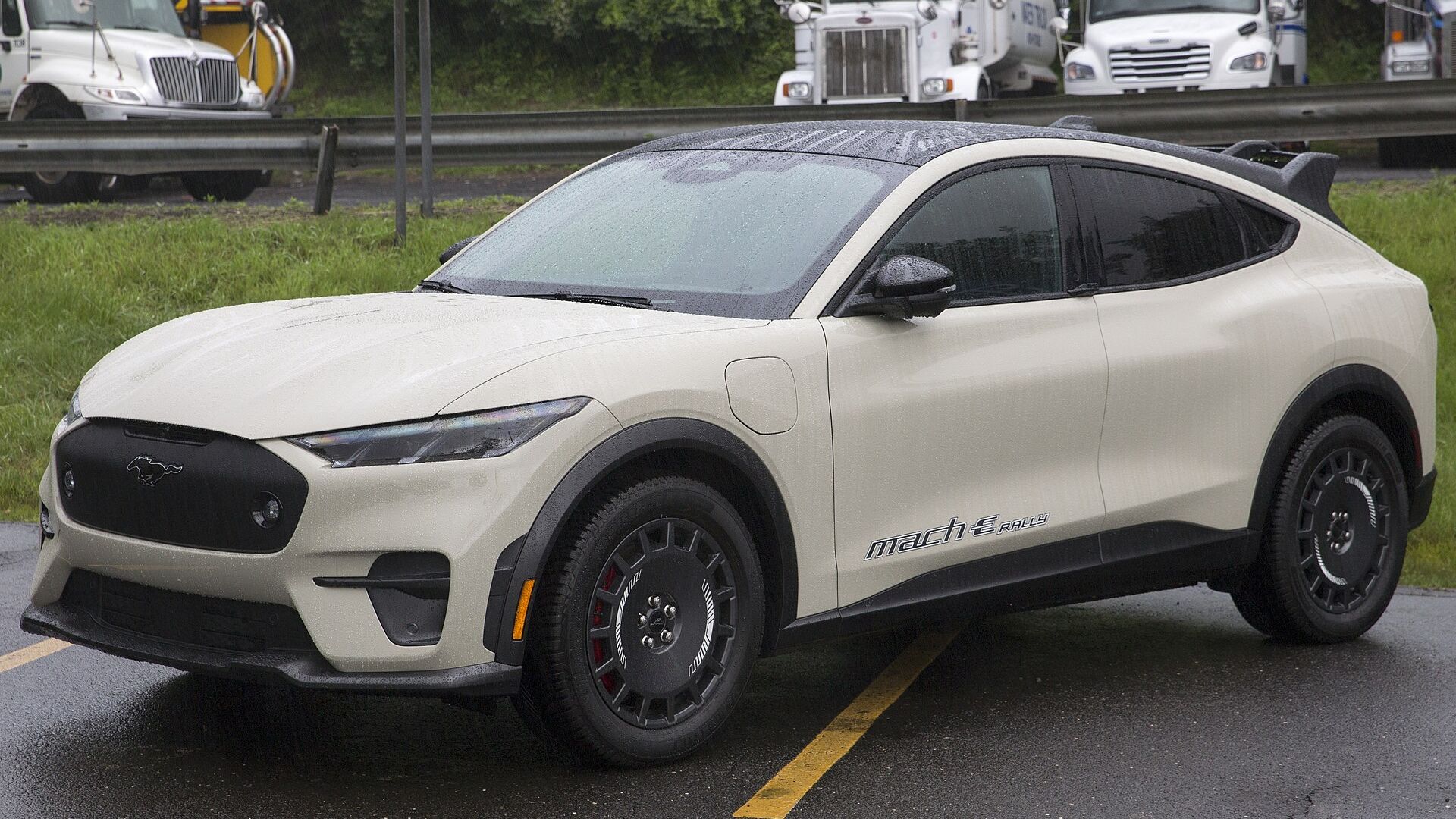
The data provides rare, large-scale insight into real-world battery aging. (Representational image)WikimediaKey TakeawaysFord electric vehicles retain over 90% battery health on average after 100,000 miles.A five-year study of 36,000 Mustang Mach-Es logged an average 92% battery capacity.Proper routine charging habits depend directly on whether batteries use NCM or LFP chemistry. Electric car batteries are holding up far better in daily driving than many motorists feared, according to extensive new road data from Ford. The carmaker says its battery packs keep more than 90% of their original capacity on average after 100,000 miles of travel. The figures offer rare, large-scale insight into how power packs age outside test laboratories. Battery degradation remains a key hesitation for drivers considering an electric model. Ford’s latest findings indicate that sudden, steep drops in storage capacity are largely absent across standard ownership cycles. Engineers based their conclusions on the 2021 Mustang Mach-E, the company’s first purpose-built electric crossover. Over five years, more than 36,000 of these vehicles have traveled across the United States and Canada. Together, they have covered roughly two billion miles on public roads. Across that entire group, average battery health stands at 92%. Crucially for researchers, the performance gap between individual cars is narrow. Ford found that 95% of the fleet falls within a tight health band between 87% and 97%. This consistency shows that extreme degradation remains rare, even in varying climates and driving conditions. Predictable aging curve The trend continues among high-mileage motorists. More than 2,000 early owners have already crossed the 100,000-mile mark on their factory-installed batteries. That specific group still averages more than 91% usable capacity. A smaller set of roughly 30 drivers has driven past 200,000 miles, retaining an average of 88%. The fleet numbers explain unusual private milestones, including one driver who reached 400,000 miles in a 2022 model without replacing his pack. While that distance remains exceptional, Ford says it fits into a clear, predictable aging curve rather than acting as a statistical freak. Across its wider electric range in North America, Ford designs its power units to operate for at least a decade. The five-year data confirms that modern battery management software prevents early chemical exhaustion. How drivers maintain their cars depends on the underlying battery chemistry. The 2021 Mach-E models rely on nickel-cobalt-manganese (NCM) cells. For daily commuting, these units degrade more slowly when owners avoid charging them to 100%. Regular charging to 80% or 90% reduces chemical and voltage stress on the cell. Tailored charging advice In contrast, several newer Ford models carry lithium-iron-phosphate (LFP) packs. These batteries handle frequent full top-ups without rapid wear. In fact, periodic charges to 100% help the onboard computers recalibrate and calculate accurate driving range figures. Ford now sends tailored charging advice directly through its smartphone app based on the specific pack installed in the car. For the automotive industry, real-world data at this scale confirms a shifting reality. Electric power packs are proving durable enough to outlast earlier expectations, easing long-term ownership concerns as the transition away from fossil fuels continues. “These rigorous quality tests are designed to help us understand how battery systems perform across a wide range of climates, charging behaviors, and driving conditions before customers get behind the wheel,” said Ford. Get the latest in engineering, tech, space & science - delivered daily to your inbox.An active and versatile journalist and news editor. He has covered regular and breaking news for several leading publications and news media, including The Hindu, Economic Times, Tomorrow Makers, and many more. Aman holds expertise in politics, travel, and tech news, especially in AI, advanced algorithms, and blockchain, with a strong curiosity about all things that fall under science and tech.
High-mileage Ford EVs cross 100,000 miles with 91% battery capacity intact, data shows
Full Article
Original Source
Read the full article at Interestingengineering →KhanList aggregates and links to publicly available news content. We do not host full articles from third-party sources. Always verify important information with original sources.