
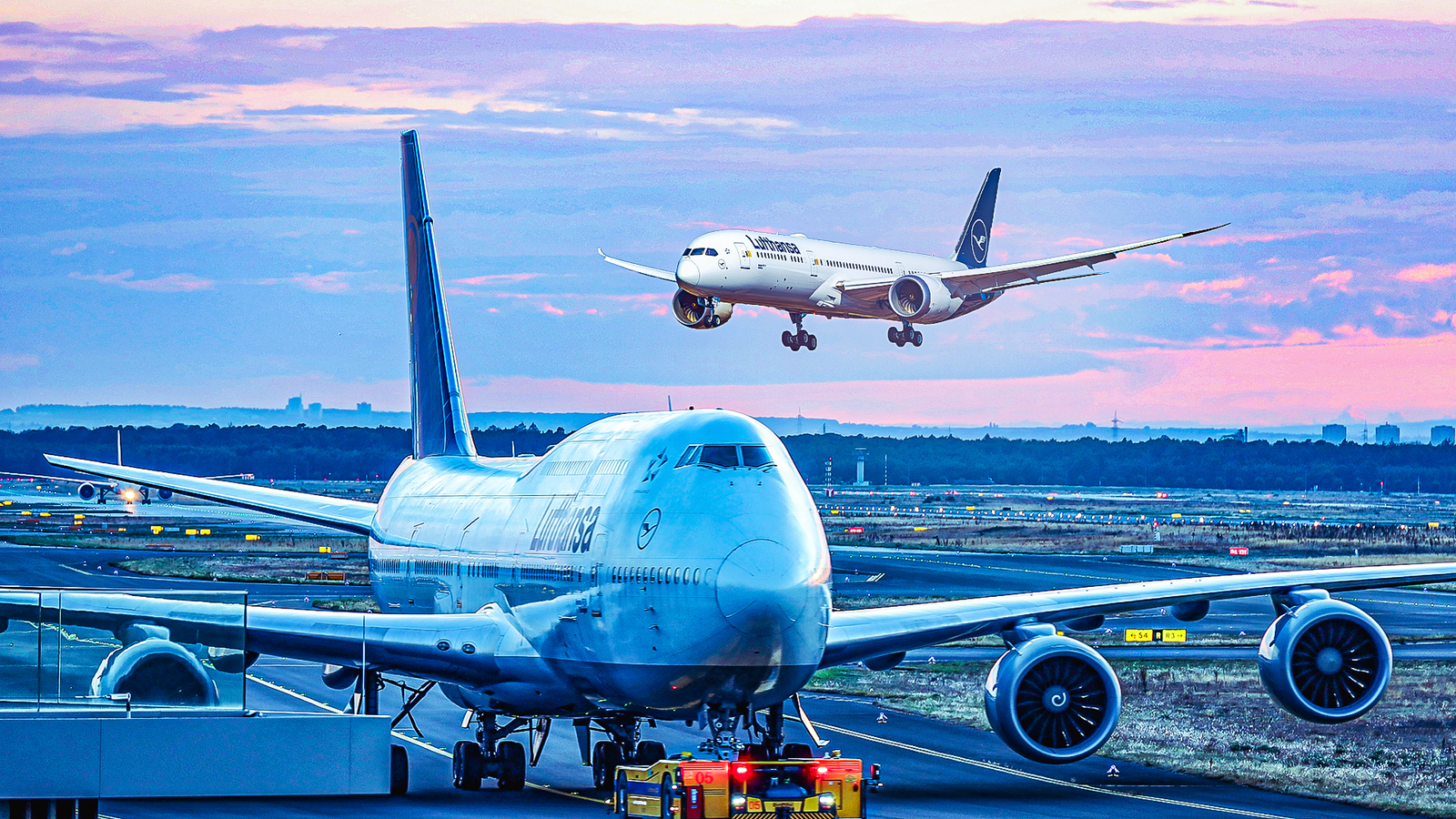
Published Nov 20, 2026, 7:00 PM EST Jack comes to Simple Flying with a lifelong interest in all things aviation. He holds a degree in Aerospace Engineering from Georgia Tech, and is a certified private and remote pilot. Beyond these experiences, Jack previously worked for a corporate flight department where he gained first-hand experience in the world of business aviation. Currently, Jack works in the professional services industry and continues to build his flight hours outside of work. When Boeing launched the 747-8 in November 2005, it presented the airplane as a stretched, re-winged, and re-engined update of the 747-400 that would use technology borrowed from the 787 Dreamliner. The Dreamliner program had been launched only a year earlier, and its work on lightweight composites, efficient engines, and electronically managed systems gave Boeing a supply of proven solutions at the moment the aging jumbo needed them. Rather than commissioning an all-new quadjet for a limited market, Boeing chose to graft selected Dreamliner innovations onto a familiar airframe, which kept development costs manageable and preserved the operating familiarity that long-time 747 customers valued. The resulting aircraft differs from its predecessor in several visible ways, yet it remains a 747 in its structure and in the way it is flown, so a fair assessment of the Dreamliner’s influence requires examining each major system in turn. That review shows a program that borrowed boldly where performance was at stake and conservatively wherever certification, cost, or pilot familiarity argued for restraint. Engines: The Dreamliner’s Most Direct Contribution Credit: Wikimedia Commons, Simple Flying The most substantial transfer from the 787 program came through the powerplants. The 747-8 uses four General Electric GEnx-2B67 engines, a smaller-diameter relative of the GEnx developed for the Dreamliner. The design emphasizes a high bypass ratio, sending most of the air around the core to generate thrust more efficiently than the lower-bypass engines of earlier generations. Engineers modified the design so that each engine could supply bleed air, the compressed air tapped from the engine to run onboard systems, because the 747 still depends on a conventional pneumatic architecture that the 787 largely abandoned in favor of electrical power. Each engine generates 66,500 pounds (30,164 kg) of thrust and carries a 105-inch (267 cm) composite fan, a material choice that cuts weight relative to metallic blades. GEnx-1B vs. GEnx-2B Technical Comparison Metric GEnx-1B (Boeing 787) GEnx-2B (Boeing 747-8) Engine Length 184.7 inches (4.69 meters) 169.7 inches (4.31 meters) Fan Diameter 111.1 inches (2.82 meters) 104.7 inches (2.65 meters) Bypass Ratio 8.8:1 – 9.0:1 8.0:1 Compressor Stages 4 3 LP Turbine Stages 7 6 Max Takeoff Thrust 76,100 lbs (34,518 kg) 66,500 lbs (30,164 kg) Sawtooth-shaped edges called chevrons line the rear of the engine housing, borrowing a noise-reduction device from the 787 that encourages exhaust and bypass air to blend more gradually. Noise also carries financial weight, since many airports levy charges tied to certified noise levels, and Boeing has said the 747-8 produces a considerably smaller noise footprint than the 747-400. Sharing a design lineage with the 787 engine allowed Boeing and GE to spread development effort across two programs rather than funding a bespoke powerplant for a model expected to sell in modest numbers. Unlike the Dreamliner, which Boeing offers with a choice between GE and Rolls-Royce engines, the 747-8 is offered only with the GEnx-2B, which spared Boeing the cost of certifying a second powerplant for a modest order book. For operators, the engine change translated into lower fuel burn and emissions per seat than the 747-400, which formed the core of the airplane’s commercial pitch to airlines and cargo carriers. Wing: New Airfoils And Raked Tips Credit: Markus Mainka | Shutterstock Boeing designed a new wing for the 747-8 with fresh airfoil shapes intended to improve aerodynamic efficiency at cruise. Designing a wing for a derivative airplane also imposes constraints that a clean-sheet program avoids, because the new surface had to mate with the existing fuselage architecture, which limited how far the planform could depart from the 747-400’s. At the tips, the upright winglets of the 747-400 gave way to raked wingtips, the same approach used on the 777 and the 787. Sweeping the tip aft reduces drag generated by wingtip vortices while adding less weight than a taller vertical surface would. The configuration debuted on the 767-400ER, which means the 747-8 inherited it from a lineage broader than the Dreamliner alone. Boeing attributes the 747-8’s higher cruising speed relative to the 747-400 to the combined effect of the wing, wingtips, and engines. The gain matters to passenger carriers flying long routes, where minutes accumulate into meaningful time savings. The aerodynamic gains in cruise efficiency also translate directly into range or payload, which matters especially for the freighter, where operators trade fuel against cargo on long sectors. The larger wing extends the span to roughly 224 feet (68.27 meters), compared with about 211 feet (64.31 meters) on the 747-400, a growth that supports the airplane’s higher maximum takeoff weight. Aerodynamic refinement of this kind typically yields incremental gains, yet on an airplane that burns many tons of fuel on every long flight, even small improvements compound into sizable savings over a fleet’s life. Flight Controls And Cockpit: Modernization With Restraint Credit: Wikimedia Commons, Simple Flying The 747-8 also adopted elements of the 787’s fly-by-wire philosophy, in which pilot inputs travel as electrical signals to flight control computers rather than moving surfaces through mechanical cables and pulleys. Electronic signaling reduces weight, since cable runs and associated hardware can be shortened, and it allows computers to modulate surface movements for smoother handling and greater structural efficiency. The shift follows a broader pattern within the company, since the 777 was Boeing’s first fly-by-wire airliner and the 787 extended that approach more thoroughly. Boeing applied the technology selectively because it wanted qualified pilots on the 747-400 to move to the new model easily. The flight deck therefore keeps a layout and control feel close to its predecessor’s. Training pilots on an unfamiliar type requires simulator time, instructor capacity, and revenue flying hours that airlines would rather devote to scheduled service, so commonality functions as a quiet but substantial financial benefit for operators already flying the 747-400, whose crews can serve both types. The Dreamliner, by contrast, was free to adopt an entirely new flight deck, a freedom the 747-8 deliberately did not exercise. The Cabin: Dreamliner Atmosphere On A Familiar Frame The passenger version of the 747-8 received an interior inspired by the Dreamliner’s. Curved, upswept ceiling panels give the cabin a more spacious feel, and LED lighting that runs the length of the cabin can shift color to suggest different times of day. Airlines adopt such lighting and ceiling cues largely because they believe the surroundings can ease fatigue on long sectors, though the benefit is difficult to measure objectively. Windows are larger than those on the 747-400, which improves natural light and passenger views, although they remain smaller than the Dreamliner’s distinctive dimmable windows. The most visible change for many travelers is the staircase to the upper deck. The classic 747’s narrow spiral staircase has been replaced by a wide, curved staircase that is easier to use and gives the entry area a more open, premium character. The interior upgrades arrived alongside an 18-foot-4-inch (5.5 meters) fuselage stretch, which lets Boeing quote a typical three-class capacity of 467 passengers. The stretch also lengthened the upper deck, giving airlines additional space for premium seating. What The 747-8 Kept From The Past Credit: Sergey Kustov | Shutterstock Despite the heavy borrowing, the 747-8 does not share the Dreamliner’s defining structural feature. The 787 builds its fuselage from carbon fiber composites, whereas the 747-8 remains an aluminum airframe, consistent with the metallic construction of every earlier 747. The decision carries consequences that passengers can feel. Because composite structures resist corrosion and fatigue better than aluminum, the Dreamliner can maintain a lower cabin altitude and higher humidity than conventional metal airplanes, benefits the 747-8 does not offer. Retaining aluminum made commercial sense. A composite fuselage would have required a new manufacturing process, new tooling, and a fresh certification effort for a program that was never expected to reach the volumes of a mainstream twin-aisle jet. Boeing instead reused the structure and production methods established over decades at its Everett factory, where the 747 had been built since the late 1960s. Boeing also preserved many systems in common with the 747-400, a choice that simplifies maintenance, spares provisioning, and mechanic training for airlines operating both models. The freighter, which accounts for the majority of 747-8 deliveries, retains the hinged nose door that lets long loads enter straight along the main deck. Beyond The Quadjet: What The 747-8 Leaves Behind Credit: The Global Guy | Shutterstock The 747-8 shows that technology transfer, when applied with discipline and clear commercial goals, can extend an airframe’s commercial life without the expense of starting over. The final aircraft left the production line in early 2023 after 155 had been built. Its more durable influence may appear in cargo operations, where the freighters seem likely to remain in service for decades. Few alternatives offer comparable volume, and the Dreamliner-derived engines should keep operating costs competitive as fleets age in the years ahead. Sustainable aviation fuel offers a further lever for extending service lives, because engines of the GEnx generation are approved for blends with conventional jet fuel, which lets operators reduce lifecycle emissions without modifying the airplane. Market pressure shapes what comes next, since fuel efficiency and emissions goals increasingly favor twin-engine aircraft, so the quadjet is unlikely to return as a clean-sheet design, and the 747-8’s lasting contribution may be as the final demonstration of how far a four-engine airliner could be pushed with the technology of its time. The 747-8 program also previews how Boeing is likely to modernize mature designs in the future. The 777X, for example, pairs a new composite wing with new engines on a fuselage descended from the 777, a pattern that mirrors the 747-8’s selective borrowing but moves much further toward composite structure. For engineers, the more transferable lesson concerns what to share and what to withhold. Components that improve efficiency without altering certification basis or pilot procedures, such as engines, aerodynamic surfaces, and lighting, moved across freely, while anything that would have disrupted commonality with the 747-400 stayed behind. Future derivatives are likely to follow the same filter, with the cost of recertification acting as the main gatekeeper, and the 747-8 supplies the clearest template of that logic.
Here's How Much The 787 Dreamliner Heavily Influenced Boeing's 747-8 Development
Full Article
Original Source
Read the full article at Simpleflying →KhanList aggregates and links to publicly available news content. We do not host full articles from third-party sources. Always verify important information with original sources.