
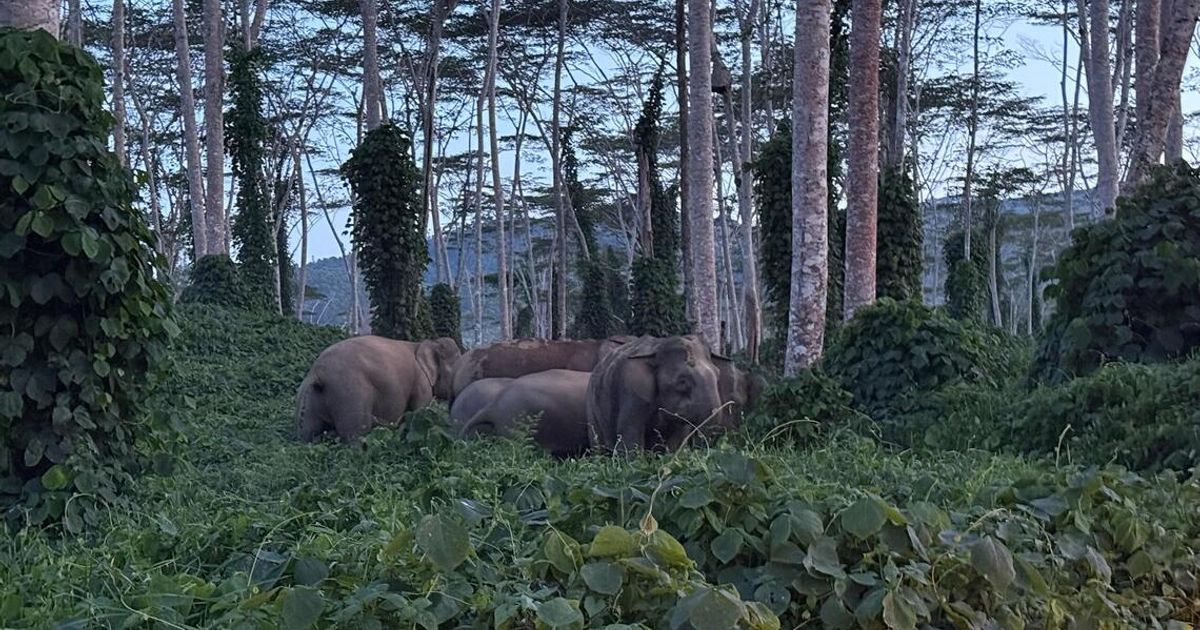
KUALA LUMPUR – Malaysia’s palm oil industry, whose activities have played a role in destroying Borneo’s ancient rainforests, has been funding conservation projects in a bid to improve its public image and comply with regulations.Across eastern Sabah, projects are under way to rebuild the habitat of orangutans, create movement corridors for Borneo elephants and rehabilitate forests damaged by logging.Yet conservationists warn that planting trees and funding isolated projects will not undo decades of environmental damage and that more thought needs to go into conservation efforts.As plantations and other land uses divide once-connected forests, orangutans, Bornean elephants and other threatened species face shrinking habitats and greater difficulty moving between them. Restoring patches of forests without reconnecting them to larger habitats, experts say, may do little to secure the animals’ long-term survival.The dilemma is particularly acute in Sabah, Malaysia’s largest crude palm oil-producing state on the island of Borneo, where plantations cover nearly 1.5 million ha, an area about 20 times the size of Singapore.As international buyers demand stronger environmental safeguards, researchers said conservation must extend beyond individual estates to address how wildlife survives across the wider landscape.“Current restoration efforts are making an important contribution, but at the scale of forest loss, are inadequate to address the full scale of historical habitat loss and fragmentation,” Robecca Jumin, head of conservation in Sabah for World Wide Fund for Nature (WWF) Malaysia, told The Straits Times.For species such as Bornean elephants, the problem is particularly complex. There are only around 1,000 Bornean elephants in existence, primarily in Sabah.The endangered animals travel between forests and plantations in search of food, damaging crops and sometimes triggering dangerous encounters with workers and nearby communities. Yet, while elephants cross property boundaries freely, responsibility for managing them often falls on individual plantation owners.“Plantations are the actors closest to wildlife impacts, but they cannot be expected to carry the full cost of delivering a public conservation outcome,” said Nurzhafarina Othman, an elephant expert and researcher at Universiti Malaysia Sabah (UMS), in a co-authored paper examining human-wildlife coexistence.Sabah has 29,918 oil palm smallholders cultivating a combined 184,564ha, underscoring the challenge of extending conservation efforts beyond large plantation companies to smaller growers with limited financial and technical resources.Nurzhafarina argued that palm oil mills, refineries, international buyers and governments must share the financial burden, particularly as smaller growers may lack the resources to maintain wildlife corridors. These are designated routes that guide animals between forest habitats away from plantations, while reducing encounters with people and damage to the crops.Can replanting and wildlife corridors undo damage?The palm oil industry’s involvement is also driven by commercial pressures, including international supply-chain requirements and the European Union Deforestation Regulation, which aims to ban market access for commodities linked to recent deforestation.Against this backdrop, the Malaysian Palm Oil Green Conservation Foundation (MPOGCF) said it has spent nearly RM10 million (S$3.1 million) on forest restoration and wildlife conservation in Sabah.One of its largest projects is in Lower Kawag, within the Ulu Segama Forest Reserve in eastern Sabah, where degraded forest is being replanted with native trees, including fruit-bearing species that provide food for orangutans.An aerial view of the restoration site at Lower Kawag within the Ulu Segama-Malua Forest Reserve after replanting, in October 2025. PHOTO: SABAH FORESTRY DEPARTMENTThe 10-year project, which began in 2019, aims to restore 2,500ha. More than 250,000 trees have been planted across 275ha at a cost exceeding RM3 million, with seedlings supplied by oil palm smallholders from Kampung Tampenau.MPOGCF said orangutans have been observed returning to regenerated areas to nest and feed, although the sightings do not establish whether their population is recovering overall.An orangutan nest found on the canopy of a Terap tree, a native species in the planting project site area, with an estimated nesting period of about one month. PHOTO: MALAYSIA PALM OIL GREEN CONSERVATION FOUNDATIONAnimal crossingElsewhere in Sabah, conservation is taking a different approach by creating space for wildlife within working plantations.At Sabah Softwoods’ estate in Brumas, Tawau, a wildlife corridor linking two forest reserves has helped reduce encounters between elephants and plantation operations.According to MPOGCF, the company reported that annual losses from elephant-related crop damage plunged from about RM500,000 to RM5,000 after the corridor was established.Building on that initiative, the foundation is funding a study into whether planting Napier grass, a fast-growing, high-calorie forage plant, can encourage elephants to remain within designated wildlife routes instead of wandering into oil palm estates to feed on young oil palms.“Cameras have recorded elephants entering the feeding areas, but researchers have yet to establish conclusively whether the animals are eating the grass or whether it is altering their movement patterns,” said MPOGCF general manager Hairulizam Mahmud.How to measure true impactSuch uncertainties illustrate the difficulty of measuring conservation success.Fewer damaged crops may benefit plantation operators, but they do not necessarily mean healthier elephant populations or more secure habitats, said wildlife and conservation experts.“Restoration is far more complex than simply planting trees,” WWF’s Jumin said, noting that seedlings can die from drought, flooding and poor soil conditions, while damaged forests may take decades to recover.Location also matters. A relatively narrow wildlife corridor linking two forests can offer greater ecological benefits than a larger restored area that remains isolated.“The challenge is not simply restoring more land, but restoring the right areas while safeguarding the forests that remain,” she said.The stakes extend beyond elephants and orangutans. Habitat fragmentation also threatens apex predator Bornean clouded leopards, sun bears, proboscis monkeys and rare species like the banteng wild cattle, which depend on healthy, connected ecosystems.A sun bear resting on top of a tree at the Bornean Sun Bear Conservation Centre in Sandakan, Sabah, on June 27. ST PHOTO: MUZLIZA MUSTAFANurzhafarina argued that existing sustainability certification systems, which assess whether plantations meet environmental standards, should place greater store on measurable wildlife protection rather than merely checking management plans and procedures.“Coexistence is unlikely to be sustained if conservation actions continue to impose disproportionate financial and operational burdens on individual producers.”A sun bear waiting to be fed at the Bornean Sun Bear Conservation Centre on June 27. PHOTO: MALAYSIA PALM OIL GREEN CONSERVATION FOUNDATIONShe called for financial incentives, technical assistance and greater support from governments and international buyers to ensure conservation becomes a shared supply-chain responsibility rather than an expense borne mainly by plantations.WWF Malaysia, meanwhile, stresses that restoring degraded forests must go hand in hand with protecting existing habitats, which are often more effective to conserve than to create after they have been cleared.“Restoration should complement, not compensate for, responsible land management,” Jumin said.Sign up for our weekly Asian Insider Malaysia Edition newsletter to make sense of the big stories in Malaysia.
Helping elephants keep to their lanes: Can palm oil millions save Borneo’s forest and wildlife?
Full Article
Original Source
Read the full article at Straitstimes →KhanList aggregates and links to publicly available news content. We do not host full articles from third-party sources. Always verify important information with original sources.