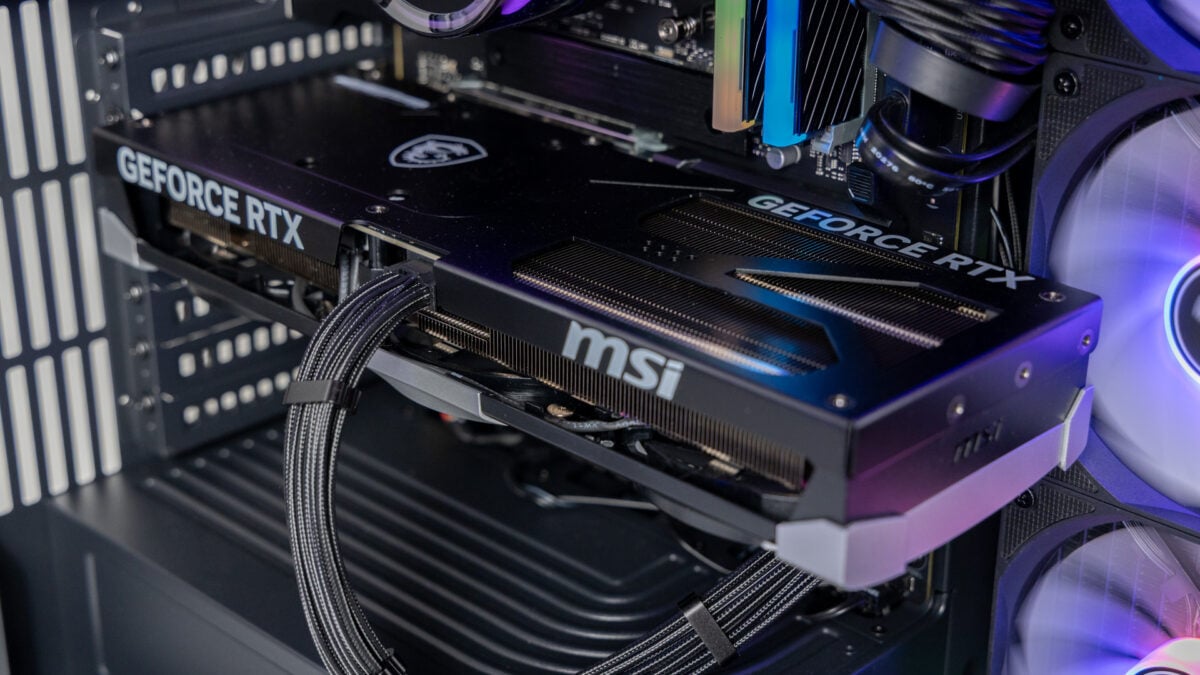
Have you already given up on modern GPU prices? If not, you may soon have no choice but to accept that this generation of graphics cards is completely unaffordable. As if PC gaming couldn’t get any more expensive, Nvidia and even AMD may end up hiking prices for every GPU available now. In the past week, reports stemming from Taiwan-based PC hardware tipster BenchLife suggested Nvidia was proposing another round of price hikes for its GPUs, both its “Founders Editions” made by Team Green itself and its add-in board (AIB) partners—the separate manufacturers who build the vast majority of available graphics cards. Nvidia sells its GPUs and VRAM (video random access memory) as an all-in-one kit, meaning the AIB companies have no choice but to accept higher costs, which naturally get passed to consumers. The news gets even worse. BenchLife suggested the costs would impact current GDDR7 memory modules—used by the RTX 50-series—as well as older GDDR6. While Nvidia reportedly ended production of its older RTX 40-series GPUs, the memory prices may indeed have an impact on other graphics cards. AMD relies on GDDR6 memory for its Radeon RX 90-series GPUs. Rumors online swirled that AMD was planning price hikes for this month, but August may finally see AMD’s GPU prices spike in tune with Nvidia’s costly cards. Semi-reliable rumors stemming from WeChat tipster Board Channels (via VideoCardz) suggest AMD delayed price increases until Nvidia made similar adjustments to its AIB pricing. Gizmodo reached out to AMD for comment, and we’ll update this post if we hear back. The RX 9070 GRE was supposed to offer a slightly lower price point for Radeon GPUs as prices continue to spike. © Kyle Barr / Gizmodo Compared to the RTX 50-series, AMD’s graphics cards like the Radeon RX 9060 XT, RX 9070 and RX 9070XT have remained closer to their 2025 price points, thanks in part to using the older type of VRAM. The Radeon maker had been explicitly trying to undercut Nvidia, though it too felt the memory crunch enough to launch an AMD Radeon RX 9070 GRE in the U.S. with only 12GB of VRAM instead of 16GB on the other cards in its class. AMD’s leadership previously promised they would try to keep GPU prices low, but there’s no way any of these companies can stave off the ballooning price of memory driven by the push for AI hyperscalers. As always, the ever-present irony is these companies are feeding the beast that keeps memory prices so high. Last week, AMD showcased its new datacenter-centric rack-scale chips, dubbed Helios. These are meant to compete against Nvidia’s Grace Blackwell and Vera Rubin AI chips. The major graphics card makers have largely abandoned any mention of their mid-gen GPU refreshes due to these spiking prices. Nvidia has kept the lid on its RTX 50-series “Super” graphics cards, and we may not see them until 2027. The RTX 50-series, especially cards sporting 16GB or more VRAM, were already astronomically more expensive than they were at launch. An Nvidia GeForce RTX 5070 Ti launched with an MSRP of $750. Now, you can only find the card for $1,100 or more, and that’s including sales prices. A comparable RX 9070XT demands just under $800, which is still more than its initial launch price. Don’t even bother glancing at top-end GPU prices. Nobody, and I mean nobody, should honestly consider buying an Nvidia GeForce RTX 5090 for $4,300 or more, no matter how many frames you imagine you can push on Nvidia’s flagship.
Graphics Cards Could Get Even More Expensive, and It’s Not Just Nvidia
Full Article
Original Source
Read the full article at Gizmodo →KhanList aggregates and links to publicly available news content. We do not host full articles from third-party sources. Always verify important information with original sources.