Published Jul 31, 2026, 1:00 PM EDT Jared is a writer, editor, and Communications Studies graduate who loves popular nerd culture (almost anything to do with Marvel, DC, Star Wars, or The Lord of the Rings) and the interactive storytelling medium. Jared's first console was the PS1, wherein he fell for Spider-Man, Spyro the Dragon, and Crash Bandicoot. 15 years ago, back when it was first released, Dark Souls created the stigma of Soulslikes being unbearably tedious and unfathomably difficult games. This reputation would go on to precede Soulslike games throughout the complete Dark Souls saga and be inherited by Bloodborne, which more than earned it. It wasn't until recently that Elden Ring’s open world offered a far more accessible and ‘easier’ option for players, dispelling that reputation somewhat. Of course, with Soulslikes being so tough, it’s no surprise that plenty of other games have risen to the challenge in order to compete in that market and appeal to players now interested in brutal challenge. Today, it’s almost laughable how easy Dark Souls is compared to the games that have come out since, Soulslike or not. We might actually be starting to see the fall of hard games nowadays, as accessibility is seemingly being cherished more than arbitrary difficulty, but some games still wear their brutal difficulty like a badge of honor. Sekiro: Shadows Die Twice Sekiro: Shadows Die Twice is an interesting case where it can either be considered easy or hard, depending on how quickly or innately players pick up on its combat. While the same can be said for any game to some degree, Sekiro: Shadows Die Twice is essentially a Soulslike in an action-adventure game’s clothing, and it abides by the rules of a Soulslike while only giving players a lone katana and a handful of optional Prosthetic Arm tools. Thus, while players can dedicate a whole playthrough to buildcrafting or respeccing their character to experiment with new weapons and gear in most traditional action-RPG Soulslikes, Sekiro: Shadows Die Twice demands that players get good at deflecting and learning the attack patterns of every enemy and boss. The upside is that this combat is deliciously satisfying once players do master an enemy or boss, and seeing the red blot icon that indicates a deathblow after whittling a boss’ health or posture down is well worth the number of times Wolf will likely perish trying to defeat them. If players want Sekiro: Shadows Die Twice to be even harder, they need only ring the Demon Bell or neglect their Prosthetic. God Of War Santa Monica’s God of War franchise finally returned with a spiritual reboot/sequel in 2018, and it brought with it a brand-new over-the-shoulder perspective and a combat system that was much slower and methodical than the hack-’n-slash entries from the series’ past. God of War Ragnarök took that combat and ran with it, and while there’s an argument to be made that the Norse mythology sequel is harder than its predecessor, God of War (2018) has far fewer combat features and forces players to become expert combatants with God of War’s Leviathan Axe and Blades of Chaos exclusively. It’s a first-party AAA PlayStation blockbuster, meaning it has plentiful accessibility features and difficulty options for players to be able to tailor the experience to their preferences. Consequently, God of War is as easy or hard as fans would like it to be. That said, for anyone who wants an experience that’ll make Dark Souls duck soup, God of War’s Give Me God of War difficulty can be truly soul-splintering. The true litmus test of Give Me God of War’s difficulty is slaying and freeing all eight Valkyries, but specifically the one that awaits Kratos at the end of the tedious Muspelheim trials, as well as Queen Sigrun at the Council of Valkyries. Cuphead Don’t be fooled by Cuphead’s gorgeous animation and art direction—it’s one of the hardest games, maybe ever, and Dark Souls is in no way comparable. To be fair, many games beyond the Soulslike subgenre are harder than Dark Souls, at least if you don’t find Soulslikes to be hard, but Cuphead is another beast entirely and is not for the faint of heart. Cuphead may be startlingly difficult for anyone who isn’t familiar with its niche genre mix as a bullet-hell platformer, as there is a lot going on at any given moment for players to adapt to or micromanage on a busy screen. It's all more overwhelming than Dark Souls, where players usually have the luxury of fighting enemies 1v1, even if frantic ambushes where players are bottlenecked with a mob of enemies can sometimes sneak up on you. There’s debate about whether Cuphead’s base game or its Delicious Last Course DLC is harder, but there’s no doubt that both are tougher than any Dark Souls game. Who knows, once the recently announced Cuphead 2 and Mighty Cuphead Adventure are released, maybe Cuphead-likes will dethrone Soulslikes as the hardest gaming subgenre in the sphere of pop culture. Lies Of P Lies of P is debatably one of the hardest Soulslike games, and there’s no debate that its expansion, Overture, is easily one of the hardest Soulslike experiences ever. Like Sekiro, Lies of P is deflect- and Perfect Guard-heavy, with dodging or rolling out of the way being much more circumstantial and often more perilous than anything. Lies of P has many more immediate options for players in combat, with a big catalog of handles and blades that can be mixed and matched to create astounding weapons, and throwables, at least for a time, were also fairly OP. Even with all of that, enemies can still be nightmarishly tough to fight. Lies of P’s bosses make use of every and any opportunity to catch players out of a poorly timed block or dodge. Plus, some mini-bosses are as hard, if not harder, than some official bosses. It’s not until players reach Lies of P: Overture’s DLC that the game becomes an actual nightmare, however, and it wastes no time in demonstrating how hard it’ll be. Anyone who was able to defeat Lies of P: Overture’s Arlecchino without summoning Leda to help them—and what a godsend it is that she’s summonable—deserves everyone’s praise, as he may well be one of the hardest bosses to ever grace a Soulslike game. That’s not to discount the base game or other DLC bosses, though. There's hardly an easy boss in the bunch, and the jester puppet that jump-scares players in the Lorenzi Arcade is enough to send shivers down players’ spines. No boss that Dark Souls throws at players comes anywhere close to anything as nerve-wracking as the horrors players confront in Lies of P, not to mention not one, but two gank boss fights against Lies of P’s Black Rabbit Brotherhood. Hollow Knight: Silksong You’d think that fans would be prepared for how gruelingly challenging Hollow Knight: Silksong is after having spent seven years playing Hollow Knight, a Metroidvania Soulslike game that was, itself, brutal and unforgiving. However, as sequels of tough games tend to do, Hollow Knight: Silksong eclipses Hollow Knight’s difficulty in nearly every way, though you could still argue that Hollow Knight’s Path of Pain, Colosseum, and Pantheons are harder than some of the areas or bosses in Hollow Knight: Silksong. In general, Hollow Knight: Silksong’s main story is much harder than Hollow Knight’s, which also brings it well beyond the standard difficulty of Dark Souls games. What Hollow Knight: Silksong tasks players with in order for them to reach and finish Act 3 is quite intense, all while its ordinary moment-to-moment gameplay, such as desperately trying to hoard rosary beads for essential purchases, is much more punishing and bears a ton of friction that the first Hollow Knight game didn’t. This is all before Hollow Knight: Silksong’s Sea of Sorrows DLC, too. Thankfully, Dark Souls games never became strictly harder in subsequent installments; they only ever evolved and gave players new options, all while also evolving bosses and enemies. FromSoftware’s Dark Souls trilogy is sort of a mixed bag in that regard, where each game is incredibly unique apart from the others (the same can be said of Dark Souls’ progenitor, Demon’s Souls), and that makes it so they all have their own dedicated fanbase who may like one or another more than the rest. Systems Released May 23, 2018 ESRB M For Mature 17+ Due To Blood and Gore, Partial Nudity, Violence Developer(s) From Software, QLOC, Virtuos Publisher(s) Bandai Namco Entertainment, From Software Engine proprietary engine, phyre engine Franchise Dark Souls Platform(s) PS4, Xbox One, PC, Switch Genre(s) Action RPG How Long To Beat 30 Hours Metascore 86 (Xbox One); 83 (Switch) OpenCritic Rating Mighty
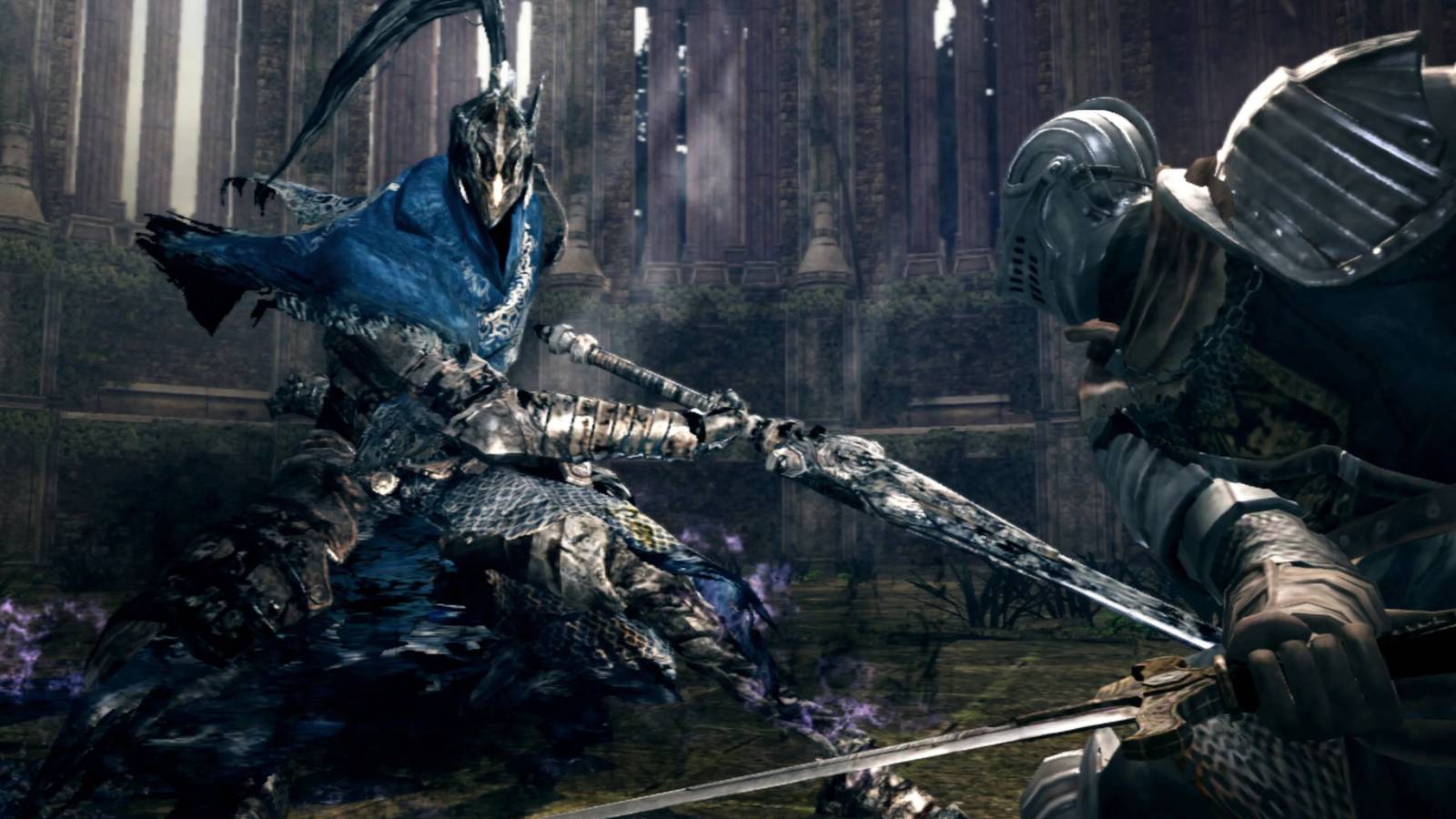
5 Games That Make Dark Souls Look Easy
Full Article
Original Source
Read the full article at Screenrant →KhanList aggregates and links to publicly available news content. We do not host full articles from third-party sources. Always verify important information with original sources.