
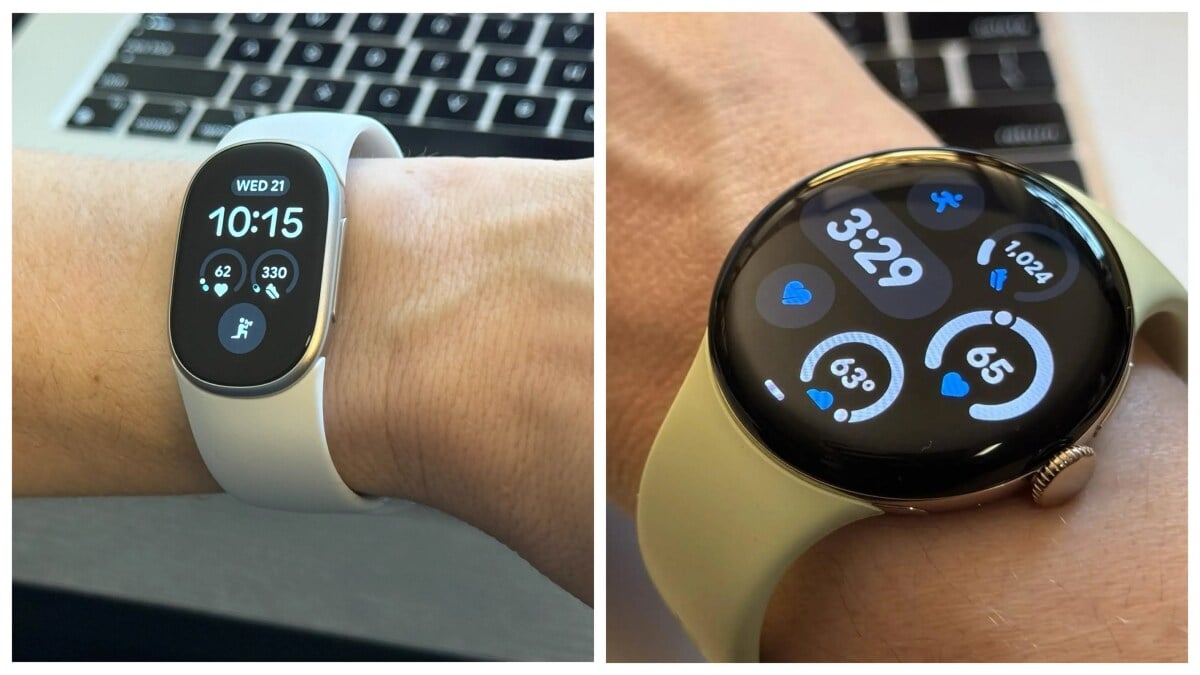
We may earn a commission from links on this page. Google’s “Health Guardian” feature set rolled out in late September to Pixel Watches 3, 4, and 5, and is now coming to Fitbit Air users in a new update. Google says the new features include reports on your blood pressure trends and on insulin resistance, which is a big claim for a wearable. Here’s what we know about Health Guardian, including how to set it up and what to expect. Can you really measure insulin resistance with a wearable? Credit: Beth Skwarecki Insulin resistance is associated with type 2 diabetes, and can be an early sign that you are heading toward pre-diabetes or diabetes. When your body’s insulin receptors stop responding as strongly to insulin, you’re more likely to have higher blood glucose. Insulin resistance is normally measured with bloodwork. For example, your fasting glucose levels and fasting insulin are combined into a score called HOMA-IR. If you’re concerned about insulin resistance or pre-diabetes, it’s best to talk to an actual healthcare professional to find out what tests they recommend, and what to do with the results. The insulin resistance feature coming to Google Health is, Google notes, “not intended for medical purposes” and “not a pre-screener for diabetes.” Google published a paper describing some of the testing that went into developing its insulin resistance algorithm. In the study, the researchers had people use their own Fitbits or Pixel Watches to record a variety of metrics, including heart rate, HRV, and activity. It’s not clear from this paper exactly how the algorithm works or whether it’s likely to be useful in a general population, but apparently Google is betting on it being an interesting factor to track in your Google Health app.Can you really measure blood pressure with a wearable? Credit: Beth Skwarecki Google also published a paper on a blood pressure algorithm, although it is not peer-reviewed. Instead of explaining how the algorithm works, it describes how the researchers tried to figure out what their AI-based model might be looking at. According to this paper, Google's model works about as well as clinical blood pressure measurements, but it's not clear how useful it would be in the real world. For example, the study excluded people with heart disease, but I'd imagine plenty of people with heart disease would be interested in their blood pressure scores. Google said last month in a press release that Health Guardian, which includes insulin resistance and blood pressure trends, is available for free for people who use a Pixel Watch 3, 4, or 5. Fitbit Air users, they added, would get blood pressure and insulin resistance trends “with a Google Health Premium subscription later this year.” "Later" has arrived, as the feature for Fitbit users is in Google Health 5.11, available on both Android and iOS. So it’s free if you have a Pixel Watch, but not if you only have the Fitbit Air: Google Health Premium is $9.99/month. It’s unclear what happens if you own both devices; presumably, having a Pixel Watch will get you free access. In any case, other devices, including older Fitbits, do not seem to be included. What do you think so far? How to get Health Guardian’s blood pressure trends and insulin resistance estimatesThe Pixel Watch got Health Guardian in the 5.09 release of the Google Health app for Android. The Fitbit got Health Guardian in the 5.11 release for both Android and iOS.You can set up your blood pressure and insulin resistance tracking as soon as you get the new version of the Google Health app. I was able to set up insulin tracking by going to the health tab and then tapping Metabolic, and I set up blood pressure under Heart. If you go to Respiratory, you can also set up sleep-breathing quality. (Some European users will get a feature that can call for help in a "breathing emergency," but that is not available in the U.S.)Google said that the insulin and blood pressure features will give you a monthly report on the first of each month, with the first report coming Oct. 1, if you have given the watch enough data in the previous month. If you're a Fitbit user and are just setting up the feature now, you'll get your first report on Nov. 1. Here is what the app requires: For blood pressure reports: You need to wear the watch for five consecutive days in the previous month (so, in October to get your November report). You don't have to wear the watch at night. For insulin resistance: You need to wear the watch for seven days and nights in the previous month, but they don't need to be consecutive.How well does Health Guardian work? I set up both features as soon as I got the update for the Pixel Watch, but that timeline didn't allow me a full seven days and nights before the October report. That means I don't have an insulin resistance result. I do have my blood pressure trend result: "Not High." As a reminder, a watch cannot know your actual blood pressure, so the watch is making estimates based on data that may not correspond with your actual blood pressure. That said, my blood pressure tends to read in the normal range at doctors' visits, so at least this wasn't surprising. What's more confusing is what you're actually supposed to do about the results. If your watch says your blood pressure or insulin are fine, would you delay seeking care or abandon a treatment or lifestyle change that was supposed to help you? If your watch says something is wrong, would you believe that and maybe spend unnecessary time and money getting checked out? Pixel Watch users are discussing their results online, with a variety of reactions. One redditor says: "I awoke to find out that my blood pressure is too high and apparently the insulin in my body does nothing. This despite that my most recent doctor's visit and blood work were all perfectly normal." Another said: "I got this high insulin result this morning. I have really changed my diet the last four months and I have been going to the gym regularly. I have lost about 40 pounds this year. It's a bummer to see this. I just wonder if it's accurate." I wonder that, too.
Google's 'Health Guardian' Is Now Available for Fitbits
Full Article
Original Source
Read the full article at Lifehacker →KhanList aggregates and links to publicly available news content. We do not host full articles from third-party sources. Always verify important information with original sources.