
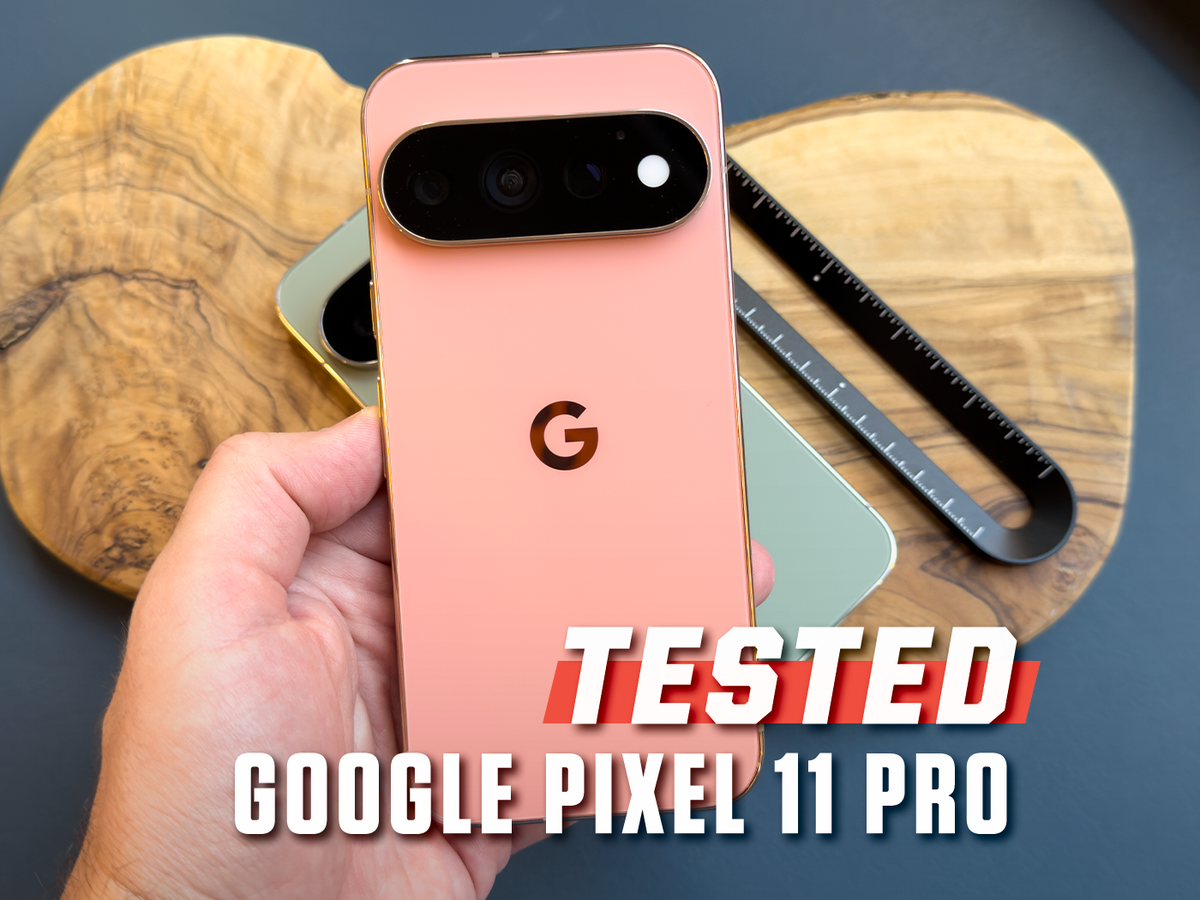
7 min readFor the second year in a row, Google has taken a conservative approach to updating its Pixel smartphone line. Aside from a minor tweak to the camera bar on the back and a swath of new colors, both the Pixel 11 Pro and larger Pixel 11 Pro XL are effectively copies of their predecessors. And last year’s Pixel 10 phones? Well, they have a lot in common with 2024’s Pixel 9 Pro and Pixel 9 Pro XL. In other words, it’s now been three years since Google introduced a notable design change or hardware-based feature to its phones.I can’t say that Google hasn’t done anything. The Pixel 11 Pro adds a notification light to the camera bar, giving you a discreet way to know when you get a text if you’re at a bar or the dinner table with your screen turned down. There’s also a perfunctory chipset upgrade, but there’s nothing here to make you clamor for this specific new phone. (It’s a pattern that, unfortunately, we’ve seen from many phone makers over the last few years, including Samsung and Motorola.)Even without a headline-grabbing signature feature or major spec upgrade on which to hang its hat, the Pixel 11 Pro remains a stellar phone. After more than a week of testing, I’d still recommend it in a heartbeat if you aren’t already using a Pixel 9 or Pixel 10. Its instantly recognizable design, phenomenal camera, and strong all-around performance help it stay in the lead of the Android race.ProsSuperb cameraTop-notch performance and battery lifeFlawless platform futureproofingThe HiLight is cool and convenientConsWired charging is slower than the competitionKey SpecsChipGoogle Tensor G6Display6.3 in. or 6.8 in. Super Actua LTPO OLED diplay (120 Hz refresh rate)Camera50MP main, 48MP ultra-wide, 48MP telephoto, 42MP front-facing cameraMemoryup to 16 GB of RAM; up to 1 TB of storageConnectivity5G, WiFi 7, Bluetooth 6.0OtherIP68 waterproofWhat’s New (and What’s Not) in the Pixel 11 ProThere’s nothing groundbreaking about the Pixel 11 Pro (or the Pixel 11 Pro XL, which has a larger screen, but is otherwise the same on the inside). The physical phone form factor is identical, with a 6.3-inch Super Actua LTPO OLED display on the Pro and a similar 6.8-inch display on the Pro XL. Technically, the 11 Pro has a slightly higher peak brightness—3,600 nits, up from 3,300—but you aren’t going to notice a huge difference moment to moment.Under the hood, Google’s upgraded the phone with its newest Tensor G6 chipset, but that doesn’t provide the kind of generational leap that I generally look for in new flagships when you compare it to the Tensor G5 in the Pixel 10 Pro.Stefan VazharovGoogle’s Tensor G6 chipset delivers speed and strong AI performance when you need it.Don’t get me wrong, the phone’s still powered up and ready to handle whatever you plan to throw at it. Snappy and powerful, the Pixel 11 Pro runs apps smoothly and handles multitasking without slowdowns. The Gemini A.I. assistant responded quickly to random questions, and games like Red Dead Redemption ran smoothly.When pushed to their limits, I’ve found that Google’s Tensor chips don’t quite reach the same performance highs as the Qualcomm Snapdragon chips found in Google’s flagship Galaxy phones, but you’re not going to reach those limits most of the time. Most of the time, this phone is going to feel fast as hell.Battery life, too, remains impressive this year. I could get through a day of heavy use on both the Pixel 11 Pro and the Pixel 11 Pro XL. Wireless charging is fast and easy, though I found that its 30-watt wired charging speed lags behind other phones like the iPhone 17 Pro with 45 watts, and the Samsung Galaxy S26 Ultra with 60 watts. These phones can charge noticeably faster with a cable and the right wall adapter.One holdover about the Pixel 11 Pro that I love is that it legitimately comes in two sizes. While Samsung forces you to buy a monster phone to get the best specs, Google offers a proper flagship, with the best specs, in a couple of form factors for different hand (and pocket) sizes.Check Notifications LightThe most interesting new feature on the Pixel 11 Pro and the 11 Pro XL is HiLight, the aforementioned circular RGB dot added to the camera bar. HiLight is tailor-made to resolve a certain tension with using your phone in social settings when we’d like to avoid checking our phones for notifications. When the phone is placed screen down, the light shines blue when you receive a call from a favorite contact (e.g., a family member, a friend, or a coworker) or white to indicate that you’ve activated the Google Assistant.The light can be helpful, in theory, if you want to keep your phone at arm’s length, but maybe need to remain available to certain specific people (like your partner, your parents, or your kids). Having it doesn’t eliminate distractions completely, but it’s definitely more low-key than peeking at a large screen.Stefan VazharovHiLight (the blue dot on the right) tells you when certain types of notifications come in so you can still get an important message with your phone face-down.More than that, though, the feature felt underdeveloped. It currently has only two use cases, but in theory you could (and should) be able to use it to signal you for many types of notifications across many apps. I’d love to get a glowing green notification when a favorite contact hits me up on WhatsApp, or a different shade of blue when I get an urgent work email in Outlook. It’s very possible that these features (and many others from third-party apps) are on the way, but for now the utility feels very limited, which makes the feature feel small.The Camera’s the Same, but Still FantasticEquipped with a trio of high-resolution cameras, the Pixel 11 Pro’s primary camera stack is still one of its biggest draws, even if it hasn’t changed in three generations. The 50-megapixel primary, 48-megapixel ultra-wide, and 48-megapixel telephoto units captured superb photos and video during my testing, regardless of lighting conditions and the environment. Given the cameras’ high-quality sensors and optics, and Google’s long track record of stellar image processing, it’s hard to argue that they need to do more here. Other than Apple, no phone maker offers a comparable set of cameras.Stefan VazharovEven without major changes, the Pixel 11 Pro has some of the best cameras around.Its top-tier telephoto zoom capabilities are, once again, among my favorite things about the Pixel Pro’s camera. Combining a 48-megapixel sensor with 5x default magnification gave me the luxury of doubling its reach to 10x without sacrificing image quality. This trick makes taking top-quality photos of birds and other wildlife incredibly easy. The Samsung Galaxy S26 Ultra is the only other phone with similar telephoto capabilities, but Google gives you the option to choose between two sizes in the 11 Pro and 11 Pro XL, versus Samsung’s S26 Ultra, which comes in a single, decidedly extra-large form factor.On the software side, Google has added an exciting new trick with Pixel 11 called Magic Capture, which seamlessly takes high-quality photos while recording video with the help of Gemini A.I. It also enhances them for instant shareability. It’s easy to use and is really great if you want to get that perfect action shot without waiting for the exact right moment.The Pixel camera app also packs a ton of additional and easy-to-access tools for capturing and enhancing your memories. Among the new additions this year, the Camera Looks feature can change how the camera sensors and HDR processing render your photos, basically creating filters at the hardware level. There’s also an elaborate portrait mode that supports images in full resolution, a dedicated setting for night photography, and much more. If you like to play with your camera and photo settings, the Pixel is the Android phone for you.Google Pixel 11 Pro Camera SamplesNo Android Like a Google PhoneI have to give Google kudos for finally upgrading the hard drive in the 11 Pro base model to 256 GB, after years of saddling folks with an unacceptably small 128-GB drive in the base model. The small drive was a relatively minor issue in a world where everyone relies on cloud storage, but it was still an eyesore when you compared the Pixel to other phones.And, like Samsung, Google promises to support the Pixel 11 Pro with Android and security updates for seven years, which is as long as you can expect from any phone brand. It’s a very good reason to stick with Google or Samsung if you’re an Android user, especially if you aren’t upgrading your phone frequently.I’ve also always appreciated Google’s “vanilla” version of Android, because it doesn’t have any additional UI clutter or app bloat like other brands. At the same time, you get full access and control over your device in a way that iOS simply doesn’t allow. This is nothing new, but the Pixel 11 Pro remains the poster child for Android as an OS, in addition to Google’s hardware expertise.Should You Upgrade to the Google Pixel 11 Pro?The Pixel 11 Pro and Pixel 11 Pro XL, while far from revolutionary, are excellent phones. If you’ve been off the market for a long time and find yourself looking at a new Android phone, these phones have my favorite blend of design and performance, especially if you care deeply about the camera. That said, if you want the largest possible screen with a baked-in privacy feature, a higher-resolution primary camera, and an integrated stylus, the Samsung Galaxy S26 Ultra is an objectively more powerful and feature-packed phone, and a good alternative to the Pixel 11 Pro XL.Stefan VazharovHaving the same specs across multiple sizes has been of the longstanding draws of going Pixel Pro over Samsung Galaxy Ultra. The Pixel 11 Pro XL (left) and Pixel Pro (right) deliver the same performance.I’m especially drawn to the Pixel 11 Pro because it is smaller, which makes it unique among flagship phones. Very few phones deliver top-level specs in a smaller, more pocket-friendly package. I’d take it over a Samsung Galaxy S26 for its superior camera and more characterful design.What About the Google Pixel 11?Stefan VazharovGoogle Pixel 11 costs a little less, but you lose camera performance and the HiLight indicator.Google’s standard Pixel 11 is a little cheaper and, this year, lacks even the minor refinements found in the Pixel 11 Pro. For $899, just $200 less than the Pro, you get a similar phone, but with lower-quality cameras. There’s also no HiLight, so there’s absolutely nothing new to celebrate here. Unless you’re hell-bent on keeping your budget under $1,000, you’re losing out on camera performance and HiLight to shave a relatively small amount of money off the price tag.Shop Google Pixel 11 ProGoogle Pixel 11 ProGoogle Pixel 11 ProGoogle Pixel 11 ProGoogle Pixel 11 ProStefan is an award-winning consumer technology editor with over a decade of experience in reviewing gadgets, particularly smartphones, tablets, smartwatches, desktop and laptop computers across multiple form factors and platforms, as well as accessories for them. He also covers televisions and audio equipment, including headphones, earbuds, wireless speakers, and soundbars. Since joining Hearst in 2015, Stefan has contributed to BestProducts, Popular Mechanics, and numerous other publications. Prior to his current role, he served as the US Editor for GSMArena.com.Mike Epstein is a Senior Commerce Editor at Hearst Enthusiast Group, producing reviews for buying guides Popular Mechanics, Runner’s World, Bicycling, and Best Products. Prior to joining Hearst, he was a video game and technology critic for over 10 years, with bylines at IGN, Gamespot, Variety, Lifehacker, Kotaku, GamesRadar, Flavorwire and Digital Trends, among others. Now, he’s a jack of all trades, helping reviewers share everything they know about all kinds of technical gear, from snowblowers, to running shoes and bicycles, and every kind of gadget imaginable.
Google Pixel 11 Pro Review: A Weak Upgrade for a Very Strong Phone
Full Article
Original Source
Read the full article at Popularmechanics →KhanList aggregates and links to publicly available news content. We do not host full articles from third-party sources. Always verify important information with original sources.