
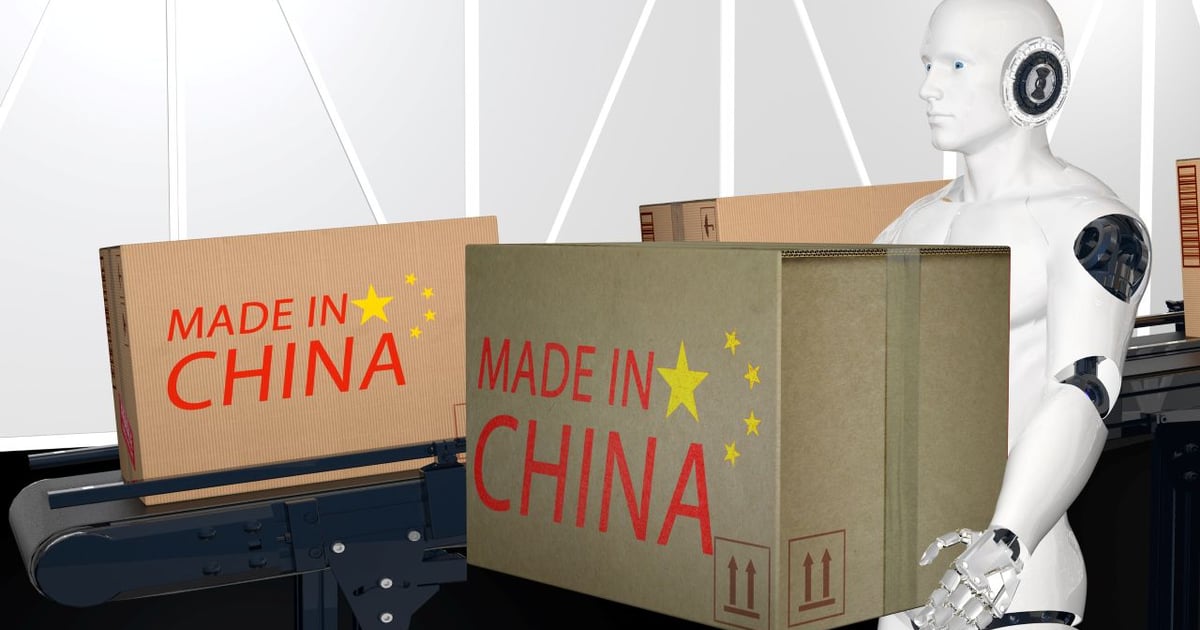
MikeMareen via Getty ImagesIn the global race for dominance in humanoid robotics, the deciding factor may have less to do with AI and more to do with the seemingly mundane hardware used to make robots move.That’s the conclusion of a new study released on Wednesday from San Francisco-based robotics AI vendor OpenMind, which assessed the infrastructure required to build and deploy advanced embodied AI across 58 countries and 22 metropolitan clusters.The study was partially motivated by the FCC’s recent barring of foreign-made robotics components from the U.S., a move that was quickly perceived as a slight against Chinese manufacturers and a bid to bolster domestic supply chains. That leaves open the question of whether the U.S. can build its own robotics ecosystem without China, and what it would take. OpenMind's study attempts to answer it.OpenMind CEO Jan Liphardt argued China has already won the parts of that race that are hardest to reverse, a lead built on decades of manufacturing capability and investment that has let the country lock in its supply chains ahead of the rest of the robotics industry.Related:XPeng’s Robotics Unit Valued at $6.3B After Investment“Physical AI is not gate-limited by AI. It's gate-limited by all the apparently simple stuff, such as the actuators, the magnets, the chips, the arms and the legs,” Liphardt told AI Business. “And it turns out that China is ahead of everyone else, not just by a tiny little bit, but significantly ahead.”China scored 82.9 on OpenMind's Physical AI Readiness Index, compared with 69.6 for Japan and 69.0 for the US. The researchers attribute the gap primarily to China's development in energy, robotics and materials, as well as years of sustained national investment."China has been putting large resources into automation and advanced robotics for a long time," Liphardt said. "There's no magic or mystery here. China has very publicly chosen advanced robots as a national priority, and they have been putting resources against that decision for the last 15 years. Other countries, for example, the U.S., have been offshoring manufacturing for years. The gap you're seeing right now in capability really reflects decades of prior decisions."China’s Ecosystem AdvantageThe report argues that the central constraint on humanoid production is mechanical. Actuators account for 40% to 60% of a humanoid's bill of materials. Without Chinese suppliers, the report says humanoid costs more than double, from $46,000 to $131,000.China also manufactures an estimated 94% of the world's sintered rare-earth permanent magnets, which OpenMind identifies as the single tightest supply-chain constraint for humanoid production.Related:Nvidia’s SONIC Teaches Humanoids to Move“One thing that the U.S. has struggled with is articulating a durable strategy for securing the supply chain,” Liphardt said. “What's needed there is a decades-long focus on securing parts of the physical supply chain.”Linda Sui, founder and principal of Smart Analytics Global, said China's supply chain advantage is due in no small part to its well-established and regulated ecosystem.“China's advantage does not come from leadership in one or two components, but from the concentration of motors, actuators, precision components, electronics suppliers, manufacturing capacity and robot OEMs within a highly integrated ecosystem,” she said. “Rebuilding that combination of supplier density, engineering expertise, scale and cost competitiveness elsewhere would require significant investment and time.”Can the U.S. Keep Up?Despite its significant standing in the humanoid market, Suit cautions against interpreting China's lead as dominance across every layer of the supply chain.“This advantage should not be viewed as impossible to challenge or permanent,” she said. “U.S., European, Japanese and Korean suppliers continue to hold strong positions in areas such as AI compute, advanced semiconductors, high-end sensing and precision reducers.”Related:Unitree Shares Surge in Stock Market Debut“Over time, we expect the humanoid supply chain to remain globally interconnected, even as China retains a significant manufacturing and cost advantage,” she added.OpenMind identified several potential ways the gap could narrow, including the successful development of non-Chinese magnet production and the transition of Western humanoid manufacturers from pilot production to mass manufacturing.Marco Wang, analyst at Interact Analysis, said European and American companies have a real opening."The industry and the technology are still in their early stages, and at this point it is difficult to quantify the market competitiveness of humanoid robot companies across different regions," he said. "In my view, European and American companies still have a strong opportunity to build competitive humanoid robot ecosystems."Partnering with Chinese companies, he added, remains an important route to scaling cost-effective hardware. In this process, he said European and American companies can establish higher engineering standards and use product performance to win market opportunities.Liphardt frames it as a question that every country must now answer for itself."What's important now is for countries to decide and articulate the extent to which they want to be able to make things themselves," he said. "There's no right or wrong answer, but it’s important for the ability to manufacture things not to be concentrated in any one place or country."“Globally, we're at an incredible technical blossoming, and what's missing is the parallel political discussion about how we want to use all of these amazing new things,” he added.About the AuthorContributing WriterScarlett Evans is a freelance writer with a focus on emerging technologies and the minerals industry. Previously, she served as assistant editor at IoT World Today, where she specialized in robotics and smart city technologies. Scarlett also has a background in the mining and resources sector, with experience at Mine Australia, Mine Technology and Power Technology. She joined Informa in April 2022 before transitioning to freelance work.
China's Humanoid Edge Is Hardware, Not AI
Full Article
Original Source
Read the full article at Aibusiness →KhanList aggregates and links to publicly available news content. We do not host full articles from third-party sources. Always verify important information with original sources.