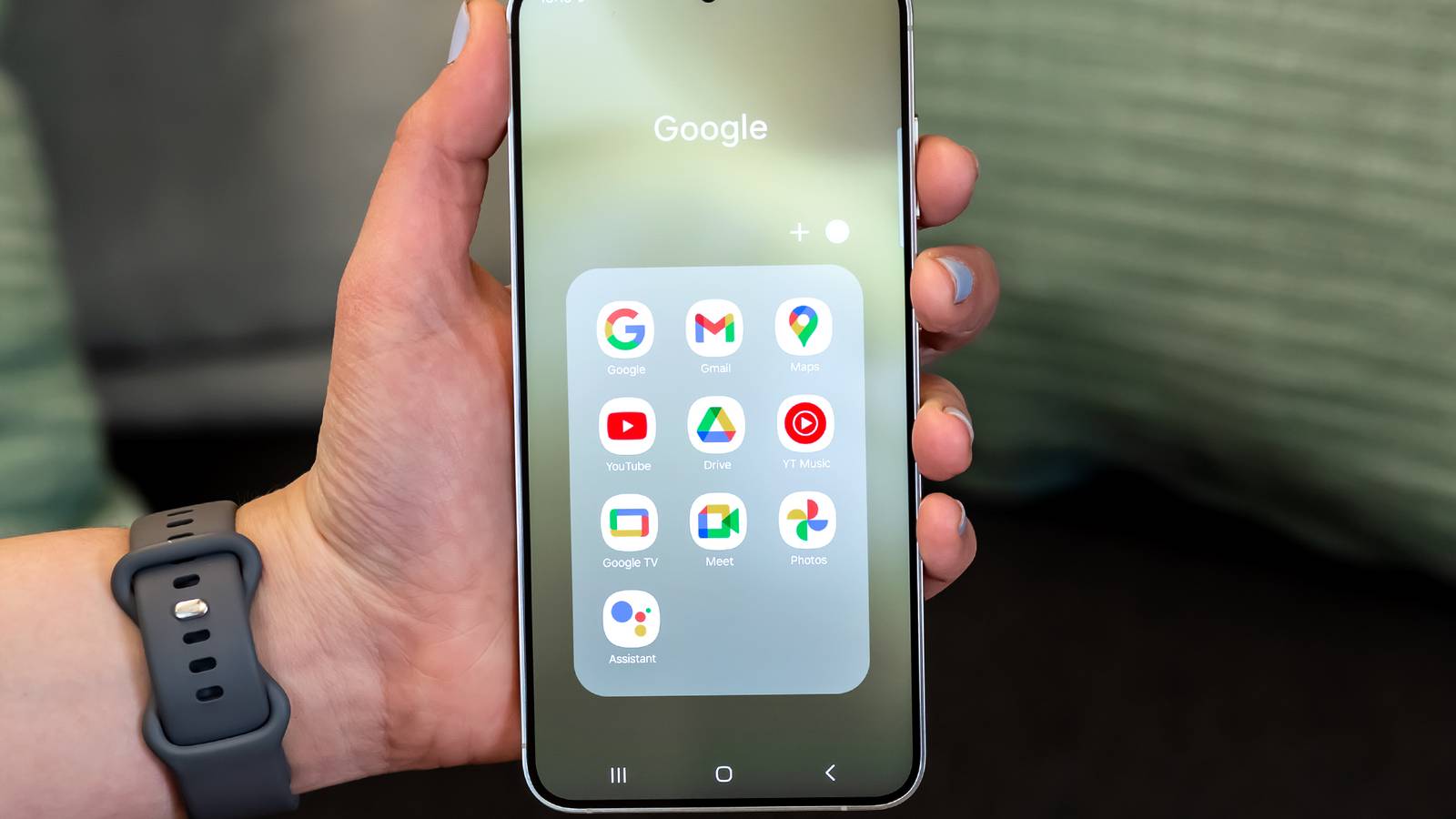
Published Aug 6, 2026, 12:56 PM EDT Bertel is a lifelong tech enthusiast with over a decade of experience writing thousands of articles about Android devices, Linux, and more. Before joining the How-To Geek team, Bertel wrote for the likes of MakeUseOf, MakeTechEasier, and Android Police—at the latter he wrote over 3,500 articles. He delights in helping others decide which tech to bring into their lives... and which tech to do without. Bertel graduated from the College of William and Mary in 2012 with degrees in History and Government. He has spent his entire career as a tech journalist covering Android, Linux, wearables, smart home devices, and more. Summary Google controls the most popular store for distributing Android apps and requires Android phone makers to ship a suite of Google software in order to have access. Some OEM apps are better than Google's, but fewer phone companies are going through the effort of making their own software. Back in the day, I used to loathe the custom skins and apps that Android phone makers added to their phones. Android's vendor-neutral default apps have since been replaced by Google apps, and the tech giant has used its dominance to fill our Android devices with far more pre-installed software than any other company. Google and Android are not one and the same But it certainly feels that way when you look at default apps Google is Android's primary developer, but the operating system is open source. Countless other companies are invested in the platform. There are big-name smartphone makers like Samsung and Motorola. Tablets and eReaders from Amazon and BOOX. Niche products that you may not realize run Android, like the minimalist Light Phone. There are self-checkout machines in big box stores that are merely Android tablets anchored in place. You may sign in at your dentist's office with an Android device without being aware of it. They're everywhere. The promise of Android is that it's a mobile-first operating system that anyone can use to create great things without starting from scratch. This is how Android got buy-in from businesses and volunteers from all over the world. You can use and develop Android without being entirely beholden to the whims of another corporation. After Android became popular, Google wanted more control The open philosophy keeps eroding Credit: Jerome Thomas / How-To Geek While Android is free, Google has control over the primary way developers distribute their apps to Android users. In order for a company to ship the Play Store on their device, they must agree to include a bundle of Google apps and background services. The company has also been willing to pay big bucks to limit the creation of alternative Android app stores. It spent years in a back-and-forth lawsuit with Epic Games to defend its alleged app store monopoly (and the settlement in 2025 leaned mildly in Epic Games' favor). Google's apps are not neutral pieces of software providing needed functionality. They're Google services like Google Search, Chrome, Gmail, Google Calendar, Google Home, Google Docs, and YouTube. Are these programs that many (if not most) Android users would go out of their way to install? Sure, absolutely. But most of them are not essential parts of a phone or tablet. They're efforts to draw you into the Google ecosystem. Google's insistence on making Android phone makers ship their apps is why a company like Samsung ships duplicate programs on their phones. They either give Google full control over the software experience, or they settle for confusing duplication. Samsung at least tries to clean up the clutter a bit by dumping most of the search giants' apps into a folder labeled "Google" on the home screen. Credit: Justin Duino / How-To Geek Many other companies have stopped making their own software and decided to stick to Google's defaults instead. There are plenty of users and product reviewers calling for just that. They're already deep in the Google ecosystem and just want the most optimized experience. Yet this stance ultimately limits the amount of choice available in the market. What's left for those of us who like Android phones but, after seeing all the shenanigans Google has gotten up to, want to opt out of doing business with them? I don't want to give all of my data to Google And you probably don't either I made efforts to de-Google my life years ago, deleting my Google account entirely. I re-created one years later when an organization I'm involved with wanted to use Google Calendar to manage our schedule. I started to use this same account to log into Google Play for apps, but that's about it. That means whenever I activate a new Android device, I go through the onboarding process and un-check as many boxes as I can. Then, I spend time uninstalling all the apps I don't want. Whether I'm setting up a Pixel or a Galaxy Z Fold, the bulk of the apps I'm removing come from Google. I don't want YouTube Music preinstalled any more than I want to see Facebook or TikTok. I don't use Chrome as my browser on any device, nor do I use Google Search. It's not that I don't use any Google apps. I find Google Maps useful, especially due to how much information it provides about local businesses. I watch YouTube, since it is the primary way major and independent publishers alike distribute video. But these apps don't provide essential phone functionality in the way that a gallery app and a local video player do. They're the kind of programs many people would immediately seek out on their own in the Play Store. Still, they're preinstalled to drive more people toward Google services and provide the company with more marketable data. People are quick to call out budget Motorola phones for installing unwanted shopping apps and random games, but Google's software collects far more data and is much more intrusive. We're just conditioned to expect them, even if we have never once clicked on Google Home. Quiz 8 Questions · Test Your KnowledgeThe History of Android OSTrivia ChallengeFrom a scrappy startup to the world's most popular operating system — how well do you know Android's remarkable journey?OriginsVersionsMilestonesAcquisitionsDesignBegin In what year was Android Inc. originally founded by Andy Rubin and his co-founders?A2001B2003C2005D2007Correct! Android Inc. was founded in October 2003 in Palo Alto, California. The original vision was actually to build a smarter operating system for digital cameras before the team pivoted to mobile phones.Not quite — Android Inc. was founded in 2003. Many people confuse this with 2007, the year the first Android phone was announced, but the company had already been working behind the scenes for years by then.Continue How much did Google pay to acquire Android Inc. in 2005?AApproximately $5 millionBApproximately $25 millionCApproximately $50 millionDApproximately $100 millionCorrect! Google acquired Android Inc. for approximately $50 million in July 2005. At the time, the deal flew largely under the radar, but it would prove to be one of the most consequential acquisitions in tech history.Not quite. Google acquired Android Inc. for around $50 million in 2005. It seemed like a modest sum at the time, but the investment paid off enormously — Android now powers billions of devices worldwide.Continue What was the name of the first commercially available Android smartphone, released in 2008?AT-Mobile G1 (HTC Dream)BMotorola DroidCSamsung Galaxy SDHTC HeroCorrect! The HTC Dream, sold as the T-Mobile G1 in the United States, launched on October 22, 2008. It featured a slide-out physical keyboard and ran Android 1.0, setting the stage for everything that followed.Not quite — it was the HTC Dream, known as the T-Mobile G1, that launched in October 2008. The Motorola Droid came later in 2009 and was hugely influential, but the G1 holds the title of first commercial Android device.Continue Android versions were famously named after desserts in alphabetical order. Which dessert name corresponds to Android 4.0?AHoneycombBJelly BeanCIce Cream SandwichDGingerbreadCorrect! Android 4.0 was called Ice Cream Sandwich, released in October 2011. It was a landmark release that unified the phone and tablet interfaces and introduced the iconic Holo design language.Not quite — Android 4.0 was Ice Cream Sandwich. Honeycomb (3.x) was tablet-only, Gingerbread was 2.3, and Jelly Bean came after Ice Cream Sandwich. The naming scheme helped make Android version updates feel like fun events.Continue Before pivoting to smartphones, what type of device was Android originally designed to power?AMP3 playersBDigital camerasCGPS navigation unitsDE-readersCorrect! Andy Rubin and his co-founders initially envisioned Android as a smarter operating system for digital cameras. When it became clear the camera market was shrinking, they pivoted to mobile phones — a decision that changed the tech world.Not quite. Android was originally conceived as an OS for digital cameras, not for the device you may have guessed. The pivot to smartphones came after the team recognized the massive potential of the mobile phone market.Continue What was the name of the dramatically new design language Google introduced with Android 5.0 Lollipop in 2014?AHoloBFluent DesignCMaterial DesignDMetro UICorrect! Material Design debuted with Android 5.0 Lollipop and brought a bold, card-based visual language inspired by physical paper and ink. It became hugely influential and was adopted across Google's entire product ecosystem.Not quite — the answer is Material Design, introduced with Android 5.0 Lollipop. Holo was the design language used in earlier Android versions, while Fluent and Metro are associated with Microsoft's design efforts, not Google's.Continue In what year did Android officially surpass iOS to become the U.S.'s most widely used smartphone operating system by market share?A2009B2010C2011D2013Correct! By 2010, Android had overtaken iOS to claim the top spot in U.S. smartphone market share. Explosive growth from manufacturers like Samsung and HTC, combined with a wide range of price points, fueled the rapid rise.Not quite — Android surpassed iOS in U.S. market share around 2010. The rapid proliferation of affordable Android handsets from dozens of manufacturers made it accessible to a far broader audience than Apple's single-device strategy allowed.Continue Starting with Android 10, Google dropped the dessert naming convention from public branding. What was the internal dessert codename for Android 10?AQuesoBQueen CakeCQuince TartDQuick BreadCorrect! Android 10's internal dessert codename was Quince Tart. Google decided to stop using dessert names publicly, citing that many of the names didn't translate well across different languages and cultures around the world.Not quite — Android 10's internal codename was Quince Tart. Google retired the public dessert branding because names like Jelly Bean and KitKat didn't resonate the same way across all the countries where Android is used.See My Score Challenge CompleteYour Score/ 8Thanks for playing!Try Again Some preinstalled apps are better than Google's Beating the giant at its own game Even if I liked the Google ecosystem and actively took part in it, I would still be sad to see Android phone makers give up on making their own software. Some companies do a better job at creating certain apps than Google does. Samsung Internet is an excellent browser. It's fully capable of replacing a desktop browser, and it has features that Google won't include because it competes with the company's business model, such as privacy features that block trackers. Samsung Gallery is one of the best apps for managing photos saved on your device. Samsung Notes is a far more comprehensive note-taking app than Google Keep. Samsung My Files feels more like a desktop file manager than Files By Google. Credit: Phone makers don't have to sacrifice the beauty of stock Android to give us custom software. The few apps Motorola does still provide integrate perfectly with Android's look and feel. The company includes software for customizing your phone more extensively, adds more gestures, and provides support for connecting your phone to a monitor or a TV (or a lapdock), using it as either a PC, video game console, or set-top box. Nothing (the company) shows how much style a phone maker can give their phones without making their devices as garish and inconsistent as the Android skins of years past. Android would be far less interesting without their innovations and experimentation. Google apps make Android phones feel homogenized Shouldn't these phones feel more unique? As Google's control over software has grown, there is increasingly less difference between one Android device and the next. You walk through similar set-up screens, are presented with the same data collection options, and see your app drawer pre-populated with largely the same software. The diversity of options is a big part of what draws many of us toward Android phones over the iPhone. Yet physical differences now come down to the style of camera bump and branding. Some people used to buy LG phones because they loved the company's software. That company no longer makes phones. HTC Sense was a vibe. The company is still technically around, but its presence and its software are a shadow of its former self. Google software has filled the void. Phones aren't the only devices that suffer from this. Consider the XREAL Beam Pro, an Android-based (and far more affordable) alternative to Apple's Vision Pro. It's a tempting addition to the AR glasses I briefly replaced my computer monitor with. When you launch the device for the first time, you're presented with a large array of Google apps that you probably didn't buy AR glasses to use. They continue to clutter up the launcher unless you dive into settings and disable them. XREAL isn't a Google company, but since access to the Play Store is a big part of the device's appeal, they're required to shill Google services, at a detriment to the user experience. It's a story of ups and downs I love Android and appreciate the work that (primarily) Google developers put into it. The platform as a whole is far more polished, attractive, and feature-complete than it was back in the day of more diverse Android phones. Part of the experimentation back in the day came out of a need to fill the gaps in stock Android's functionality, after all. Sadly, the amount of Google bloatware worsens the experience. If I want a Google device, I can buy a Pixel. For all other phones, let phone makers and their customers decide what kind of apps we want to see shipped on our phones.
Google is now the biggest maker of Android bloatware
Full Article
Original Source
Read the full article at Howtogeek →KhanList aggregates and links to publicly available news content. We do not host full articles from third-party sources. Always verify important information with original sources.