
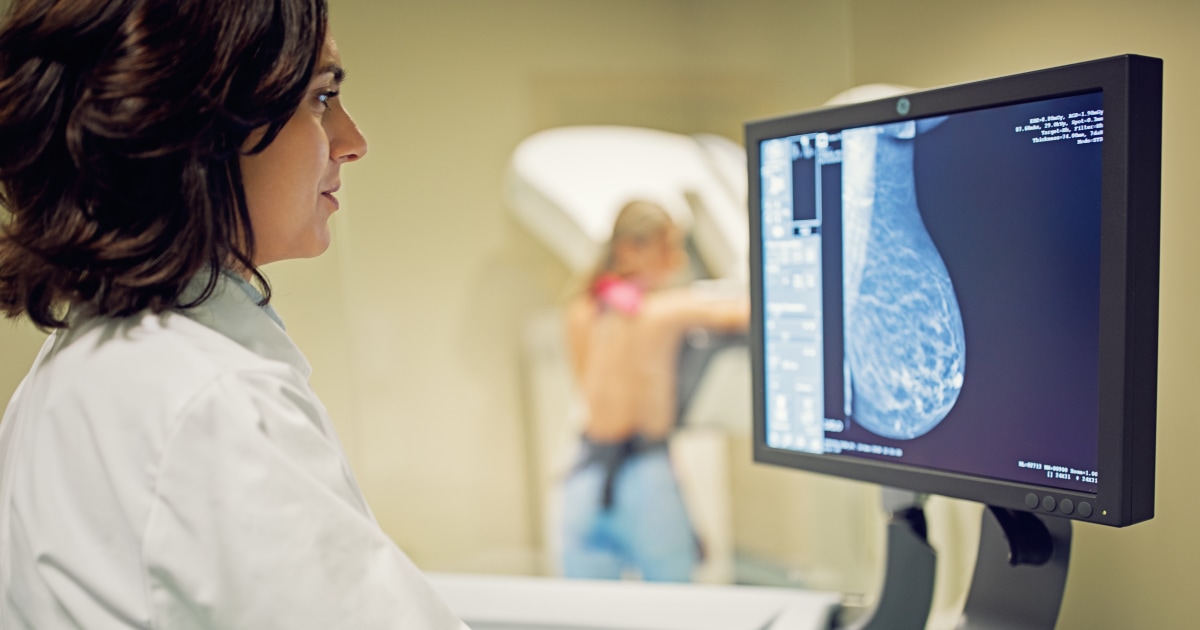
Women who take popular GLP-1 weight-loss drugs may discover they have increased breast density after being on the anti-obesity treatment, a new study has found.When researchers at the Mass General Brigham Cancer Institute examined the mammograms of 104 women right before they started taking GLP-1 medications like Zepbound and Wegovy and then at least one year after, the scans showed almost two-thirds of the women, 62%, had denser breasts on the follow-up test.The findings have not yet been published in a peer-reviewed journal and will be presented at the annual meeting of the Radiological Society of North America, which starts on Sunday, Nov. 29.The increased breast density is not a direct effect of the GLP-1 medication, but rather the effect of the weight loss, said Dr. Eva Gombos, the study co-author and a radiologist at Mass General Brigham.The women in the study all had obesity before they started treatment and lost 40 pounds on average.“When someone loses substantial weight, fat loss can change the appearance of the face. The same is true for the breast,” Gombos tells TODAY.com.Breasts are composed of fatty tissue and more dense fibroglandular tissue. As breast fat decreases, the fibroglandular tissue in the breast then becomes more prominent on a mammogram, she notes.“The general appearance is more dense, but it shouldn’t cause alarm. It’s just manifestation of the weight loss,” Gombos says.The researchers didn’t demonstrate increased breast cancer risk, she emphasizes.Still, there were some consequences — 22% of the patients in the study were called back for additional screening, and four underwent biopsies, which were all benign.For screening mammograms, it’s normal for patients to get called back for additional testing about 10% of the time, and the rate was double that in this study, which is very high, says Dr. Kimberly Feigin, a radiologist at Memorial Sloan Kettering Cancer Center, who was not involved in the new research.“I think what’s happening is that there may not have been good communication of why the breast density was increasing,” Feigin notes.“Maybe they could have avoided some of the callbacks if (the radiologists) had known that the patient had been on a GLP-1 and had lost a lot of weight.”Dense Breasts and Cancer RiskAbout half of women who are 40 or older have dense breasts, according to the Centers for Disease Control and Prevention. It’s not something a person can see or feel, but is determined by a mammogram.Women with dense breasts have a higher chance of developing breast cancer, the CDC notes. Having dense breasts also makes it harder to find a tumor on a mammogram because both look white on the scan.But Feigin doesn’t believe greater breast density associated with weight loss due to a GLP-1 drug increases a woman’s risk of getting breast cancer.Dr. Elisa Port, breast surgery chief at Mount Sinai Health System, agreed.“The flip side could be true, in fact. We know that being overweight or obese can increase a woman’s risk of breast cancer, so the GLPs may actually be beneficial in overall reducing the risk,” Port said on TODAY.All mammogram facilities across the U.S. are required to notify patients about the density of their breasts.Breast density is fluid — it can change from year to year, says Dr. Eleonora Teplinsky, the head of breast and gynecologic medical oncology at Valley Health System in Paramus, New Jersey. Many studies show it can increase with weight loss in general, she adds, not just with GLP-1s.“My takeaway from this study would be that women who are on a GLP-1 should know that their breast density might change, and they should pay attention to that on their mammogram,” says Teplinsky, who was not involved in the new research.“If they notice a change in their breast density, really talking to their medical teams about what this means for their screening. So do they need to add supplemental imaging with ultrasound or MRI.”Teplinsky doesn’t believe simply being on a GLP-1 should change breast cancer screening at this point.As of now, there’s no need to change any screening recommendation, Gombos agreed.Mammogram Tips If You Are Taking a GLP-1Gombos encourages women to keep a normal breast cancer screening schedule, which is one mammogram per year. Before getting a mammogram, tell the technologist you are taking a GLP-1 drug so the radiologist will keep that in mind when reading the X-ray, she says.“Make sure that the radiologist is aware of the interval weight loss because the mammogram will look different, and that can help the radiologist interpret the mammogram appropriately,” Feigin adds.If you’re notified that your breasts have suddenly become dense, don’t get alarmed, Gombos says. Be prepared the radiologist may want to get more pictures.“There’s no reason to panic and there’s still very low risk of having cancer,” Port said.Ask your doctor about getting supplemental screening such as a breast ultrasound or breast MRI, Feigin says.
GLP-1 Weight-Loss Drugs Tied to Higher Breast Density in New Study. What Women Need to Know
Full Article
Original Source
Read the full article at Today →KhanList aggregates and links to publicly available news content. We do not host full articles from third-party sources. Always verify important information with original sources.