
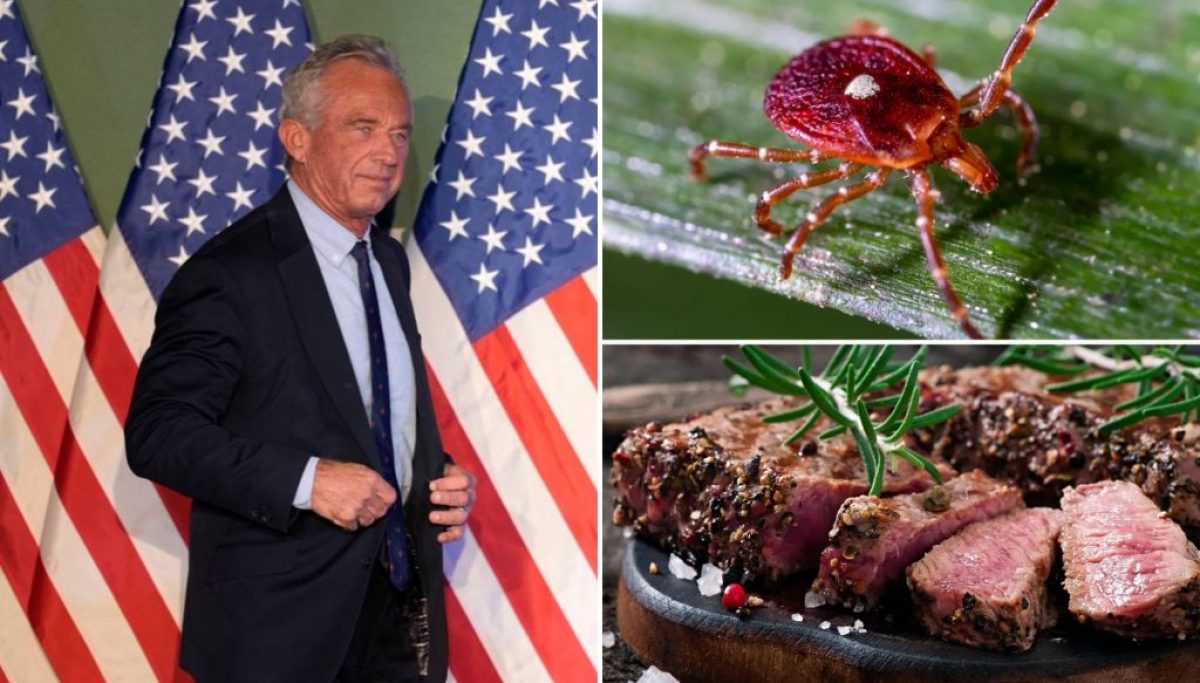
New research on a tick-borne red meat allergy suggests cutting out animal-based proteins is good for metabolic health, a finding that challenges the Make America Healthy Again movement’s promotion of beef consumption.Avoiding red meat has modest cardiometabolic health benefits, according to a working paper circulated this week by the National Bureau of Economic Research on alpha-gal syndrome, an allergy to mammalian meat caused by lone star tick bites.The new findings, which have not been peer-reviewed, put two priorities of Health and Human Services Secretary Robert F. Kennedy Jr. in contention with each other. He has sought to improve research on alpha-gal syndrome and other tick-borne diseases. But he has also encouraged Americans to eat more animal-based proteins. Investigators from Harvard University Medical School used health data from nearly 30,000 patients nationwide diagnosed with alpha-gal syndrome and found that those who stopped eating beef, pork, and lamb products had, on average, a sustained weight loss of roughly 2 pounds over two years, compared with adults with other tick-borne diseases. Alpha-gal patients also had “small but significant” reductions in cholesterol, blood sugar, and other markers of cardiovascular risk, according to the report.Using alpha-gal patients and comparing them to others who have sustained other tick-borne illnesses, such as Lyme disease, creates a unique natural experiment, the Harvard authors note.Observational studies for decades have associated red meat consumption with cardiometabolic disorders such as heart disease, obesity, and Type 2 diabetes, but previous studies have not been able to control for lifestyle factors that contribute to those problems, such as general diet quality and physical activity.Because alpha-gal symptoms can cause a range of allergic reaction symptoms, from mild hives to life-threatening anaphylaxis, patients with the syndrome are strongly advised to eliminate mammalian meat. According to the authors, the syndrome “therefore imposes abrupt and sustained avoidance of red meat, prompted by illness rather than chosen for its expected nutritional health benefits.”“By using alpha-gal syndrome to separate the effect of the dietary change from the characteristics of the people who choose to make these changes, our quasi-experimental analysis suggests that the cardiometabolic consequences of stopping red meat consumption are modest but measurable,” the authors note.Kennedy in June called alpha-gal syndrome and Lyme disease each a “science fiction nightmare” and announced new research projects on tick-borne diseases by the National Institutes of Health, along with tick-control measures by the Centers for Disease Control and Prevention.But the new findings from the Harvard report could undermine Kennedy’s more central priority of pushing for animal-based proteins to be the center of the American diet.RON JOHNSON PRESSURES FDA OVER VACCINE INJURY REPORTING PROBLEMS DRIVEN BY STAFFING CUTSHHS and the Agriculture Department in January doubled the daily protein intake recommendations in their Dietary Guidelines for Americans, a document that governs federal food programs, including school lunches and nutrition assistance. The new food pyramid visual accompanying the guidelines also emphasizes full-fat dairy products in addition to plant-based fats such as nuts and avocados.Kennedy has repeatedly referred to previous recommendations against animal proteins from nutritional health experts as a “war on saturated fats” and has said there is no solid evidence to support calls to limit animal-based proteins.
Alpha-gal syndrome patients benefit from loss of red meat, in challenge to RFK agenda
Full Article
Original Source
Read the full article at Washingtonexaminer →KhanList aggregates and links to publicly available news content. We do not host full articles from third-party sources. Always verify important information with original sources.