
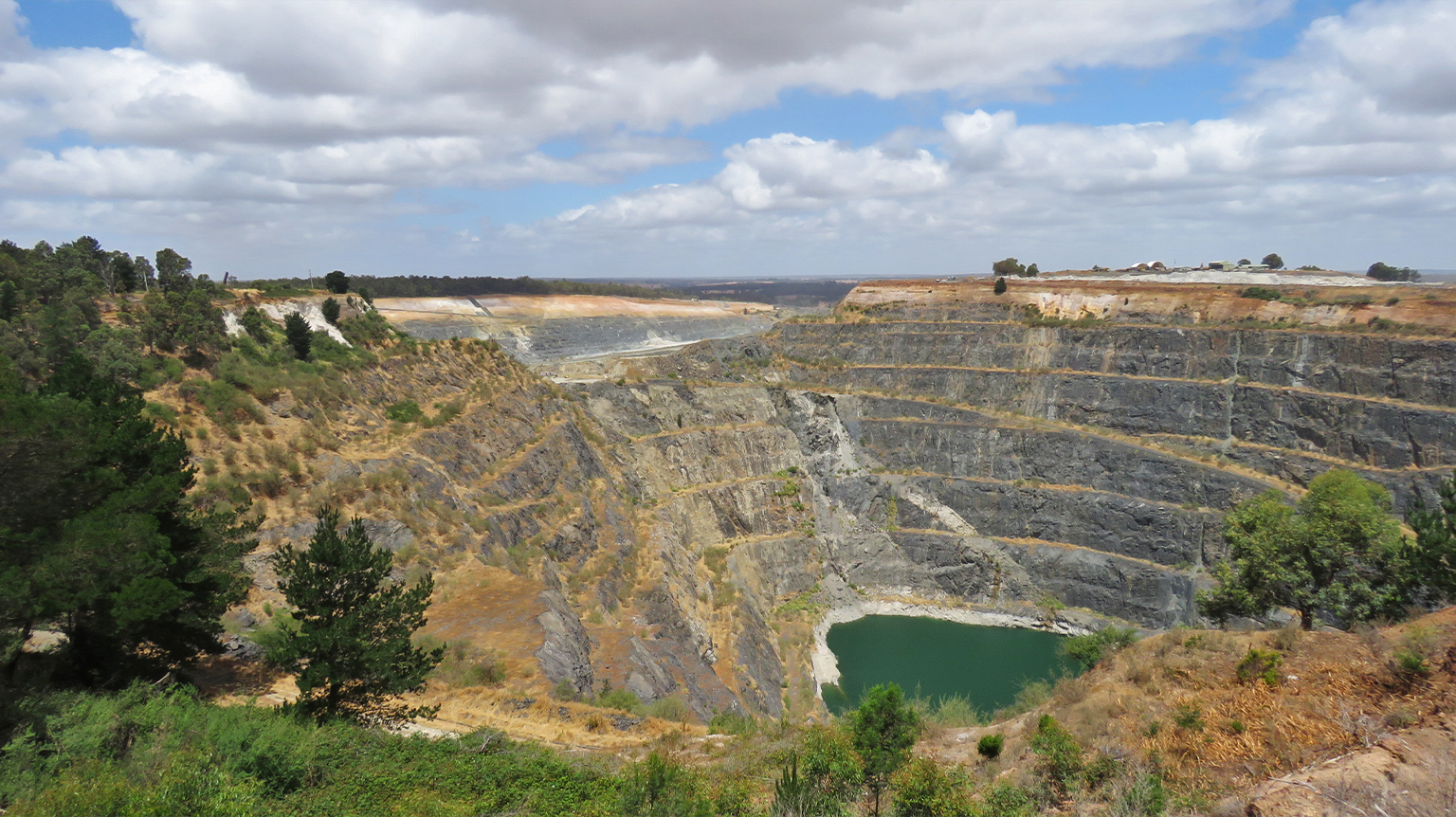
The global push to transition away from fossil fuels is driving a massive surge in mineral extraction and renewable energy infrastructure that is fundamentally reorganizing land use, resource flows and geopolitical power relations, according to a recent report. The report, published in November by global nonprofit the International Land Coalition (ILC) and the Land Matrix, a land monitoring initiative, reveals that commercial concessions for clean energy and critical transition minerals now span an estimated 328 million hectares (about 810.5 million acres) globally — an area equivalent to the size of India. “What is most striking, and genuinely surprising, is that despite relentless global calls to accelerate and ‘fast-track’ the energy transition, until now, we simply did not know the true scale of its physical land footprint,” Jérémy Bourgoin, the report co-author who leads the ILC Knowledge & Research team, told Mongabay by email. Projects in early exploration and planning phases account for 80% of the total mapped area. “Perhaps the most sobering takeaway is the sheer scale of what is yet to come,” Bourgoin said. “The acute social, environmental, and territorial impacts documented in the report reflect a landscape where only roughly 20% of mapped projects are currently operational.” The report finds that large-scale solar, wind, hydro, and geothermal facilities account for 159 million hectares (393 million acres), while mining concessions for critical minerals like copper, lithium, nickel, and cobalt cover 239 million hectares (591 million acres). Building low-carbon technologies requires vastly more land and raw materials than traditional fossil fuel systems, the report notes: An electric vehicle requires six times the mineral inputs of a conventional car and onshore wind requiring nine times more than a natural gas plant. “We are witnessing a shift from fuel-intensive energy system to a mineral- and land-intensive ‘energy addition’ regime,” Bourgoin said. The massive spatial expansion falls heavily on marginalized communities. Half of all transition mineral concessions — roughly 120 million hectares (297 million acres) — and 25% of utility-scale renewable energy projects overlap directly with Indigenous Peoples’ and local communities’ lands, according to the report. The report added that governments and civil society must systematically track land lease applications, commercial negotiations and exploratory mining claims as they emerge. “Decarbonisation is not an abstract, weightless process: it is deeply material and spatial,” the report notes. It adds that transition to a low-carbon economy threatens “to reproduce the destructive patterns of traditional extractivism under a ‘green banner’”, if strict land safeguards are not enforced. “Climate plans count carbon, but rarely land,” Bourgoin said. “Every solar park, wind farm, and mine needs space, and that space is seldom empty. It is farmed, grazed, fished, or lived on, often under customary rights that appear on no official map.” Banner image: The open pit of the Greenbushes lithium mine, Western Australia, seen from the public mine lookout. More than half of Australia’s clean energy mines lie on Indigenous land. Image by Calistemon via Wikimedia Commons (CC BY-SA 4.0). Credits Topics
Global clean energy transition demands millions of acres, threatening indigenous rights: Report
Full Article
Original Source
Read the full article at News →KhanList aggregates and links to publicly available news content. We do not host full articles from third-party sources. Always verify important information with original sources.