
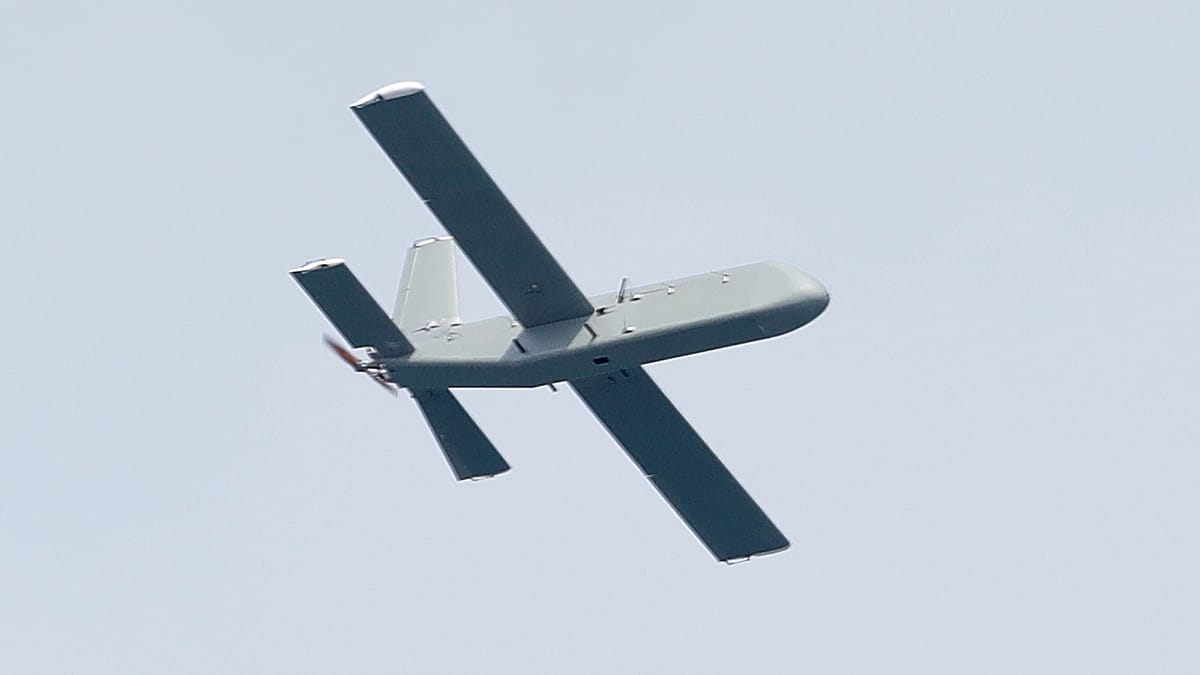
Germany's armed forces have begun testing kamikaze drones and artificial intelligence-assisted targeting technology in Lithuania, marking another step in the Bundeswehr's efforts to modernize its military capabilities amid continuing security tensions between NATO and Russia. ADVERTISEMENT ADVERTISEMENT The trials, conducted at the Rūdninkai military training area near the Belarusian border, involve loitering munitions developed by German defence technology companies Helsing and Stark Defence. The weapons are designed to identify and strike battlefield targets, including armoured vehicles, while potentially offering greater flexibility than conventional precision-guided weapons. According to Reuters, the tests form part of the multinational Freedom Shield military exercise, which brings together approximately 3,800 personnel from eight NATO countries. The exercise also provides German forces with an opportunity to evaluate how artificial intelligence can improve battlefield reconnaissance, target identification and military decision-making. A new generation of battlefield weapons Often referred to as kamikaze drones, loitering munitions are unmanned aircraft designed to remain airborne while searching for or waiting to engage a target. Once an attack is authorized, the drone flies into its target, destroying itself in the process. Unlike traditional missiles, which are generally launched toward a previously designated target, loitering munitions can provide military operators with additional time to observe battlefield developments before committing to an attack. During the Lithuanian trials, German troops tested drones against simulated armoured targets. The aircraft were equipped with inert warheads, allowing military personnel to evaluate their performance without using live explosive payloads. The Bundeswehr is examining how such systems could complement existing artillery, reconnaissance platforms and armoured formations. The technology has attracted increasing attention following its extensive use during the war in Ukraine, where both Ukrainian and Russian forces have employed attack drones against tanks, artillery positions, supply vehicles and other military targets. Their widespread deployment has demonstrated how relatively inexpensive unmanned systems can threaten costly conventional equipment. However, the conflict has also exposed significant limitations, including vulnerability to electronic interference, communication disruptions and increasingly sophisticated counter-drone defences. Artificial intelligence enters the targeting process Alongside the drone trials, German military personnel also evaluated Clarity, an AI-supported military intelligence and targeting platform developed by Helsing. The software is designed to process battlefield information from multiple sources, potentially including drones, surveillance systems and other military sensors. By analysing large volumes of information, AI-assisted systems can help identify potential targets and provide commanders with a more comprehensive picture of battlefield activity. Traditional targeting procedures may require information to pass through several stages of analysis and communication before a military unit can respond. AI-assisted software could reduce some of these delays by identifying relevant information and presenting it to military personnel more efficiently. Lithuania becomes a strategic testing ground The decision to conduct the trials in Lithuania reflects the country's growing importance in NATO's eastern defence strategy. Lithuania borders Belarus, a close ally of Russia, and Russia's heavily militarized Kaliningrad region. Its geographic position places it near one of the alliance's most strategically sensitive areas. Germany has committed to permanently stationing a combat brigade in Lithuania, representing a significant development in its military posture. The formation, known as Panzerbrigade 45, is expected to reach full operational capability by 2027, with approximately 5,000 military personnel and supporting civilian staff. The brigade is intended to strengthen NATO's ability to defend Lithuania and reinforce the alliance's deterrence posture along its eastern frontier. Testing emerging military technologies in the country allows German forces to evaluate equipment in an operational environment relevant to their future responsibilities. The wider Freedom Shield exercise also includes conventional military activities such as manoeuvre operations, electronic warfare and cooperation between different branches of the armed forces. Together, these activities reflect NATO's efforts to integrate traditional military formations with emerging technologies. A changing security environment in Europe The trials are taking place against the backdrop of continuing concern among European governments about Russia's military capabilities and the long-term security of NATO territory. European defence officials have repeatedly emphasized the need to improve military readiness, expand ammunition production and strengthen the alliance's ability to respond to potential threats. Russia, meanwhile, has rejected accusations that it intends to attack NATO territory and has criticized the alliance's military expansion near its borders. The opposing positions have contributed to a security environment in which military exercises, force deployments and weapons development carry increasing strategic significance. The future of European warfare Germany's drone and AI trials in Lithuania illustrate a wider shift in military thinking across Europe. Future battlefield effectiveness may depend not only on tanks, artillery and aircraft, but also on the ability to connect sensors, autonomous or remotely operated systems, artificial intelligence and human decision-makers. The Bundeswehr's experiments represent an attempt to understand how these technologies can operate together in realistic military conditions. Whether the tested systems ultimately deliver the expected operational advantages remains to be demonstrated. The Bundeswehr itself has acknowledged that battlefield drone success rates can be significantly lower than footage of successful strikes might suggest.
Germany tests Kamikaze drones and AI targeting technology in Lithuania
Full Article
Original Source
Read the full article at Euronews →KhanList aggregates and links to publicly available news content. We do not host full articles from third-party sources. Always verify important information with original sources.