
Researchers in the United States are developing a new refractory metal powder atomization system that will help researchers develop materials for extreme environment applications, such as gas turbines and fusion energy systems. “Ames Lab has a long history of making specialized powders that other places simply can’t,” said Ames Lab Scientist Jordan Tiarks. “This system builds on that foundation but pushes us into a new temperature and materials regime that’s been largely out of reach.” The research team also revealed that the powdered metals are crucial for American industry as they enable the precise manufacturing of complex components and specialized alloys that are difficult or even impossible to create using traditional methods. The new system addresses a critical gap in the nation’s ability to supply powder materials for high‑melting‑temperature alloys.The new system can process materials at temperatures up to 3400 °C with production rates up to one kilogram per minute. These capabilities allow researchers to produce the quantities of powder needed to develop, test, and scale novel materials for extreme environments, helping accelerate their adoption by U.S. industry, according to a press release. Gas turbines are made from nickel- or cobalt- based superalloys It was also revealed that currently, land-based and aerospace gas turbines are made from nickel- or cobalt- based superalloys. They require elaborate cooling systems and costly thermal barrier coatings to operate at the extremely high temperatures necessary for optimal efficiency. To improve performance and reduce cooling requirements, researchers are looking to new alloys that can withstand extreme temperature conditions. “Teams had great ideas on paper, but they were running into year‑plus waits just to get the powders they needed for testing,” said Tiarks. “ARPA‑E recognized that what was missing was not just new alloys but also access to equipment capable of making sufficient quantities of high-quality powders of these alloys for research and development. Ames Lab was a natural place to build that capability because we’ve been doing powder metallurgy at a high level for decades.”The research team also pointed out that the new system at Ames Lab overcomes this limitation by using a transferred arc plasma process. Rather than requiring a specially manufactured electrode, the system uses high-energy plasma to locally melt the feedstock before atomization. The feedstock for this process can be in any physical form, including bars and chunks, as long as the material has a consistent composition throughout The melting takes place inside a water-cooled copper hearth, which allows the outer layer of the molten material to freeze against the copper to form a thin protective layer of solid material. This layer (called a “skull”) acts as a liner between the ultra-hot molten material and the cooled copper.Another important part of the process is that only a small volume of the material is molten at any one time. “Local melting gives us two big advantages,” explained Tiarks. “First, it’s safer—if anything goes wrong, you don’t have a huge vat of 3400‑degree metal to manage. Second, the material spends less time at high temperature, which helps us maintain purity and control reactivity.”The refractory atomizer complements a suite of atomizers at Ames Lab. Designed for materials that require much higher processing temperatures, it expands the laboratory’s ability to produce powders from refractory metals and alloys. For conventional alloys that can be processed at lower temperatures, Ames Lab’s existing induction and close-coupled atomizers remain the more efficient option. Those systems can achieve a 50%-60% yield in the optimal particle size range, while the refractory atomizer typically achieves 10%-20% yield for high-temperature alloys, according to the press release.Get the latest in engineering, tech, space & science - delivered daily to your inbox.Prabhat, an alumnus of the Indian Institute of Mass Communication, is a tech and defense journalist. While he enjoys writing on modern weapons and emerging tech, he has also reported on global politics and business. He has been previously associated with well-known media houses, including the International Business Times (Singapore Edition) and ANI.
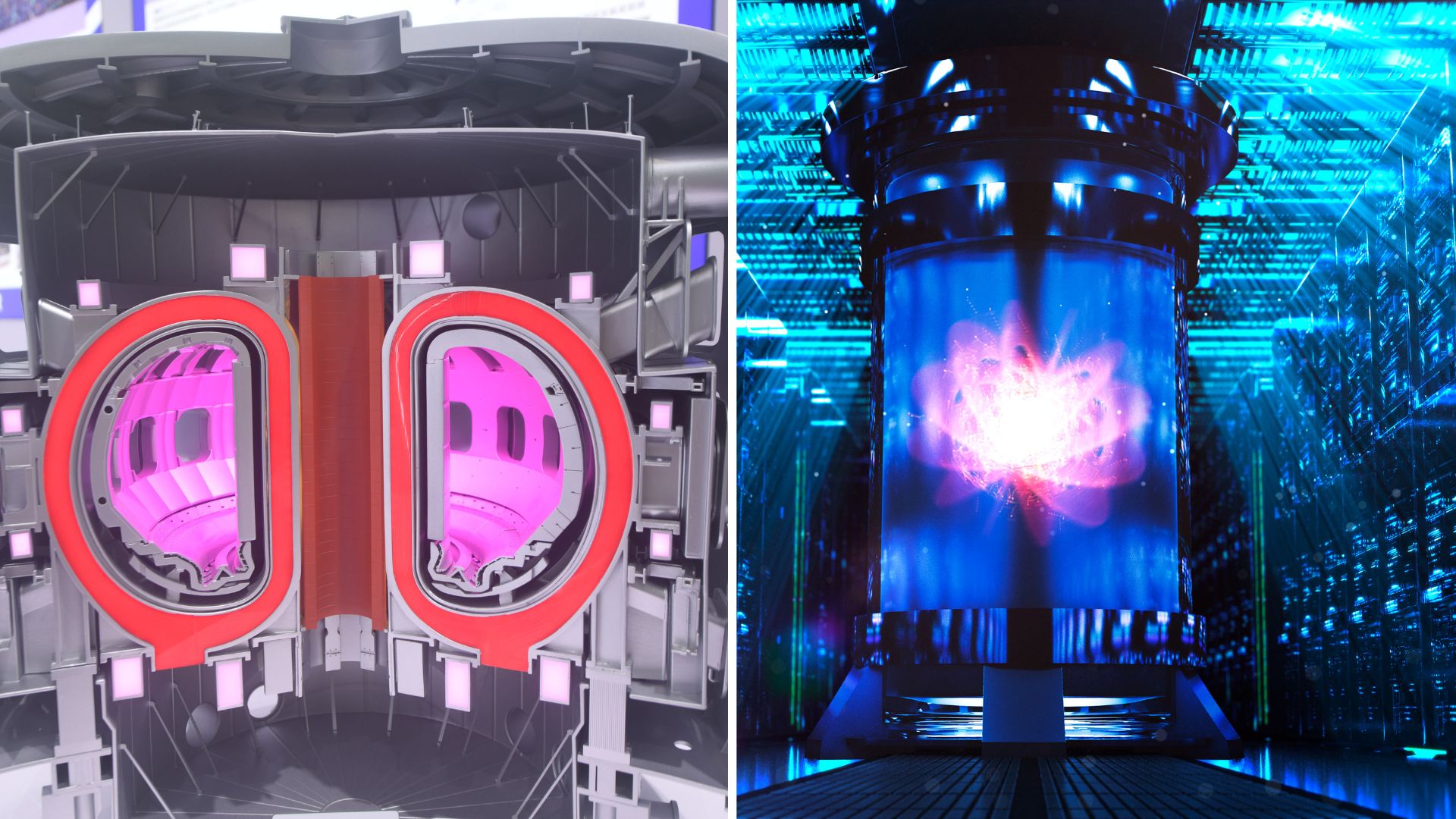
Fusion energy, extreme environment materials could be built easily as US develops key system
Full Article
Original Source
Read the full article at Interestingengineering →KhanList aggregates and links to publicly available news content. We do not host full articles from third-party sources. Always verify important information with original sources.