
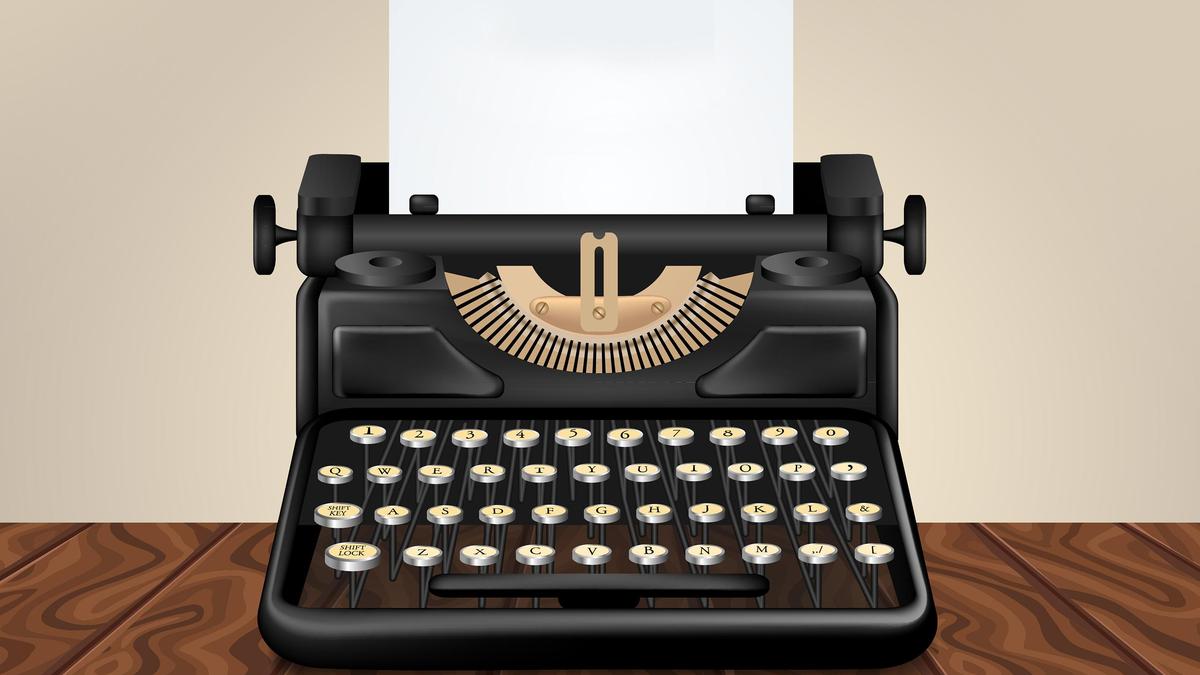
There was a time when reporting began with being there. A reporter had to physically attend a meeting, listen to the speaker, collect the press note and, more importantly, observe what happened around the event. The words spoken at the microphone were only one part of the story. The conversations before and after the meeting often provided the real information.The newsroom, meanwhile, operated at a distinctly different pace. Copies were typed on typewriters. The reporter’s typed sheets were then handed over to operators who fed them into the newly introduced computers. A mistake meant the familiar ritual of striking out a word, retyping it or starting again.Then came the early word-processing systems. The introduction of software such as MSSoft was liberating for reporters. For the first time, many could write their copies directly on a computer. Wrong spellings could be erased and rewritten without the clutter of corrections on paper.It was a small technological change, but it felt revolutionary. English-language reporters were the envy of many vernacular reporters who continued to work with more cumbersome processes.For a long time, the lone landline telephone in the office was the lifeline. Those wanting to give information and those seeking it had to wait for their turn. Reporters took slots to use the phone. Fax machines brought another change. They buzzed incessantly and consumed enormous quantities of paper, receiving press notes from anywhere.Then came the pager. Compared with today’s smartphones, the pager was a primitive device, yet it revolutionised the way reporters received information. Messages were short and crisp: “Rush to press conference.” “Check accident.” “Call office.”When The Hindu became one of the first newspapers in Hyderabad to use the technology, possessing one was something of a status symbol among reporters.I still remember how information about the infamous Jubilee Hills bomb blast, targeting then TDP Minister Paritala Ravi, was conveyed to a colleague through a pager. The pager’s arrival marked an important change - the reporter no longer had to be at the office to receive instructions.The mobile phone took that transformation several steps further.When the first mobile phones began appearing in the late 1990s, they were scarce and the privilege largely belonged to the bosses. The ability to reach a journalist anytime, anywhere, was itself a new phenomenon.Once mobile phones became available to reporters, the traditional boundaries of the working day began to disappear. Journalism became a 24-hour profession.Emails added another dimension. Reporters could receive large volumes of material instantaneously. Unlike paper, emails could be stored, searched and retrieved. Information that might earlier have disappeared into a pile of files could now be preserved for years.But the greatest transformation came with the smartphone and messaging applications. The smartphone changed the very definition of being a reporter.Technology was expected to make journalism easier. In some ways, it did. A reporter could access documents, make calls, record interviews, take photographs, check facts and file a story from a single device.But the paradox was that the easier the tools became, the longer the working day became. The reporter now has to file a story from home, while having a meal at a restaurant, or even during a morning walk. News no longer waited for the reporter to reach the office. The office, effectively, travelled with the reporter.Today, news is consumed on the move. A reporter is expected not only to follow the news but to anticipate it, react to it, update it and, often, explain it almost immediately. Now the role extends far beyond filing a written story. They are increasingly expected to visually tell the story through videos and add value with related podcasts. The reporter is expected to master newer technologies covering digital narrations in line with the changing preferences of the audience. The reporter is now chronicler of instant history using all formats.Yet, for all the advantages of technology, something has been lost. The long conversations over tea and snacks, picking up information that would never have appeared in an official statement. A press note arrives.The reporter reads it. Perhaps a call follows. The story is filed. The next message arrives. The typewriter disappeared. The landline became redundant. The fax machine is in a bin. The pager vanished. Even the desktop computer has surrendered much of its importance to the smartphone.Somewhere between the typewriter and WhatsApp, we lost the time required to build the relationships that once made reporting richer.(ravikanth.ramasayam@thehindu.co.in)
From typewriters to podcasts: the decades that changed the reporter’s worklife, quality of output
Full Article
Original Source
Read the full article at Thehindu →KhanList aggregates and links to publicly available news content. We do not host full articles from third-party sources. Always verify important information with original sources.