
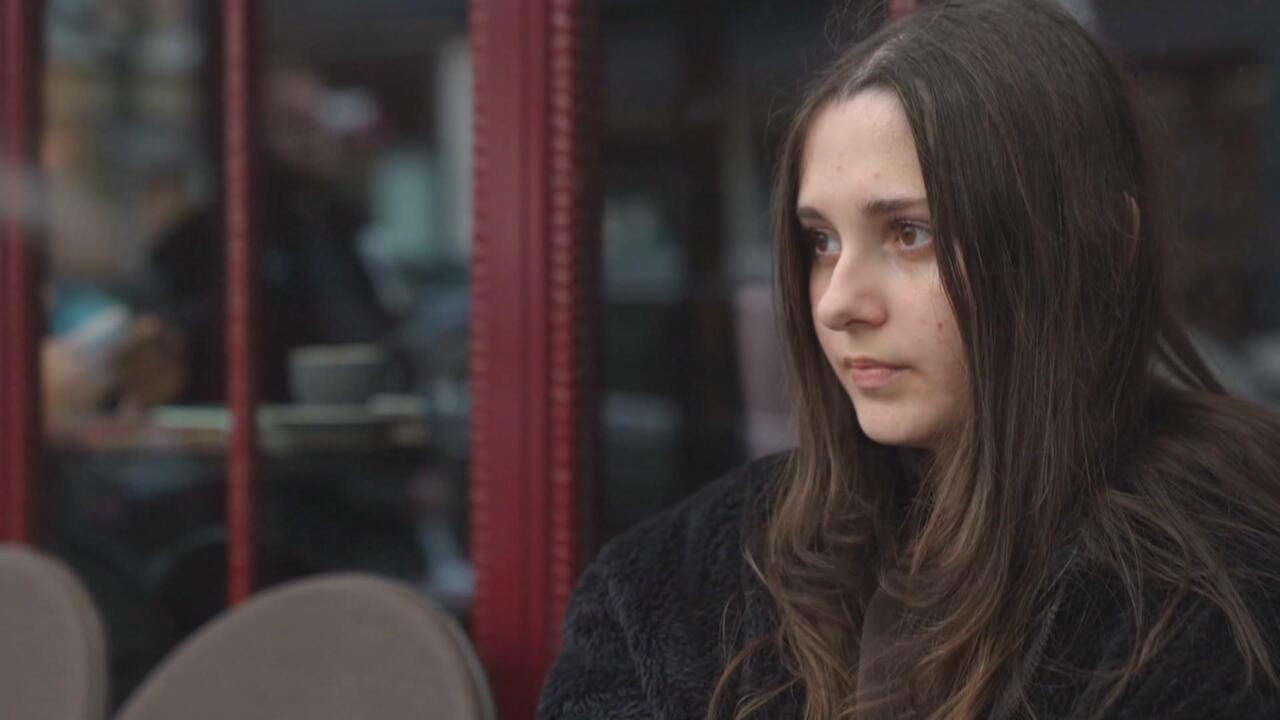
In France, 111 women were killed by their current or ex-partners in 2025 alone, leaving behind dozens of children. How can they rebuild their lives without their mother? How can they seek help? In this episode of France in Focus, we meet Cloé and Eva-Louise, whose world collapsed when their father brutally murdered their mother. FRANCE 24's Natacha Vesnitch, Olivia Bizot, Clément Di Roma and Aurore Cloé Dupuis report. Eva-Louise remembers every detail of March 28, 2023. That day, she received a phone call from the man she now refuses to call her father. "He told me my mother had left him, that she'd sent him a message saying she was tired of living together. It didn't sound like her at all," recalls the young woman, now 23. A month and a half later, on June 14, 2023, Michel Pialle was taken into police custody. Karine Esquivillon's husband confessed to killing her, although he claimed it was accidental. Following his confession, her body was found in a wooded area around 15 kilometres from her home. The autopsy showed she took a bullet to the chest. Pialle was formally charged with murdering his wife and is due to stand trial in February 2027. 'At 20, you're not ready to organise your mother's funeral' Eva-Louise hoped her mother might still be alive, but when her corpse was found, the young woman's world was turned upside down. Her younger brother and sister, both under 18, were initially placed in the care of child protection services before their older brother took over guardianship. At just 20, Eva-Louise also had to organise her mother's funeral, find a lawyer and deal with media requests. "You stop sleeping, you cry, but you don't have time to grieve," she says, adding that she was never offered any support to cope with the trauma. The family home remained sealed off as part of the investigation for almost three years. When Eva-Louise was finally allowed back inside in December 2025, she retrieved a few personal belongings, including photographs and documents bearing her mother's handwriting -- precious reminders of a life brutally cut short. Charities step in to support victims' families After a femicide, children often lose both parents: their father either takes his own life, flees or ends up in prison after killing their mother. To support these children and their families, Sandrine Bouchait and Isabelle Seva-Boismoreau founded the National Union of Families Affected by Femicide (UNFF) in 2019. Throughout the year, the two women travel across France to support victims' relatives, particularly during court proceedings. The organisation has also produced a leaflet to help children identify and understand the emotions they may experience after losing their mother: sadness, anxiety but also happiness. The aim is to reassure them that all these feelings are legitimate and that they have no reason to feel guilty about them. Another crucial challenge is helping children navigate conflicting loyalties. "A child can continue to love their father while condemning what he has done," Bouchait explains. Burned alive in front of her seven-year-old daughter Bouchait's own sister, Ghylaine, was killed by her partner on September 22, 2017. She was 34 and wanted to leave him. He doused her in petrol and set her on fire. Her seven-year-old daughter Cloé witnessed the attack. Sandrine promised her sister on her deathbed that she would take care of Cloé. She eventually adopted her after navigating all the necessary procedures alone. Fortunately, she realised how important psychological support would be for the little girl. "We received no support," Bouchait says. "But we knew that Cloé had lived through a war zone, and that she would need help to overcome it and have a safe space of her own where she could process everything she had seen that night." Femicide support protocol still not widely implemented in France Now 16, Cloé is in high school and dreams of becoming a forensic doctor "to help ensure that the perpetrators of the most heinous crimes are convicted". Eva-Louise, meanwhile, has moved in with her boyfriend and has returned to university. In France, a dedicated femicide response protocol provides free medical and psychological support for children whose mothers were murdered. First introduced in the Paris suburb of Seine-Saint-Denis 11 years ago, it was extended nationwide in 2022. Yet implementation remains patchy. According to a July 2024 report by the National Committee on Domestic Violence, only one in five French departments have set it up. As for young adults like Eva-Louise, there is no support system for them, following the murder of their mother by their father.
France's femicide orphans: The invisible victims of violence against women
Full Article
Original Source
Read the full article at France24 →KhanList aggregates and links to publicly available news content. We do not host full articles from third-party sources. Always verify important information with original sources.