
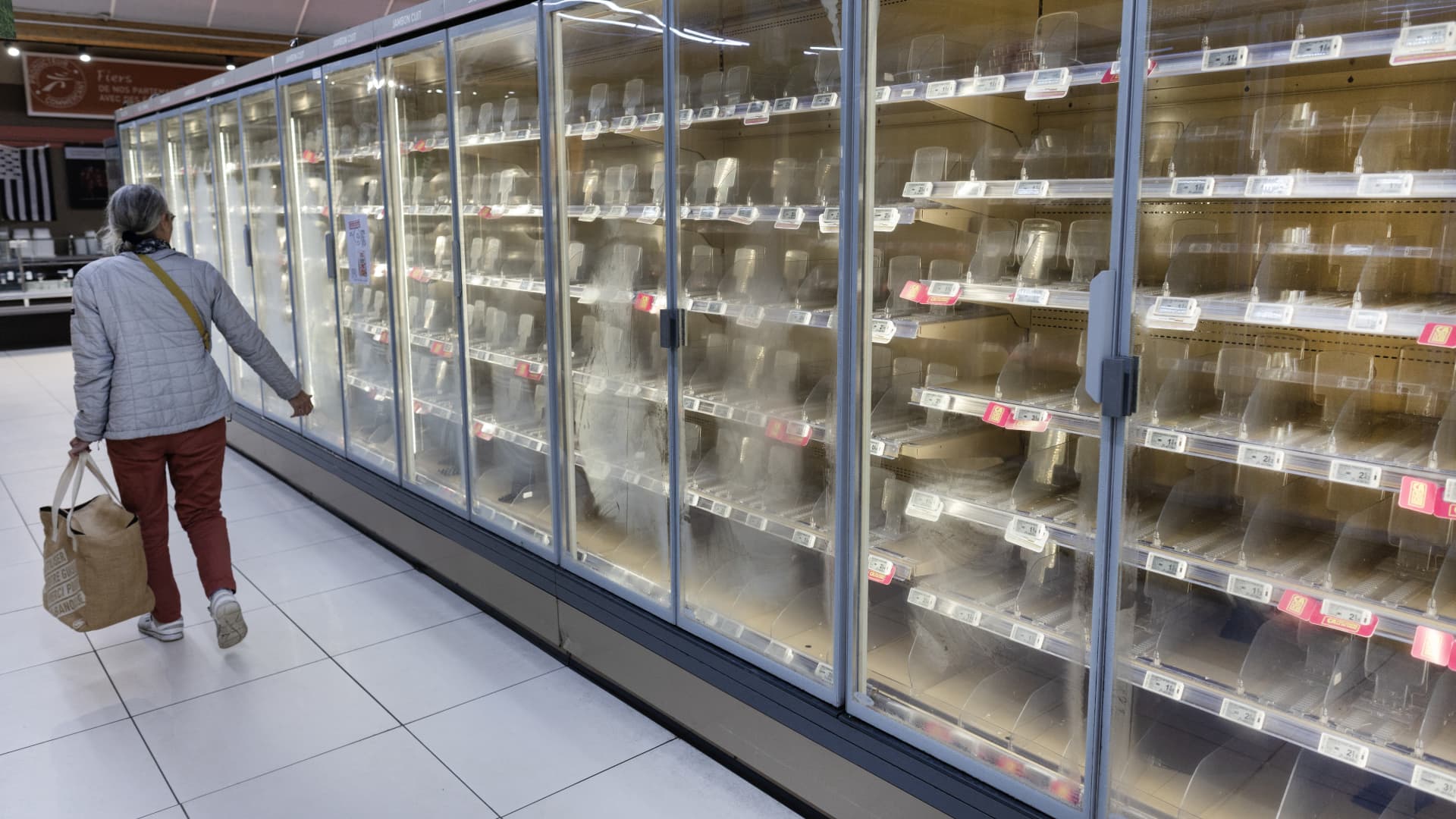
France is "not ruling anything out" in its response to October's mass cyberattacks on supermarket refrigerators that the country has blamed on Iran, the country's Foreign Minister Jean-Noël Barrot said on Tuesday.The French government summoned Iran's ambassador Tuesday morning after Paris said Monday that the findings of an investigation laid the blame for the hacks on Shahid Kaveh, an affiliate of the cyber unit of the powerful Revolutionary Guard Corps. Barrot told radio station Franceinfo that the French government could respond with bans on entering European territory and the freezing of assets of anyone held responsible, as it looks to deter any further malicious acts conducted against the region. Probe points to Iranian hackersRemote hacks on around 700 grocery stores over the night of Oct. 11 to Oct. 12 caused refrigerators and freezers to heat up by as much as 50 degrees Celsius (122 degrees Fahrenheit). The soaring temperatures spoiled food and sparked fires, generating tens of millions of dollars in damage. Major French retailers, including Intermarché, E. Leclerc, Carrefour, Monoprix and Coopérative U were targeted. The Paris Prosecutor's Office is seeking international arrest warrants, Paris chief prosecutor Laure Beccuau said in a statement. A customer enters an Intermarche supermarket in Issy-les-Moulineaux, on the outskirts of Paris, on October 12, 2026, , following a cyberattack affecting the French supermarket chains Intermarche and Cooperative U that caused their refrigerators to defrost. Dimitar Dilkoff | Afp | Getty ImagesInvestigators found use of Farsi and IP addresses pointing to devices in Iran, according to the statement, which added that the attacks were committed to serve a foreign power, in this case, Iran.The hacks targeted refrigeration controllers supplied by Danfoss and Dixell, with attackers remotely taking control of the equipment through web interfaces and starting unlimited defrost cycles while disabling the safety alerts on sensors designed to activate when temperatures exceed a set threshold, it said.France proposes fresh sanctions against IranThe French government also said Monday that it would propose new European sanctions against any Iranian entities and individuals involved, and summon the Iranian Ambassador. "France condemns in the strongest possible terms the unacceptable cyberattacks carried out on its territory by the Islamic Republic of Iran against its interests," France's Ministry for Europe and Foreign Affairs said in a statement. "This is an unprecedented campaign in terms of its scale and level of aggressiveness, thus constituting the first cyber offensive campaign carried out purely for the purpose of sabotage on national territory.""This actor poses a persistent threat to our critical infrastructure. These destructive cyberattacks are unjustifiable, inexcusable, and violate international law," the ministry said. CNBC has contacted the Iranian government for comment. France attributes several previous cyberattacks on the country to Iran-based actors, including cyberattacks and "information manipulation campaigns" against the newspaper Charlie Hebdo in 2023 and the Paris Olympics in 2024. Those led to sanctions in March 2026 against private Iranian company Emennet Pasargad. European infrastructure vulnerability More supermarket fridges elsewhere in Europe were targeted in November, with stores across Belgium, Luxembourg, the Netherlands, Finland, Ireland and Sweden reporting losses. French blood banks were also affected on Nov. 2 by cybersecurity attacks, the French Blood Establishment said.Temperature and defrost thresholds at cold storage units used to store blood products and samples headed to healthcare settings and biobanks were "set to excessively high levels," the EFS said in a statement translated from French to English by CNBC.European leaders and the public have meanwhile been rattled by a wave of hoax bomb threats that have caused dozens of passenger flights to perform emergency landings. "It feels like this could be a pretty unsubtle message from hostile actors to European governments warning that..[they] have the capability to interfere with critical infrastructure and disrupt essential services whenever they choose," Simon Edwards, CEO of cybersecurity testing lab SE Labs, said in an emailed comment."Whether this is an attempt to intimidate governments or preparation for something bigger, it shows how vulnerable our infrastructure can be.""The lack of basic cybersecurity hygiene is the key factor making these attacks possible, why were these fridges connected to the internet in the first place, and accessible without passwords?"— CNBC's Emma Graham and Sawdah Bhaimiya contributed to this story.
France blames Iran for supermarket refrigerator cyberattacks, weighs sanctions
Full Article
Original Source
Read the full article at Cnbc →KhanList aggregates and links to publicly available news content. We do not host full articles from third-party sources. Always verify important information with original sources.