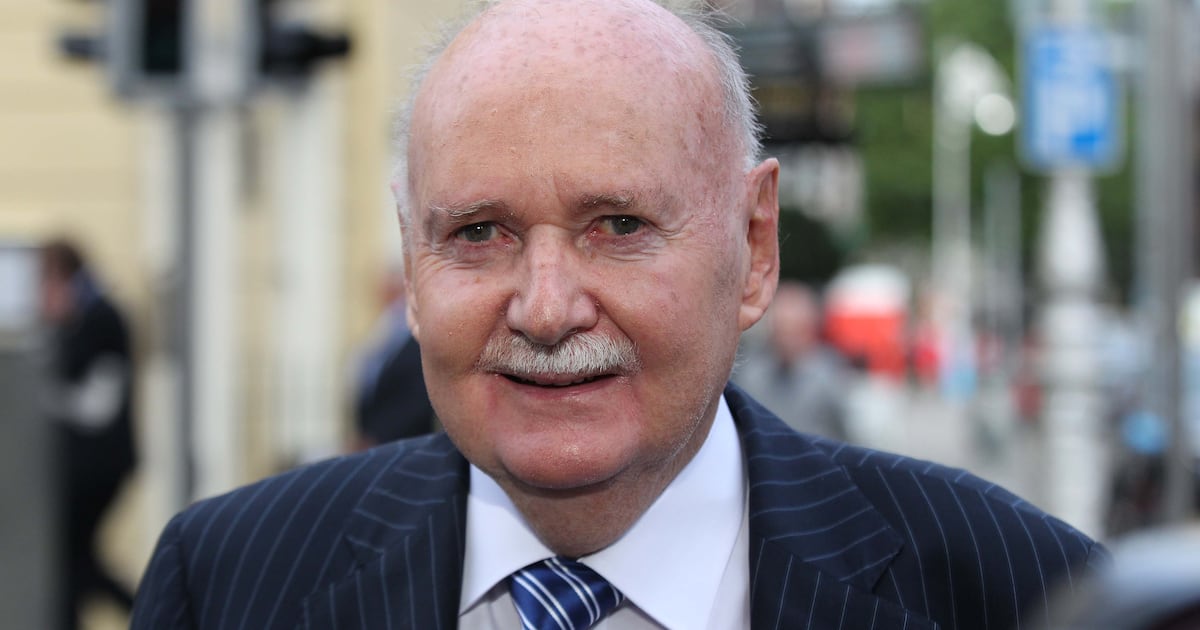
Michael Fingleton, the former managing director of the now-defunct Irish Nationwide Building Society, has died. He was 88. Fingleton died on Sunday seven years after he was incapacitated by a stroke.Fingleton led Irish Nationwide between 1971 and 2009, turning a sleepy building society into one of the State’s main lenders to boomtime property developers, with a peak asset base of €16 billion – before collapsing during the financial crash at a cost to taxpayers of €5.4 billion.Born in Tubbercurry, Co Sligo, the son of a Garda was sent at the age of 13 to boarding school at St Nathy’s College in Ballaghadereen, Co Roscommon, before following the path of many smart men of his generation by entering the All Hallow seminary in Dublin. He left before taking his vows.READ MOREIn 1961, Fingleton joined Allied Irish Finance, which gave him the funds to start studying commerce at night at University College Dublin. On completing his degree six years later, Fingleton qualified as a chartered accountant and began to work with the Dairy Disposal Agency, a State organisation that ran creameries, cattle stations and cheese factories in the west of Ireland.In the late 1960s, he joined Concern and spent a few years working for the charity in Nigeria.Fingleton returned home in 1971 to join a century-old Irish lender then called Irish Industrial Building Society, which had five employees, one branch and IR£2.3 million of assets at the time. He was 33.In 1973, Fingleton qualified as a barrister, though he never practised. However, his head for figures and knowledge of the law would come in handy as he went about building up the sleepy lender. He got the lender’s board to agree to expand beyond Dublin and rebrand as Irish Nationwide Building Society (INBS) in 1975.A skilled networker, Fingleton built strong relationships with politicians and journalists during the 1970s and 1980s. At the time, many newsrooms were filled with reporters who had secured their first mortgage through him, the man who would later earn the nickname Fingers. “During the 1980s, we expanded, slowly and conservatively, the development of the society, particularly in the home loans market,” Fingleton would tell the Oireachtas inquiry into the banking crisis in 2015. “But in addition, we also did small ticket commercial loans for shops and individual offices, for farms and even for small developments and building construction.”The society took advantage of a change in legislation in 1992 that allowed building societies to venture into the financing of housing development and construction. It was around this time that the society started to get into joint ventures with developers, the first of which was with Sean Mulryan’s Ballymore in Lucan in west Dublin, where they built more than 500 homes and a shopping centre.Profit-share arrangements would become an increasingly important part of INBS’s business during the boom years, especially as the group followed clients to the UK market. INBS’s commercial loan book surged €8.18 billion by 2008 to account for almost 80 per cent of total loans.A Central Bank inquiry, established in 2015 and concluded a decade later, heard that INBS failed to process loans in line with policies, obtain property security for commercial loans, get proper valuation reports on assets it was lending against or establish credit-risk policies for profit-share agreements with developers during the boom.INBS had the most toxic loan book of the six banks guaranteed by the State in September 2008. The National Asset Management Agency (Nama) applied the biggest discount – as much as 72 per cent – to the society’s loans when it took over commercial property assets of the sector during the crisis.Between 2008 and 2010, INBS suffered financial losses in excess of €6 billion, primarily arising from the impairment of its commercial loan book. INBS cost taxpayers €5.4 billion to rescue during the financial crisis before its remains were folded in 2011 into Irish Bank Resolution Corporation, previously Anglo Irish Bank. IBRC itself was put into liquidation two years later.Although the Central Bank quietly terminated its inquiry into Fingleton in late 2019 due to his ill-health after he suffered a stroke – while continuing to investigate others – the former INBS head continued to be pursued through the courts by liquidators of IBRC for allegedly negligently mismanaging the lender before it imploded.Fingleton, acting through his wife Eileen Fingleton and son Michael Fingleton jnr, under their powers of attorney, made several attempts through court challenges and appeals to halt the case, originally filed in 2012, but ultimately failed.The civil case – in which Fingleton was unable to give evidence – concluded at the High Court in October 2025. Justice Michael Quinn informed all parties at the time he was reserving judgment.
Former Irish Nationwide chief Michael Fingleton dies at 88
Full Article
Original Source
Read the full article at Irishtimes →KhanList aggregates and links to publicly available news content. We do not host full articles from third-party sources. Always verify important information with original sources.