
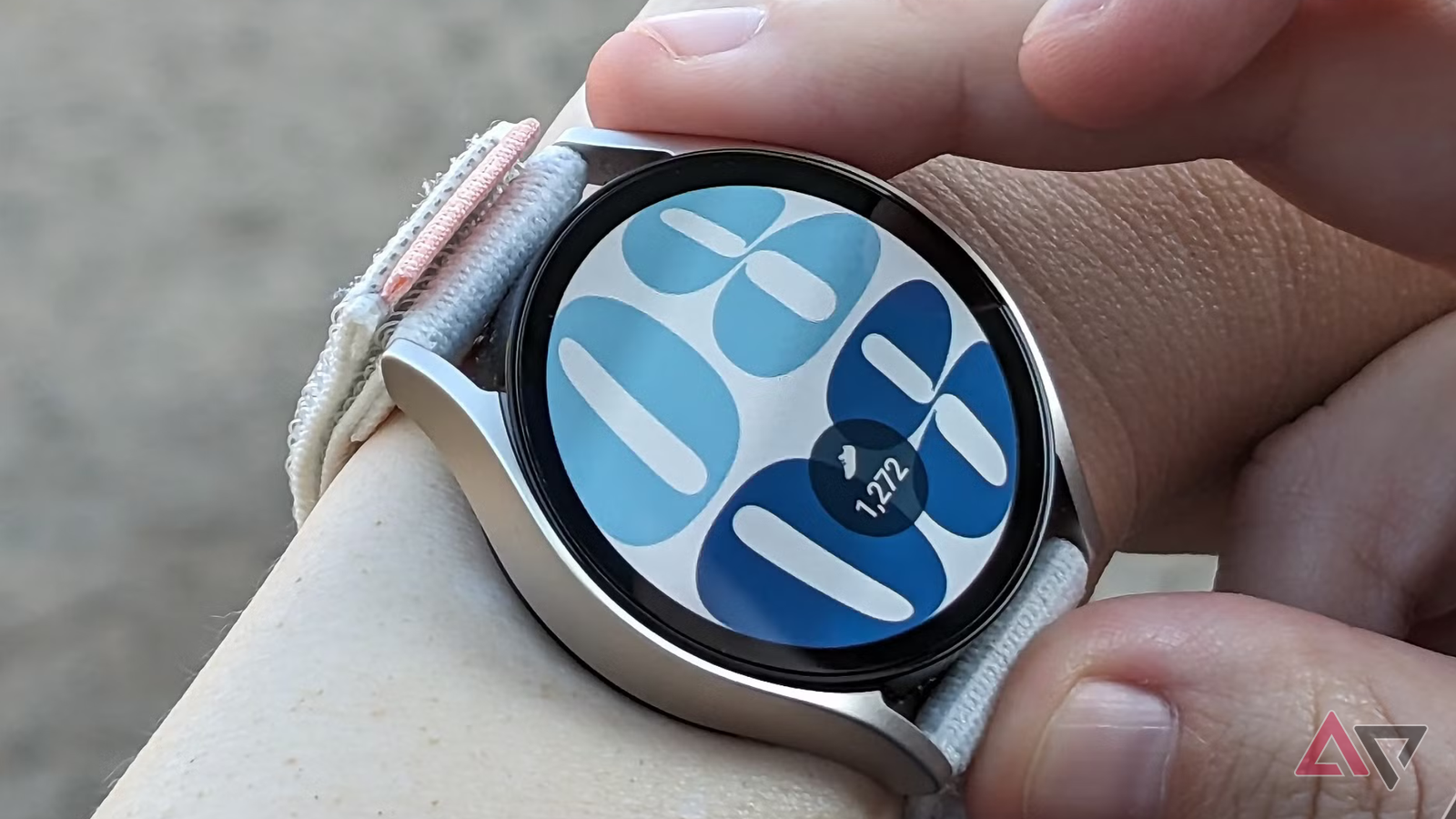
On paper, the Samsung Galaxy Watch 9 is a clear upgrade over the Galaxy Watch 6. It has a bigger battery and interprets your health data more precisely, with features like the Heart Health Score and Fitness Index that explain what your numbers mean. When I started running regularly and wanted to track my runs without carrying my phone, I found that those upgrades don't make the Watch 9 any better on the job than its three-year-old predecessor. As a casual runner whose routes are mostly through a park and my neighborhood, I needed a watch that offered the basics: accurate GPS, reliable heart-rate monitoring, useful notifications, and enough battery for a few runs between charges. The Watch 6 handles every item on that list as well as the Watch 9 does. The only difference I notice day to day is the $80 I'd still have. The Watch 6 provides the features most people need Great features for the everyday user The Samsung Watch 6 has practical smart features that most people need. GPS-based navigation, music controls, phone notifications, calls, and messages. For health, it tracks steps, over 90 workouts, and automatically identifies activities like running, walking, and cycling. It also monitors heart rate, supports blood pressure measurement, and tracks stress and sleep. The Watch 9 keeps the same daily foundation as the Watch 6 but includes more interpretation and coaching around the data. It keeps notifications, calls, workouts, and sleep tracking, while adding or improving features like the Heart Health Score and Fitness Index. For the daily user on a budget who needs notifications, steps, workouts, heart rate, and sleep tracking, the Watch 6 is sufficient. The battery life still keeps up with the Galaxy Watch 9 Power through multiple workouts with all-day battery Battery life is one of the main things I consider when choosing a smartwatch. I want to know how long I can use it before needing to charge it. In this case, both models offer up to 40 hours of normal use. The Galaxy Watch 6 has a built-in 425mAh battery in the 44mm model and a 300mAh battery in the 40mm model. They're both rated for up to 40 hours with the always-on display off and up to 30 hours with it on. The Galaxy Watch 9 uses a 390mAh and 445mAh battery for the 40mm and 44mm models, respectively, yet Samsung rates both at the same 40 hours without AOD and 30 hours with AOD. Since their official battery-life ratings are identical, the Watch 9's bigger battery doesn't translate into any real-world advantage. The price gap is bigger than it looks You're paying for features a casual runner won't miss Samsung's launch prices put these two watches at $80 apart, but that number is out of date. At the time of writing, the Galaxy Watch 6 sells for around $180 on Amazon for the 40mm model and $218 for the 44mm. The Watch 9 is still $379.99 and $409.99. That's about $200 more for the smaller watch and $192 more for the larger one. So what does the extra money buy? Mostly analysis. The Watch 9's Heart Health Score, Fitness Index, Energy Score, and Vitals turn your data into recovery and training guidance, and its Snapdragon chip makes everything feel quicker. That's useful if you're training for a race or chasing personal bests. On my runs, though, I care about three things: accurate GPS, reliable heart-rate readings, and a battery that lasts until my next run. The Watch 6 does all three. There are exceptions. Samsung's trade-in offers can cut the Watch 9's price sharply. During pre-orders, a trade-in brought the 40mm model down to $129.99. If you have an old device to trade, compare the numbers before you buy. If you're paying full price, though, the Watch 6 gives you the same running basics for more than $190 less. The Wear OS features still run well on the Watch 6 Smooth notifications, calls, messages, and workouts Credit: Samsung Wear OS still works well on the Galaxy Watch 6 in 2026 for day-to-day use, though it's no longer the newest or fastest Galaxy Watch platform. Its Exynos W930 processor and 2GB RAM handle the core interface, Samsung applications, and common Google services. The Watch 6 is still a good option if you want the familiar Wear OS experience at a lower cost, especially when it's updated to Wear OS 6. It reliably records GPS, heart rate, pace, and distance, while music controls and Bluetooth headphone playback work as expected. The Watch 9 has a faster Snapdragon chip and more advanced health insights. It also adds interesting features that turn sleep, heart, and activity data into more personalized recovery and training guidance. The Watch 9 is the better option if you want the newest interface, faster hardware, and a longer software runway. But that's not necessary for smooth notifications, calls, workouts, or music controls. The Galaxy Watch 6 offers the essentials The Galaxy Watch 9 may be Samsung's newest flagship smartwatch, with a faster chip and newer features, but the Watch 6 offers everything I need for my daily use. Workouts, GPS, music controls, calls, messages, and phone notifications. At a much lower price, the Watch 6 makes a solid case as Samsung's best value-for-money smartwatch in 2026. Display 40mm: 1.3-inch 432 x 432 Super AMOLED, Always On Display 44mm: 1.5-inch 480 x 480 Super AMOLED, Always On Display CPU Exynos W930 Dual-Core 1.4GHz RAM 2GB Storage 16GB Battery 40mm: 300mAh 44mm:425mAh Connectivity LTE 6, Bluetooth 5.3, Wi-Fi 2.4+5GHz, NFC The Samsung Galaxy Watch 6 is still one of the best smartwatches for casual, everyday use. With a sapphire crystal display, Exynos W930 processor, 2GB of RAM, and up to a 425mAh battery, this smartwatch offers a budget-friendly alternative to Samsung's latest flagship Galaxy Watch 9 line. Software Wear OS 6 / OneUI 8 Watch
Forget the Galaxy Watch 9: the Galaxy Watch 6 is still the best budget smartwatch for Android users
Full Article
Original Source
Read the full article at Androidpolice →KhanList aggregates and links to publicly available news content. We do not host full articles from third-party sources. Always verify important information with original sources.