
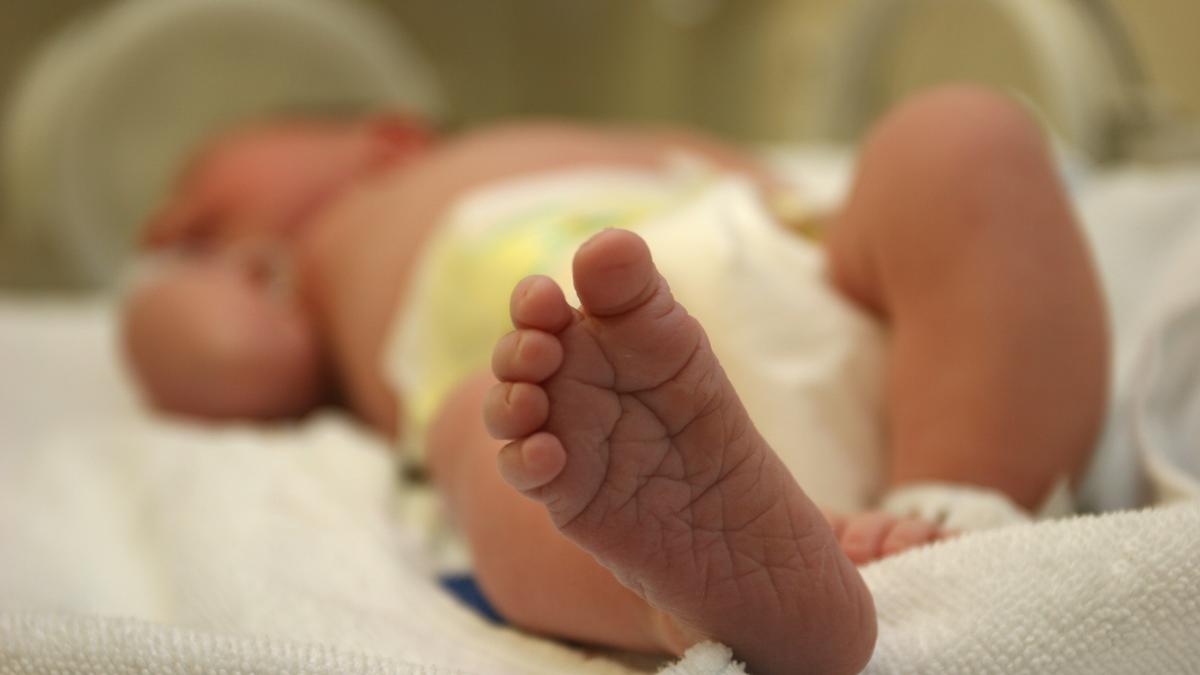
In India, newborns are dying. Earlier, they used to die at home without medical care. Now, they are dying in hospitals. On August 24, 2026, three newborns lost their lives in an accidental fire at the government women’s hospital in Amravati, Maharashtra. This was not the first such episode in government newborn care units, and it will not be the last — unless we view it not as an isolated event, but as a trend.These are episodes of clustered newborn deaths in the government institutions (that were identified by ChatGPT)/in the format of Year/Government hospital/Newborn deaths — 2017 BRD Medical College, Gorakhpur 17; 2017 Government hospital, Ahmedabad 18; 2019 JK Lon Hospital, Kota 10; 2020 JK Lon Hospital, Kota 9; 2020 Government hospital, Shahdol 8; 2021 District Hospital, Bhandara One fire 10; 2021 Kamla Nehru Children’s Hospital, Bhopal One fire 4; 2021 Government Medical College, Ambikapur 4; 2022 Medical College, Ambikapur 4; 2023 Government Medical College, Nanded 12; 2024 Maharani Laxmi Bai Medical College, Jhansi One fire 10; 2025 District Women’s Hospital, Budaun 4; 2026 District Women’s Hospital, Amravati One fire 3This is not a comprehensive national registry, but only a partial list. The pattern, however, is recurring and therefore demands a systemic response.The problems and challengesWhat is going wrong? The first reason is overcrowding. India has achieved remarkable success in ensuring that women increasingly deliver in health institutions — from 39% in 2005-06 to 90% in 2023-24 (National Family Health Survey-6). But this success has created a new challenge. The absolute number of women delivering in institutions has risen from 109 lakh in 2005 to 194 lakh in 2024-25 (Ministry of Health and Family Welfare (MoHFW), Government of India). The total number of sick newborns hospitalised in public Special Newborn Care Units (SNCUs) has also risen rapidly, from 11.3 lakh in 2021-22 to 14.45 lakh in 2023-24 — a 28% increase in two years (Health Management Information System, MoHFW). Hence, newborn-care units everywhere are becoming overloaded.The second reason is the changing case mix. As institutional deliveries have expanded, government hospitals have become the destination not only for normal deliveries but also for large numbers of high-risk births, including premature, low-birth-weight and sick newborns referred from peripheral facilities.Infrastructure failures are the third reason. The Gorakhpur episode of August 2017 was attributed by a district-level inquiry to oxygen deprivation following an interruption in oxygen supply. The fires at Bhandara in January 2021, Bhopal in November 2021 and Jhansi in November 2024, as well as the more recent incident in Amravati, demonstrate the risks posed by fire and electrical hazards in neonatal units. Sick newborns need warmers, incubators and ventilators. Overcrowding can increase the electrical load on these units.Infection and staffing problems would be the fourth reason. Overcrowding, inadequate nurse-to-baby ratios, equipment shortages and poor infection-prevention practices can turn a neonatal unit into a setting where hospital-acquired infections can spread rapidly.The Gadchiroli modelThis diagnosis leads to some obvious solutions. But there is an additional way.India already has another solution. More than two decades ago, the Gadchiroli field trial conducted by the Society for Education, Action and Research in Community Health (SEARCH) demonstrated that trained community health workers (CHWs) could provide effective home-based neonatal care (HBNC), resulting in a 62.2% reduction in neonatal mortality in the rural area (The Lancet, 1999). The trained CHWs identified and managed neonatal infections at home, supported breastfeeding and warmth, and managed low-birth-weight and preterm babies. Subsequent data from Gadchiroli, published in the Journal of Perinatology in 2005, showed that between 1996 and 2003, 97% of low-birth-weight and preterm babies — including those with birth weights above 1,800 g and gestational ages of more than 34 weeks — were managed at home, with a very low case-fatality rate.The principles of the Gadchiroli model have already become a part of India’s public health system (MoHFW, 2011). Around 8,00,000 Accredited Social Health Activists (ASHAs) have been trained to provide HBNC, using training modules developed from the Gadchiroli experience. Therefore, India does not have to invent a new system. ASHAs, if adequately trained, supervised and supported, can provide many components of newborn care. This could take a considerable load off SNCUs and help reduce overcrowding.Of course, a baby with severe prematurity, respiratory distress, shock, severe sepsis, serious birth asphyxia or another danger sign needs immediate facility-based treatment. HBNC is not a substitute for neonatal intensive care. But not every newborn who needs care requires a hospital bed.The optimum strategyIndia should therefore adopt a three-part strategy. First, decongest neonatal units. Strengthen HBNC by ASHAs so that appropriate, stable newborns can safely receive care at home rather than occupying scarce SNCU beds.Second, strengthen neonatal care units. Ensure adequate numbers of doctors and nurses, appropriate nurse-to-baby ratios, functioning equipment, reliable oxygen and electricity supplies with backup systems, along with rigorous infection-prevention measures.Third, make neonatal units intrinsically safe. Fire detection and suppression systems, electrical and oxygen-system safety measures, emergency evacuation drills and independent safety audits should become mandatory.The success of the Janani Suraksha Yojana (JSY) is unquestionable. Institutional delivery can help save mothers and babies. But the next phase of India’s newborn-health strategy must recognise that getting mothers into hospitals is only the first step. Every mother will give birth to a baby who needs care. But not every newborn who needs care requires a hospital bed. The future of newborn care should not be hospital versus home; it should be hospital plus home.That would reduce overcrowding and, most importantly, ensure that each newborn receives the right care, at the right place, at the right time.Abhay Bang is a physician and the founder of Society for Education, Action and Research in Community Health (SEARCH), a community health research organisation
For newborns, the answer is hospital plus home
Full Article
Original Source
Read the full article at Thehindu →KhanList aggregates and links to publicly available news content. We do not host full articles from third-party sources. Always verify important information with original sources.