
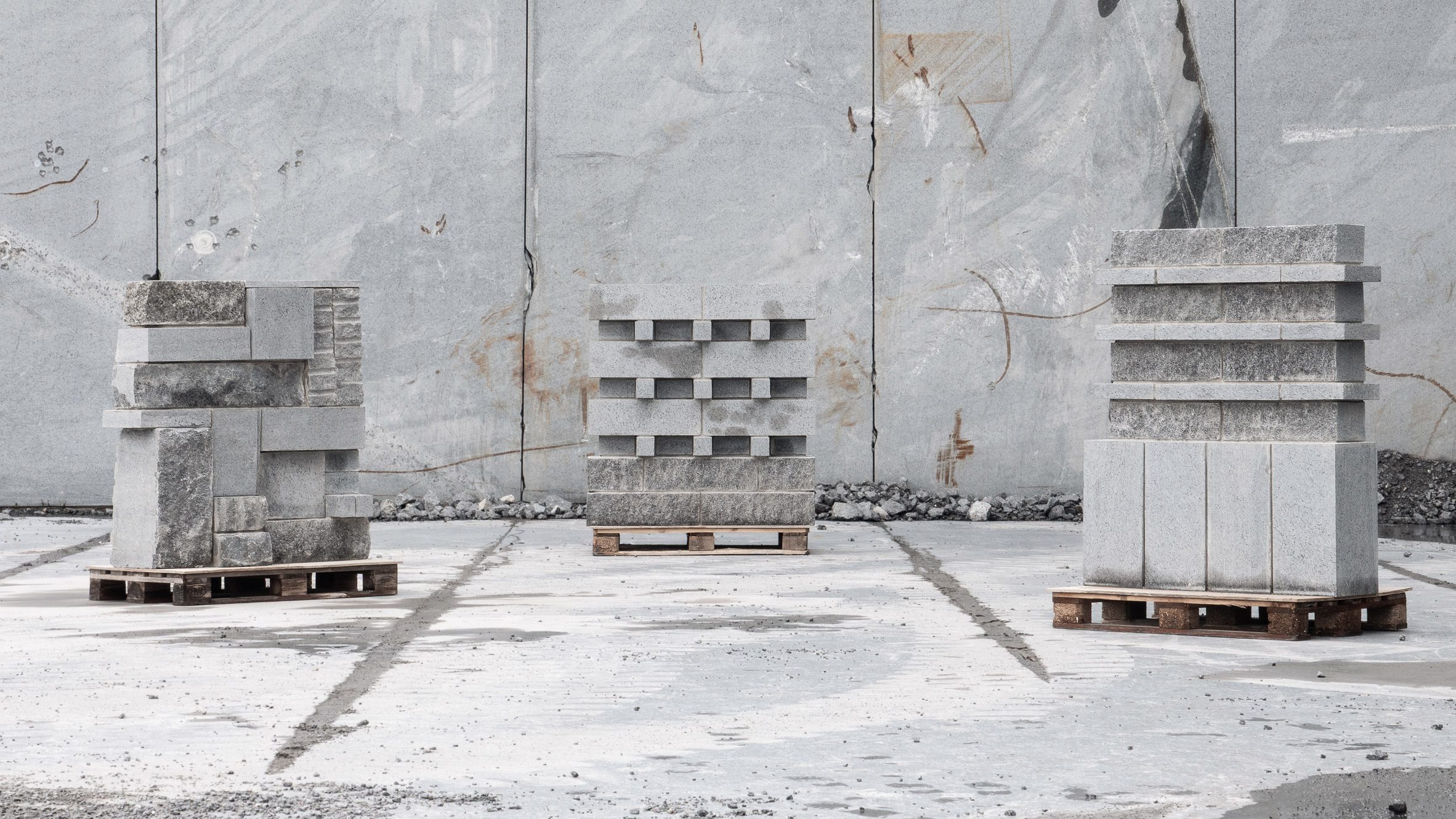
Projects using reclaimed natural materials and local resources proved popular at this year's Oslo Architecture Triennale. From innovative wool tiles to monolithic stone walls, we round up key highlights from the event. In its ninth edition, this year's Oslo Architecture Triennale includes exhibitions, seminars and workshops centred around the theme What If Nature Comes First? Taking place from 17 September to 1 October at Oslo's Sofienberg Church, many of the projects on display in the main exhibition championed the reuse of various natural materials and sourcing materials locally. "This triennale shows what architecture looks like when nature comes first" "Construction is one of the biggest single drivers of nature loss and emissions, and we keep building and demolishing the way we always have," said Oslo Architecture Triennale director Line Ramstad. "What we talk about too little is how much is already available to us in materials, in buildings that still stand, and in knowledge we already have," she continued. "This triennale shows what architecture looks like when nature comes first, and what it would take to scale solutions that already exist." Read on for five stand-out projects at the Oslo Architecture Triennale: Photo by Amy Peacock Upcycling Wool Ecologies by Grinham Research Group An installation cloaked in multicoloured fluted tiles made from waste sheep wool was presented at the triennale by the Grinham Research Group at Harvard University. To make the tiles, wool was treated with an alkaline solution that breaks down the material's protein chains, and a biodegradable additive was added to make it into a plastic material. Conceptualised for retrofitting the outside of buildings, the tiles have a multi-layer design made up of a low-density back panel that acts as an insulative board and a denser outer panel with a fluted surface that is more durable and weatherised. "We're looking at this application because external retrofits are less cost-prohibitive – replacing interior insulation is more cost-prohibitive because you need to dig into the wall," said Harvard University researcher Leonard Palmer. "There is an abundance of waste wool in the world," he continued. "Sheep wool is like nature's plastic; it has really good properties – it's insulative, fire-resistant and anti-bacterial." Photo by Magnus Widerøe Lasting Larvikite by Martin Hopland and Studio Wideroe Oslo-based architecture firms Arkitekt Martin Hopland and architecture firm Studio Wideroe collaborated on a trio of stone wall prototypes, which they assembled using Larvikite stone from Norway's Larvik quarry. One wall has a mismatched mosaic appearance made entirely from excess stone, another features a profile pattern of horizontal bands atop a plinth, and the third wall has stone elements rotated 90 degrees to create an ornamental design. "We feel like it's time we get back to where we were a couple of hundred years ago," Arkitekt Martin Hopland founder Martin Hopland told Dezeen. "This has the huge potential to solve three things at once," added Studio Wideroe founder Magnus Widerøe. "Reducing the waste the stone quarry produces, replacing high-intensity processed materials like concrete, and using a material that actually lasts." Photo courtesy of Ask Holmen Materiet Former by Ask Holmen Norwegian architect Ask Holmen created four sculptural benches placed around the exterior of Sofienberg Church, reusing stone sourced from a local stone mason. Holmen stacked circular, curved and rectangular slabs to form the seating, which he hopes will become places of conversation during the triennale. "The bench is like a sunken portal – when you sit down, you are in between worlds," he told Dezeen. "It's an invitation for dialogue, and when you enter into a dialogue with someone, you never leave the same as you came in." "I didn't know what stone elements I would get, so the elements themselves led me to the aesthetics," Holmen continued. "It's an open process and an interesting way that we can also approach architecture; maybe we can have a way of thinking that balances between rigidity and flexibility." Photo by Julie Hrncinova of Abrakadabra Open Sauna Experimental Construction by Oslo Badstuforening, Oslo School of Architecture and Design and UCLouvain-Loci Non-profit sauna association Oslo Badstuforening worked with students and professors at the Oslo School of Architecture and Design (AHO) and Belgium's UCLouvain-Loci to build a sauna next to the Sofienberg Church. Over two five-day sessions, master's students built the sauna from recycled building materials, including timber structure and cladding, small glass brick windows and colourful polycarbonate panels lining the split roof. "The light coming from the top is inspired by the stained glass windows in the church," said AHO assistant professor Matthew Dylan Anderson. "Through interviews with the target group of kids who will be using the sauna, we found out they didn't like the idea of people seeing into the sauna so that they can play with their mates, hence the small glass brick windows." Photo by Amy Peacock Initiating Common Ground by Studio Dreist In the lead-up to the triennale, Vienna-based collective Studio Dreist hosted workshops where participants learned to work with cocciopesto, an ancient Roman building technique that uses lime and crushed brick. The outcome of the workshops was a collection of air-dried panels, which were laid on a reused-timber frame to form a large communal table at the triennale exhibition. "We were asked to make a table for the church, so we looked for materials that were local," said Studio Dreist cofounder Sophie Coqui. "Oslo has a long brick history, similar to Vienna, so we thought about how to repurpose brick into a table." "We are curious in materials, we are not super specialised in one," added fellow cofounder Luisa Zwetkow. "We are trying to figure out how materials and processes work – it's different planning to use a material if you've already worked with it." Oslo Architecture Triennale takes place from 17 September to 1 October at Sofienberg Church in Oslo, Norway. See Dezeen Events Guide for more architecture and design events around the world. Read more: Architecture and design events Oslo Oslo Architecture Triennale Reclaimed materials Stone Wool Architecture Design Subscribe to our newsletters Your email address New! Dezeen Agenda US Sent on alternate Fridays, this US edition of Dezeen Agenda is a fortnightly newsletter rounding up everything you need to know from America, featuring news, projects and interviews with industry figures. Plus occasional updates and invitations to Dezeen events. New! Dezeen Showroom New Releases A quarterly newsletter rounding up a selection of recently launched products by designers and studios, published on Dezeen Showroom. Dezeen Debate Our most popular newsletter, formerly known as Dezeen Weekly, is sent every Tuesday and features a selection of the best reader comments and most talked-about stories. Plus occasional updates on Dezeen’s services and breaking news. Dezeen Agenda Sent every Thursday and containing a selection of the most important news highlights. Plus occasional updates on Dezeen’s services and invitations to Dezeen events. Dezeen Daily A daily newsletter containing the latest stories from Dezeen. Dezeen In Depth Sent on the last Friday of every month, Dezeen in Depth features original feature articles, interviews and opinion pieces that delve deeper into the major stories shaping architecture and design. Dezeen Jobs Daily updates on the latest design and architecture vacancies advertised on Dezeen Jobs. Plus occasional news. Dezeen Jobs Weekly Weekly updates on the latest design and architecture vacancies advertised on Dezeen Jobs. Plus occasional news. Dezeen Awards News about our Dezeen Awards programme, including entry deadlines and announcements. Plus occasional updates. Dezeen Events Guide News from Dezeen Events Guide, a listings guide covering the leading design-related events taking place around the world. Plus occasional updates and invitations to Dezeen events. Dezeen Awards China News about our Dezeen Awards China programme, including entry deadlines and announcements. Plus occasional updates. We will only use your email address to send you the newsletters you have requested. We will never give your details to anyone else without your consent. You can unsubscribe at any time by clicking on the unsubscribe link at the bottom of every email, or by emailing us at [email protected]. For more details, please see our privacy notice. Thank you! You will shortly receive a welcome email so please check your inbox. You can unsubscribe at any time by clicking the link at the bottom of every newsletter.
Five stand-out projects at the Oslo Architecture Triennale
Full Article
Original Source
Read the full article at Dezeen →KhanList aggregates and links to publicly available news content. We do not host full articles from third-party sources. Always verify important information with original sources.