
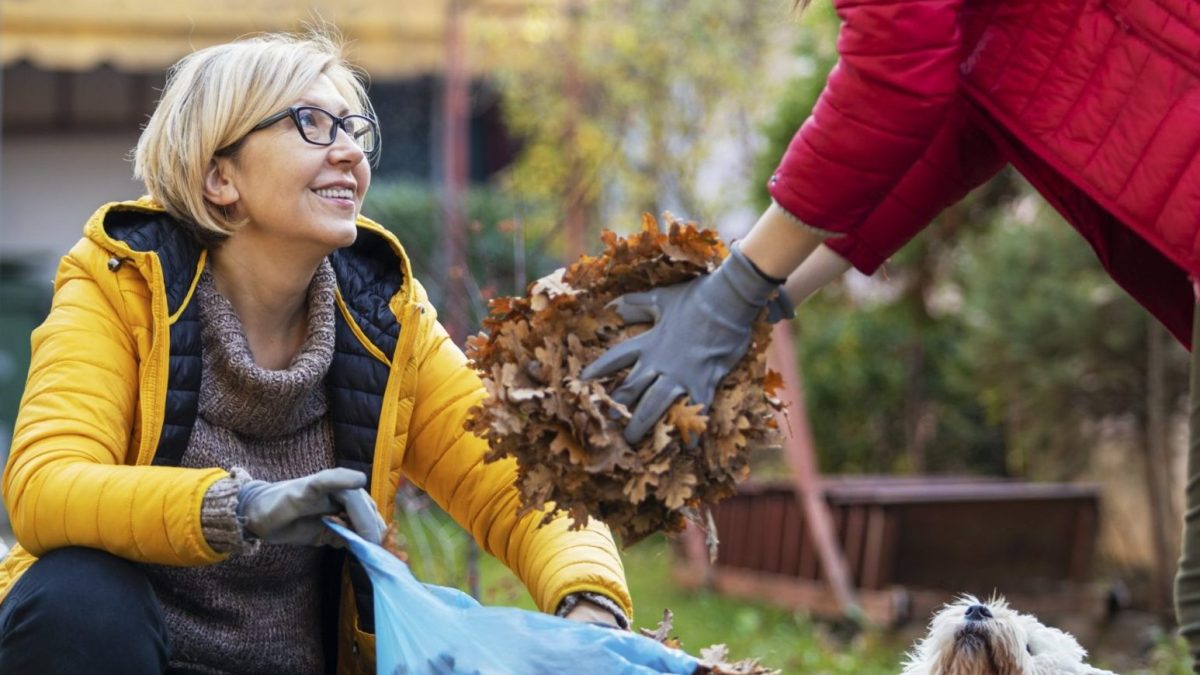
This is Everyday Science with Clare Wilson, a subscriber-only newsletter from The i Paper. If you’d like to get this direct to your inbox every week, you can sign up here. With the warm weather finally ending where I live in south-east England, this week I dug out a list of autumn gardening jobs I made several years ago. I was surprised to see that, with several of the items on the list, I either no longer do them, or they involve less work than before. Shorts While gardening lore might seem set in stone, the latest advice can change over time. Here are five corners of the garden where you might want to do things differently this autumn. Digging over the soil Standard advice has been to dig over the soil in flower beds and vegetable patches every autumn, to break up clods and improve drainage and aeration. This also gives a chance to pull out weeds and stones, and mix in fertiliser or compost. Perfectionists might finish by raking it over to get fine crumbly soil that seems perfect for planting up next spring. But all this work could be doing more harm than good. According to the “no dig” method, popularised by organic gardener Charles Dowding, soil should be disturbed as little as possible. Even in soil that looks compacted, there will be natural air holes and fine networks of fungi that help plant roots absorb more nutrients, says Nick Turrell, a gardening expert at the Royal Horticultural Society. The fungal threads release a gluey substance called glomalin, which binds small mineral particles and organic matter into larger clumps, which are more free-draining. All that structure is broken up by digging. “It’s a lot better if you just leave the soil alone,” says Turrell. Adding compost or other organic matter to the soil is a good idea, but no need to mix it in. Leave it on top and worms will take it down in to the soil for you. “Worms are the best gardeners on the planet,” says Turrell. Clearing dead leaves Raking and bagging fallen leaves is another chore that can be counterproductive. Leaves on flower beds can be left where they have fallen – they are a useful source of organic matter. What if leaves are on your lawn? The worry is that they will smother the grass, starving it of light and killing it. Even here we can get away with less work than we might think. According to researchers at the University of Wisconsin-Madison, you don’t need to do anything if less than a fifth of your lawn is covered by leaves. The leaves will blow around and eventually break down, releasing nutrients. The grass will not only survive but benefit. But if half or more of the lawn is covered, then you do need to take action. You can just run the lawnmower over it without collecting the cuttings in the grassbox. This will shred the leaves into fine pieces, letting them decompose more quickly. “If you bag them up and take them to the tip, that’s an own goal because you are getting rid of a really valuable source of food for worms,” says Turrell. Think twice on bird feeding Traditionally, autumn and winter is when we start putting out more bird food, as there are fewer natural food sources. But a growing number of studies find garden bird feeders are not the unalloyed benefit they’re usually assumed to be. One problem is that bird feeders can spread disease, such as trichomonosis, caused by a parasite. This is often carried by pigeons, which can be resistant, but feeders can spread it to birds such as greenfinches and chaffinches, for whom it is deadly. Greenfinch numbers have dropped by 60 per cent in the UK since the 1990s, mainly due to this disease. Mealworms are a treat for great tits (Photo: Chris Gomersall/RSPB) Because of this, the Royal Society for the Protection of Birds (RSPB) said this year people should no longer put out birdseed and peanuts – which are liked by finches – in spring and summer. They should only offer such food from around November to April, when the cold kills off the parasite. The RSPB also said people should stop using flat bird tables, because these tend to spread disease when birds pick up seed dropped by others and it mixes with their droppings. Instead, we should use the hanging feeders that store food in a tube or wire cage. In theory, people can start putting out the full range of bird food from next weekend. But there’s another potential downside. Not all bird species can access garden feeders. Some species are more dominant, such as great tits, blue tits and greater spotted woodpeckers. These keep away other species, such as willow tits, marsh tits and lesser spotted woodpeckers. Not only do feeders fail to benefit the threatened birds, they are actually bad for them, because they boost numbers of the common species, which compete for natural food sources and nesting holes. “If food is always there and it’s monopolised by the dominant species, they can then exclude the subordinate species from food resources, but also nesting resources,” says Professor Alex Lees, a biodiversity expert at Manchester Metropolitan University. For people living near woodlands, garden feeding could be contributing to the decline of scarcer bird species, he says – although it is unlikely to be a problem in more urban areas. But there is not yet enough evidence to advise people to stop feeding altogether, says Charlotte Ambrose, RSPB wildlife adviser. Leave the mess Once flower beds have gone to seed or died back, it is tempting to get rid of the brown straggly foliage to neaten things up. But a more laissez-faire approach can be a different way of helping birds and other wildlife. Seed heads are a direct food source for birds, while leaves and hollow stems can become shelters for insects and spiders that are fodder for insectivorous birds, like robins, wrens and goldcrests. “I have watched the sparrows and goldfinches coming in our garden and eating teasels and wildflower seed heads,” says Lees. “For me, that’s a bigger payoff than putting out some niger seed, which might have been grown in Ethiopia.” No crocks in pots When the summer jobs are out of the way, it makes sense to turn our attention to any plants we have in containers, to consider if they need a larger pot. Standard advice is to put a layer of coarse material at the bottom of every pot to improve drainage – usually using broken shards of pottery, or “crocks”. It sounds logical, as water drains faster through coarser soil like gravel than when grains are finer. But this premise is wrong, says Turrell. Water drains more slowly through the interface between a fine-textured and a coarse one. Water will only move into the crock layer when the compost above is saturated – which we don’t want. The simplest solution is just to fill the new post with compost, unless it has a large drainage hole that lets the soil spill through, in which case a single shard may be needed to cover it. The RHS advises people to wait until the end of winter before repotting, in case the new compost that contains no plant roots becomes waterlogged. An easy way to stop that from happening is to slightly raise them off-ground. Turrell uses thin plastic “spacers” from DIY stores, often used by kitchen fitters. “The eye doesn’t see that the pot is slightly floating, but it still lets the water come out and drain away,” he says. I’ve been watching I am riveted by the latest series of The Celebrity Traitors, enhanced this year by the show-by-show “reaction” episodes on The Rest Is Entertainment podcast. But I was shocked to learn Richard Osman’s radical strategy for Faithfuls: When you know someone is a Traitor, don’t vote them out until the end – otherwise they will only recruit a new Traitor whose identity will be a mystery. Osman surely deserves to be a contestant on the next series.
Five autumn jobs gardeners are getting wrong – and the easy fixes
Full Article
Original Source
Read the full article at Inews →KhanList aggregates and links to publicly available news content. We do not host full articles from third-party sources. Always verify important information with original sources.