
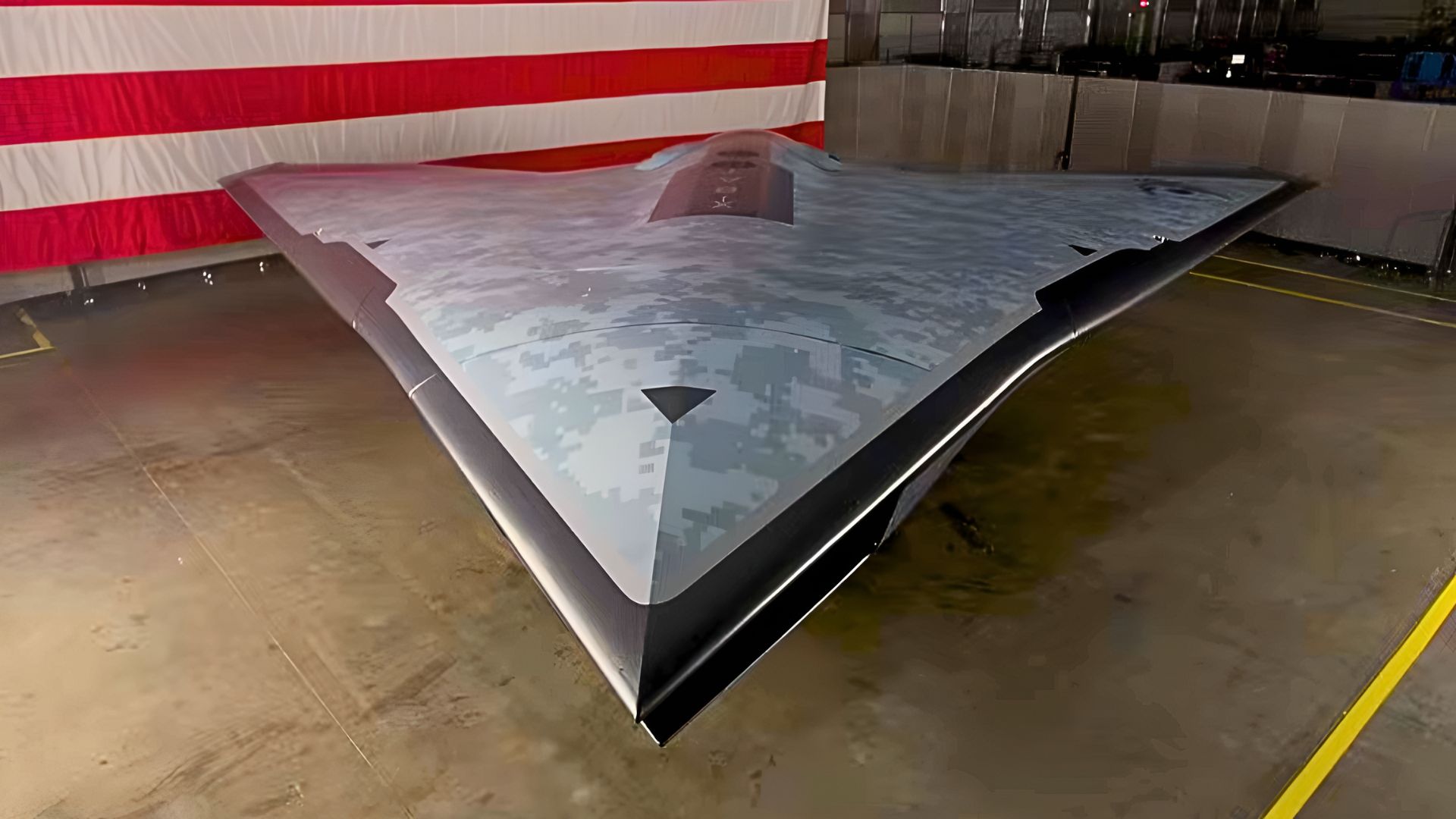
Shield AI has completed the first full-scale prototype of its X-BAT autonomous combat aircraft, bringing its ambitious runway-independent fighter concept closer to flight testing. The aircraft uses a vertical takeoff and landing (VTOL) configuration that could allow U.S. forces to launch combat drones without conventional runways. Its design targets operations from naval vessels, remote islands, and other locations with limited infrastructure. Designated X-BAT 001, the prototype recently emerged from Shield AI’s development facility in Frisco, Texas. The company is now transporting the aircraft to its X-Forge 2 flight test facility in Newton, Kansas. Engineers will begin evaluating its propulsion system and vertical-flight capabilities before attempting untethered flight. Testing the vertical flight system Shield AI plans to follow a carefully staged testing program before X-BAT attempts its first independent flight. Engineers will initially run the engine horizontally while the aircraft rests on its launch and recovery vehicle. Vertical engine tests will follow. The team will then use a crane to support the aircraft during early flight experiments. This arrangement should help prevent a prototype loss if the engine stalls or another technical problem emerges. Successful crane-assisted trials would clear the way for untethered flight demonstrations. X-BAT’s propulsion system centers on GE Aerospace’s F110-GE-129E turbofan. The engine incorporates an Axisymmetric Vectoring Exhaust Nozzle (AVEN), which directs thrust to control the aircraft’s orientation during vertical operations. Shield AI and GE Aerospace completed engine ignition, nozzle movement, and integration tests in July. Those trials took place at GE’s facility in Peebles, Ohio. The work helped validate a critical part of the aircraft’s unusual flight configuration. Fighter without runways X-BAT takes a different approach to the U.S. military’s growing interest in Collaborative Combat Aircraft (CCA). Shield AI envisions a larger uncrewed platform capable of carrying substantial weapons loads. The aircraft reportedly measures roughly twice the size of the Air Force’s first-generation CCA designs. Its internal weapons bays should accommodate munitions weighing up to 2,000 pounds. External weapon stations could provide additional flexibility for different combat missions. Shield AI also identifies air-to-ground strikes, counterair operations, and electronic warfare among its intended roles. The aircraft will use the company’s Hivemind autonomy software to manage flight and mission execution. The system targets operations in environments where GPS signals or communications links become unreliable. This capability could prove particularly valuable during operations across contested regions. Shield AI has advertised a range exceeding 2,000 nautical miles with a full mission payload. Its stated combat radius reaches approximately 1,000 nautical miles. Flight testing must establish whether the aircraft can achieve those performance targets. A changing aircraft design New footage of X-BAT 001 also reveals several differences from earlier design models, as TWZ noted. Its thrust-vectoring exhaust nozzle now extends noticeably beyond the rear edges of its wings. Previous renderings showed a more recessed arrangement. Two prominent structures also appear on either side of the aircraft’s central dorsal spine. Each features a small forward-facing opening. Two additional circular openings sit atop the spine, with mesh screens covering them. Their purpose remains unclear, although they could relate to the propulsion system. The exhaust nozzle provides pitch and yaw control, while Shield AI previously described using wing-mounted bleed-air thrusters for roll control. The newly visible openings could offer clues about that arrangement, but the company has not explained their function. X-BAT has already undergone substantial design changes since its October 2025 unveiling. A half-scale model displayed at the Navy League’s Sea-Air-Space 2026 exhibition featured a revised arrowhead-shaped wing planform. The full-scale prototype now offers a clearer look at the engineering choices behind the aircraft. Get the latest in engineering, tech, space & science - delivered daily to your inbox.Aamir is a seasoned tech journalist with experience at Exhibit Magazine, Republic World, and PR Newswire. With a deep love for all things tech and science, he has spent years decoding the latest innovations and exploring how they shape industries, lifestyles, and the future of humanity.
First full-scale X-BAT combat drone prototype packs 2,000-mile range, vertical flight
Full Article
Original Source
Read the full article at Interestingengineering →KhanList aggregates and links to publicly available news content. We do not host full articles from third-party sources. Always verify important information with original sources.