
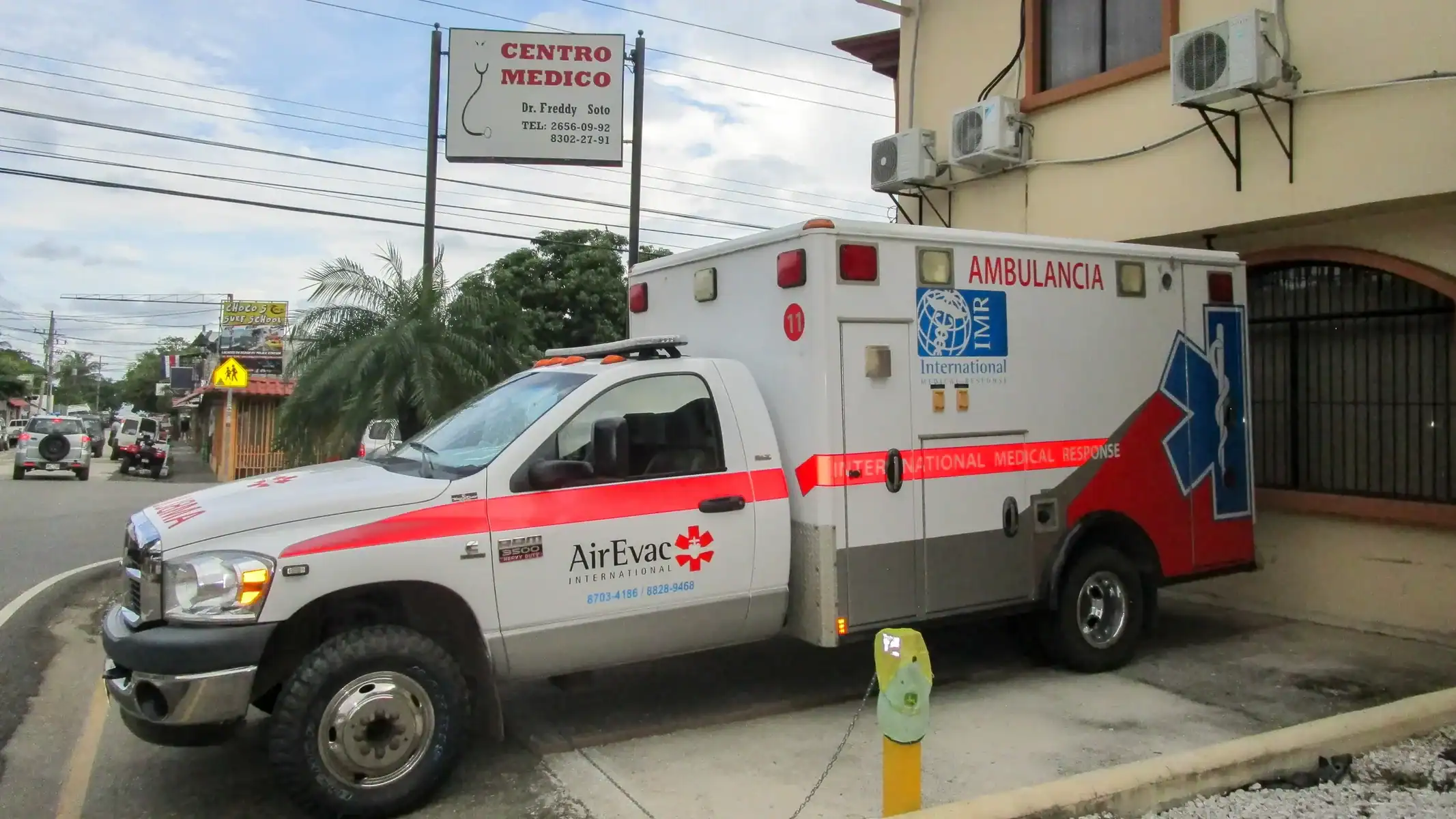
The director of Costa Rica’s Fire Department, Héctor Chaves León, said last night that President Laura Fernández gave no instruction on how to buy 40 ambulances now under review by anticorruption prosecutors. Internal procurement documents, however, cite a presidential instruction as the basis for the emergency purchase. The Fire Department, known here as the Cuerpo de Bomberos, awarded the contract on Sept. 28 to the SGSV-Bem Estar consortium for $13.88 million, about $347,000 per vehicle. It invited only that consortium to submit an offer, using Article 66 of the General Public Procurement Law, which allows exceptional contracting in emergencies. The consortium joins SGSV Soluciones Tecnológicas Integradas with the Brazilian ambulance maker Bem Estar. Two people linked to SGSV, its legal representative and regional sales director and a company officer who has held that post since 2015, bought political debt bonds from Fernández’s Pueblo Soberano party during the presidential campaign. According to the Supreme Elections Tribunal (TSE), the purchases totaled 43 million colones and 9 million colones, or roughly $95,600 and $20,000. The TSE has opened a preliminary administrative inquiry into the economic solvency of the two campaign financiers. The inquiry began on Sept. 17 and was expanded on Nov. 4. Separately, the Deputy Prosecutor’s Office for Probity, Transparency and Anticorruption (FAPTA) opened a case on its own initiative on Nov. 2 into alleged influence peddling against the public treasury. No one has been charged, and the investigation is at a preliminary stage. At a press conference yesterday, Chaves said Fernández had not told the Fire Department which contracting method to use, how many ambulances to buy or which suppliers to consider. He said those were the institution’s own decisions and asked anyone claiming otherwise to produce written evidence such as emails or messages, adding that none exists. Chaves acknowledged that the president asked in July for prehospital emergency care to be strengthened. He said it was the government’s Health Sector Council that later instructed the Fire Department to speed up the process. A recommendation report addressed to Chaves and dated Sept. 25, three days before the award, states that the urgent purchase was carried out under the instruction of President Fernández and a July 31 agreement of the Health Sector Council. The report traces that reasoning to a Sept. 4 memo from the department’s Operations Directorate, and a Sept. 10 compliance report from its procurement office treats the presidential instruction as the trigger for the urgency. Asked about the document, Chaves said it refers to the president’s general instruction to promote prehospital care in the country, not to the purchase method or the choice of suppliers. Two local suppliers that had submitted quotes during the department’s market study were not invited to bid. Comercializadora Técnica Industrial del Oeste (Cotisa) offered all 40 units for $11.57 million, or $2.31 million less than the winning price, while AutoStar Vehículos offered $13.74 million. The Fire Department rejected both, citing delivery times of 240 days as excessive. Chaves said the speed of delivery was vital. He said the competing offers ranged from 240 to 280 days, while the Brazilian manufacturer proposed 100 days, and that he expects the units next March, whereas other purchasing routes could have pushed delivery into 2027 or 2028. Under the contract, the supplier is to deliver one prototype first and the remaining 39 ambulances within 100 days of the department’s approval of that prototype. An inspection of the prototype at the factory in Brazil is scheduled for Nov. 19 and 20. The Fire Department has acknowledged that its own failure to specify the exact color code for its red fleet altered the contract schedule, and it approved an extension. The tender required proof that the bidder had built at least 200 ambulances for five clients over the previous two years. Bem Estar submitted certificates for 210 units for two Brazilian clients. AutoStar asked for the procedure to be annulled over what it called serious defects, and the Fire Department rejected the request as untimely. Chaves said the ambulances would be advanced life support units equipped with ultrasound, defibrillators and ventilators, assigned to the Southern Zone, Limón, Guanacaste, the Northern Zone and the Central Valley. He said the country handles about 50,000 accidents a year. He also said the Fire Department dealt only with the Brazilian manufacturer, which then sought out a Costa Rican partner to form the consortium. Chaves said he had sent the full procurement file to the Prosecutor’s Office and to FAPTA, and that he is willing to cooperate with the Comptroller General’s Office. The file is public and can be consulted on the government’s SICOP procurement platform. Gabriela Chacón, executive president of both the National Insurance Institute (INS) and the Fire Department, announced at Casa Presidencial on Oct. 7 that the 40 ambulances had been awarded and were expected to enter service in February 2027. On Nov. 2, she said she did not know the details of the procedure and attributed its approval to the department’s director or to its administration. SGSV has won at least five public contracts since 2022, four of them through special procedures, and it was part of a consortium that bid in 2024 for the contract behind the digital marchamo vehicle sticker, a tender the INS later declared void. Opposition lawmaker Claudia Dobles of the Coalición Agenda Ciudadana described the links between the president’s campaign financiers and the winning consortium as vulgar and sharply questioned the process. The contract remains in force while prosecutors and electoral authorities carry out their reviews and none of the people or companies involved has been accused of a crime.
Fire Chief Says Fernández Gave No Order on Ambulance Deal, but a Memo Cites Her
Full Article
Original Source
Read the full article at Ticotimes →KhanList aggregates and links to publicly available news content. We do not host full articles from third-party sources. Always verify important information with original sources.