
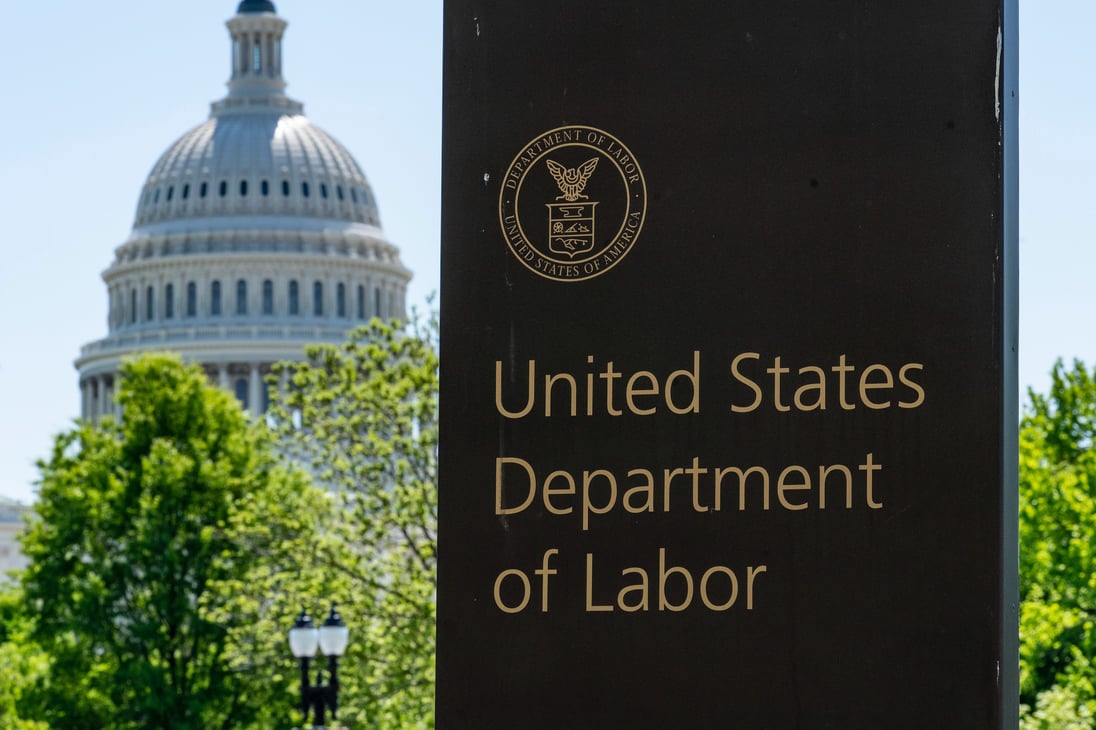
The Roberts court’s push to disarm the administration state could disrupt the Trump administration’s ability to enforce penalties for companies violating rules around foreign worker programs.WASHINGTON (CN) — The Trump administration begged the Supreme Court on Tuesday to uphold its ability to enforce worker protections for immigrant laborers.In Department of Labor v. Sun Valley Orchards, the justices considered whether the federal government can impose penalties on employers who violate H-2A program conditions through agency proceedings instead of courts of law.Unlike Article III courts, administrative law judges fall under the executive branch. About 2,000 of these judges work across 30 agencies; by comparison, about 900 judges work throughout the judiciary.Sarah Harris, the principal deputy solicitor general at the Justice Department, said it wasn’t possible to bring federal court cases for hundreds of violations each year, leaving the government open to massive underenforcement of the law. And she warned an adverse ruling could ripple through other public benefit programs across the government, such as Medicare and federal student loans.“Please tell us if we need to get legislative affairs on it right now because this will snowball,” Harris said. “Please reverse.”The H-2A program allows U.S. employers to bring foreign nationals into the country to fill temporary or seasonal agricultural jobs when domestic workers are unavailable. In return for bringing foreign laborers into the country, employers must agree to terms and conditions, such as satisfying certain minimum standards for working and living conditions.Sun Valley Orchards in New Jersey obtained permission for 96 H-2A visas for foreign workers to pick asparagus and peppers from April to October in 2015. Along with 51 domestic workers, the immigrant laborers were expected to work 12 hours a day with only a single one-hour break.Sun Valley’s laborers lacked access to drinking water and clean bathrooms while on the job, and their living conditions weren’t much better. Workers were housed in six bedrooms with 20 bunk beds per room, and the bathrooms were dirty and lacked sufficient hot water.Several workers met with Sun Valley’s owner to discuss the substandard provisions. Instead of addressing their concerns, the company gave them prefilled departure forms to sign, stating they were voluntarily leaving because of personal issues. The H-2A workers were subsequently laid off midseason.The Department of Labor launched an investigation and determined Sun Valley violated the H-2A program requirements. An administrative law judge and the department’s Administrative Review Board affirmed the findings, ordering the company to pay over half a million dollars in civil penalties and back wages.But an appeals court said the case had to be brought through the federal judiciary under the Supreme Court’s recent ruling in SEC v. Jarkesy. The 2024 decision was part of the Roberts court’s recent spate of rulings disarming the administrative state, a term describing the governing power of the federal government and its agencies.Harris argued Jarkesy included an exception for public rights claims. She said the H-2A program qualified because it involved government-granted privileges.“The government is exercising its plenary immigration power on the employer’s behalf to grant aliens visas and allow them to stay and work for that employer,” Harris said.During the first half of Tuesday’s argument, most of the conservative justices seemed opposed to Harris’ argument and looked likely to constrain the government’s ability to bring civil penalty claims in agency proceedings.Chief Justice John Roberts, a George W. Bush appointee, suggested the government wanted to extend broad executive authority over immigration beyond the justification for its application.Justice Neil Gorsuch, a Donald Trump appointee, questioned why the administration should be allowed to set up a whole court system to adjudicate H-2A claims when federal courts already exist to do so.Harris’ stark warnings seemed to give some of the justices pause.“Ms. Harris put a lot of chips on the table when she finished saying this would be quite destructive for the government if she lost,” Roberts remarked.Sun Valley’s arguments, however, appeared to sway even more opinions in the government’s favor. Robert Johnson, an attorney with the Institute for Justice, struggled to articulate the bounds of the employer’s arguments.Justice Brett Kavanaugh, another Trump appointee, described Johnson’s proposal as “at war with clarity.” Justice Samuel Alito, a fellow Bush appointee, said he was outlining a “hodgepodge opinion.”The court’s three liberals seemed broadly opposed to Sun Valley’s arguments from the start. Justice Ketanji Brown Jackson, a Joe Biden appointee, said the employer was “fighting the reality” of the H-2A program’s purpose to ensure farmworkers weren’t coming in and undercutting domestic workers. Justice Elena Kagan, a Barack Obama appointee, said the employer’s argument would prevent the government from targeting immigration fraud.Justice Sonia Sotomayor, also an Obama appointee, said Sun Valley’s arguments would allow employers to treat workers badly and gamble on whether the Justice Department had enough lawyers to penalize everybody who violates the program’s rules.After nearly two hours of arguments, Harris made a final push for compromise during rebuttal.“I don’t like the prospect of losing,” Harris said. “I think that’s very obvious. I hope we don’t lose this case because of the consequences. But if you were looking to which poison is the least bad, I agree that the poison that’s the least bad is at least saying that we can impose penalties initially in adjudications and then have de novo review in Article III courts.”Subscribe to our free newslettersOur weekly newsletter Closing Arguments offers the latest about ongoing trials, major litigation and rulings in courthouses around the U.S. and the world, while the monthly Under the Lights dishes the legal dirt from Hollywood, sports, Big Tech and the arts.Additional Reads
Feds warn SCOTUS against handing over policing power for immigrant labor laws
Full Article
Original Source
Read the full article at Courthousenews →KhanList aggregates and links to publicly available news content. We do not host full articles from third-party sources. Always verify important information with original sources.