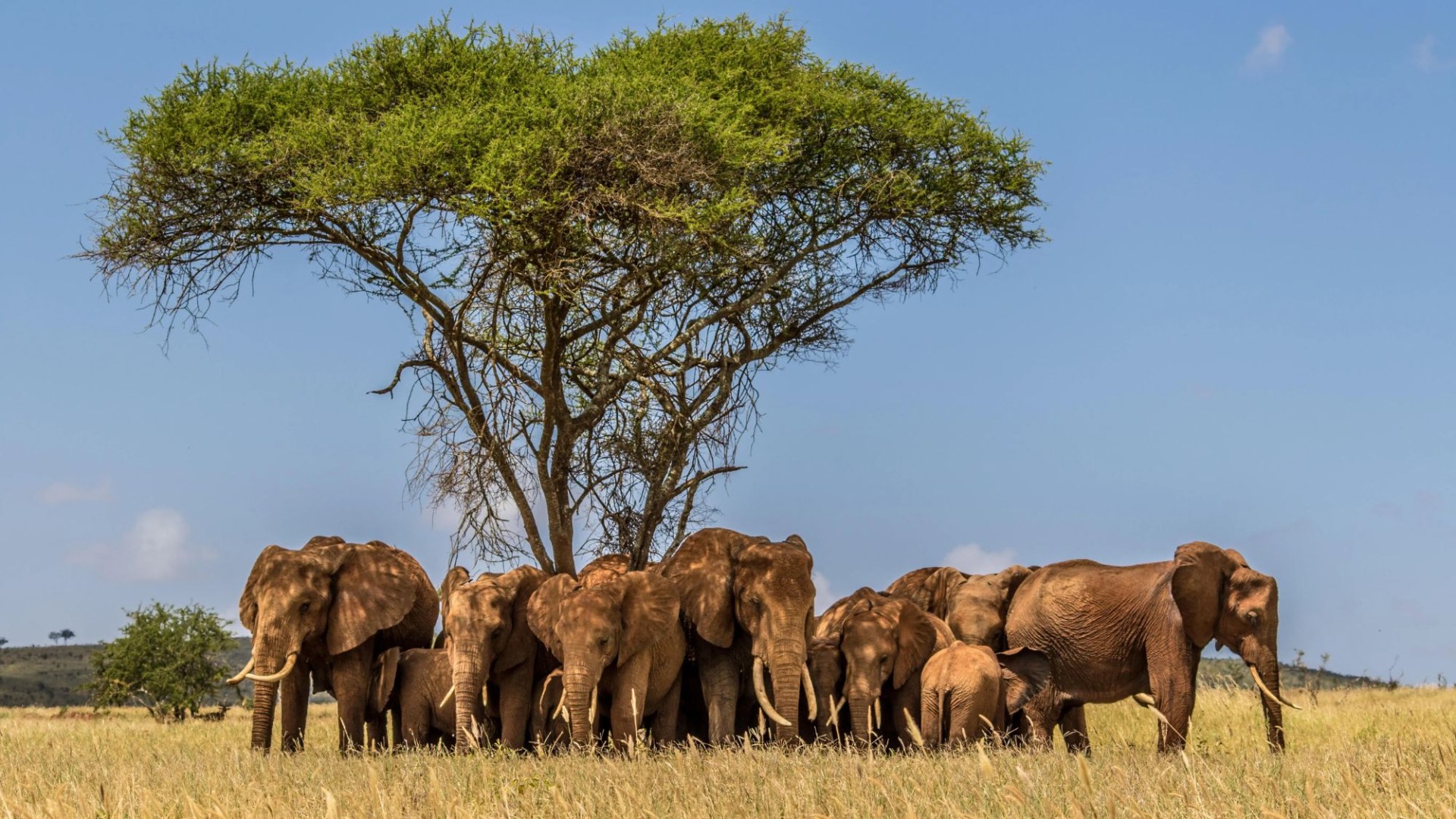
THERE are fears a mystery poison has wiped out 15 elephants after a deadly illness left mums and babies paralysed before they suddenly died. The shocking die-off has sparked an urgent investigation in southern Kenya near Amboseli National Park. There are fears a mystery poison has wiped out 15 elephants (stock) Credit: Alamy The shocking die-off has sparked an urgent investigation in southern Kenya (stock) Credit: Alamy Ten of the 15 elephants suffered the same terrifying symptom – partial paralysis that left them unable to stand before they died within a day or two. The other five carcasses were too badly decomposed or had been scavenged, leaving experts unable to establish what killed them. Sign up for The Sun newsletter Thank you! Only one of the dead elephants was a bull, with most of the victims females and calves. The elephants died between June 24 and July 24, with all the carcasses discovered outside the park on community land around 10 to 20 miles from its boundaries. KWS head of communication Duncan Wanyama said the bodies were found at different locations between around 15km and 30km from the park’s boundaries. The Kenya Wildlife Service said there is currently no evidence pointing to a single cause. But preliminary tests on tissue samples at a laboratory at the University of Nairobi detected a “potential toxic substance”. A separate analysis by a government laboratory came back negative for the toxins tested. Most read in The Sun Further tests are now under way as experts race to uncover what caused the devastating deaths. KWS said: “Environmental investigations are also being undertaken, including the analysis of water sources and other potential environmental contaminants within the affected areas, to establish whether the elephants were exposed to a common source,” The authority said there was no risk to humans. Experts are examining the carcasses and tissue samples have been sent to laboratories to establish whether disease, poisoning or another factor is to blame. Ten of the 15 elephants suffered the same terrifying symptom – partial paralysis (stock) Credit: Getty The elephants died between June 24 and July 24 (stock) Credit: AFP The alarming deaths have triggered fears of a repeat of previous elephant poisonings linked to poaching and human-wildlife conflict in Kenya. The scale of the catastrophe is particularly chilling because it is the worst elephant die-off recorded in the Amboseli ecosystem for decades. Officials said the deaths are the first mass elephant mortalities on this scale recorded in the region for decades, after successful efforts to crack down on poaching. The victims included elephants of different ages and sexes, suggesting the deaths were not confined to one family or demographic. Amboseli and its surrounding ecosystem straddles the border with Tanzania and is one of Africa’s most famous wildlife landscapes. The region is home to more than 2,000 elephants, according to figures from the Amboseli Trust for Elephants in 2025. The spectacular park is famed for its vast savannahs and breathtaking views of Mount Kilimanjaro across the border in Tanzania. It is also home to some of Africa’s last “super tuskers” – giant bulls whose enormous tusks weigh more than 45kg (100lb). One of the most famous, Craig, died in January aged 54 after fathering numerous calves. KWS said there are plans to preserve Craig’s remains for public display. The latest mystery echoes a devastating elephant die-off in Botswana’s Okavango Delta in 2020. More than 350 elephants died in the shocking outbreak, which was later linked to toxic cyanobacterial blooms in waterholes. Scientists said warming temperatures and changing rainfall patterns had helped create the conditions for the deadly blooms. Now Kenyan wildlife experts are desperately trying to establish whether the Amboseli deaths have a similarly sinister environmental cause. Comment now
Fears herd of elephants have been poisoned as 15 die after mystery illness that paralysed babies & mums before death
Full Article
Original Source
Read the full article at Thesun →KhanList aggregates and links to publicly available news content. We do not host full articles from third-party sources. Always verify important information with original sources.