
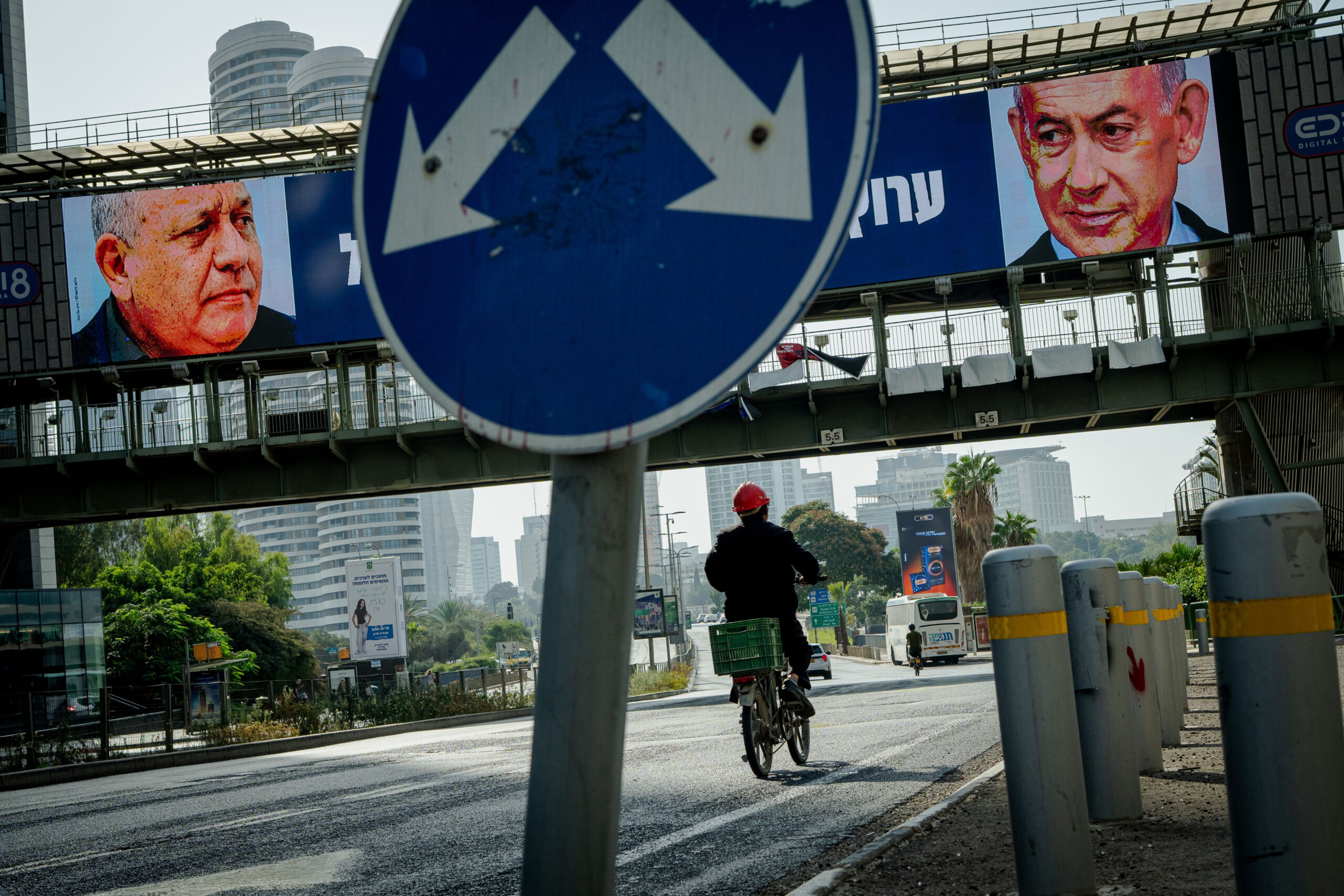
October 28, 2026 • 12:58 pm ET Atlantic Council GET UP TO SPEED The ballots are in. The winner isn’t. With vote counting still underway after Israel’s election on Tuesday, neither Prime Minister Benjamin Netanyahu’s bloc nor that of his challenger Gadi Eisenkot is poised to secure the sixty-one seats needed to form a government. The path ahead for either candidate to form a working coalition is uncertain, with Eisenkot facing the added question of whether and how to rally support from Arab parties. We polled our experts on what’s next. TODAY’S EXPERT REACTION BROUGHT TO YOU BY Daniel B. Shapiro (@DanielBShapiro): Distinguished fellow with the Scowcroft Middle East Security Initiative in the Atlantic Council’s Middle East programs and former US ambassador to Israel Gina Abercrombie-Winstanley: Distinguished fellow at the Scowcroft Middle East Security Initiative and former special assistant for the Middle East and Africa to the US secretary of state Shalom Lipner (@ShalomLipner): Nonresident senior fellow at the Scowcroft Middle East Security Initiative and former aide to seven Israeli prime ministers The big picture The election “solved very little,” Dan tells us. But with Netanyahu’s coalition dropping from sixty-eight seats to a projected fifty-three, “a clear majority of Israelis registered their desire for a different government.” Gina reads the deadlock differently. “Bibi has not been thoroughly repudiated,” she argues, noting that his support among Israelis remains substantial, and his party, Likud, will be the largest in the Knesset. The vote sends a message to the world, Gina adds, that the current government’s approach to the region, which has prompted an international backlash, “is not just a Bibi problem. It represents today’s Israel writ large.” Shalom highlights the strong voter turnout, which was close to 80 percent. “Israelis have demonstrated emphatic confidence in the democratic system, if only very limited confidence in their elected representatives,” he says. The path to sixty-one Dan says Netanyahu’s best chance is “to recruit one or more of the members of the opposition bloc,” such as Avigdor Lieberman or Naftali Bennett, to join him in a new government. But Shalom notes that most opposition parties have “refused adamantly to sit together with him.” Eisenkot’s route may be even trickier. He could form a government if Arab parties backed it or abstained, Shalom says, “but many core members of the opposition bloc oppose any such form of cooperation.” Among Eisenkot’s bloc, Dan explains, “there is reluctance to partner with parties who do not define Hamas as a terrorist organization.” But in a coalition-building process, red lines can move, Gina observes. “Such commitments have been broken before,” as when Bennett joined Yair Lapid to form a government in 2021, though those former rivals were aligned in their positions on Hamas. In the first post-October 7 election, Gina wonders, “Will that apply to Arab parties who many have diminished to second-class citizens, notwithstanding their record-breaking electoral participation and parliamentary representation?” Sign up to receive rapid insight in your inbox from Atlantic Council experts on global events as they unfold. The wild cards The first call belongs to President Isaac Herzog, who must decide whether to offer the mandate to form a government first to Netanyahu, as head of the largest party, or to Eisenkot, who could receive more recommendations from members of the Knesset. Dan says that Herzog will likely push for a unity government, bringing the main rival blocs into one coalition. That could mean Netanyahu stays in office for some time or even gets pardoned in his corruption trial—both “bitter pills” for Eisenkot and his allies. But Shalom says such calls are “falling, thus far, on deaf ears of the potential participants.” If this process drags on, another election is possible. Netanyahu, Dan says, “may prefer to lead his current government in a caretaker role, refuse any compromises necessary to bring in additional partners, resume the war in Iran during the government formation period, and take his chances in a new election in about six months.” Image: A cyclist rides beneath a pedestrian bridge displaying electronic election billboards showing former IDF chief of staff Gadi Eisenkot and Prime Minister Benjamin Netanyahu in Tel Aviv. (DPA / Picture Alliance via Reuters Connect)
Fast Thinking: How the Israeli election deadlock could end
Full Article
Original Source
Read the full article at Atlanticcouncil →KhanList aggregates and links to publicly available news content. We do not host full articles from third-party sources. Always verify important information with original sources.