
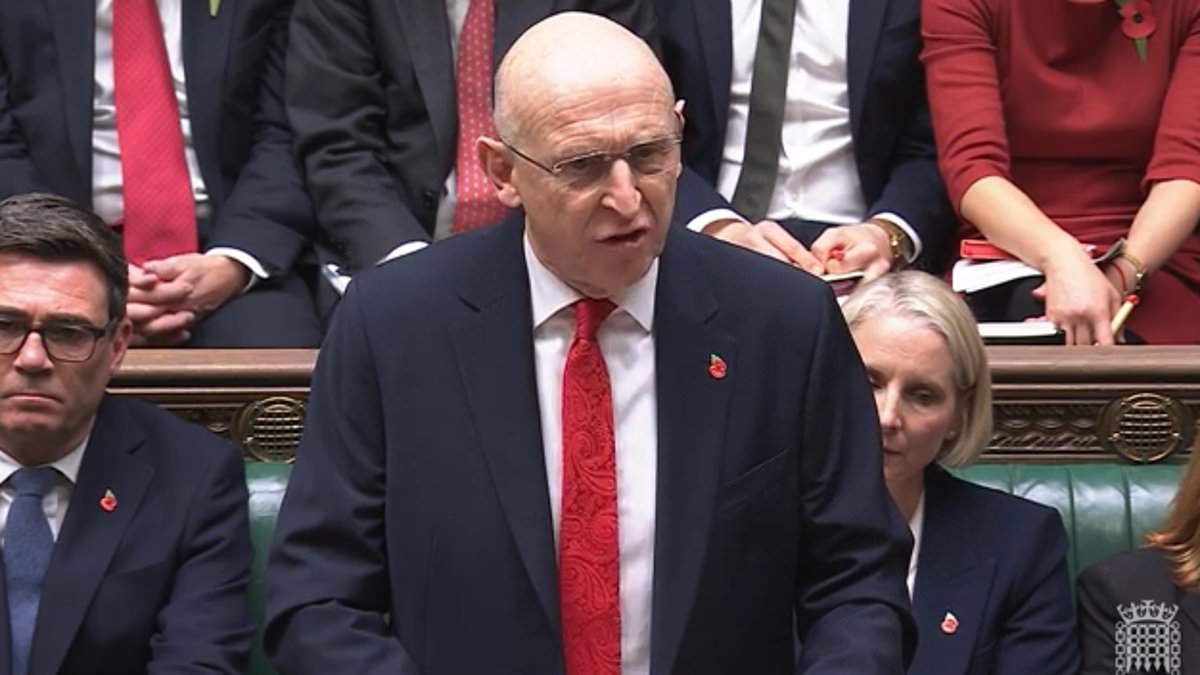
Published: 13:53 EDT, 28 October 2026 | Updated: 14:17 EDT, 28 October 2026 Millions of households will get £100 off their energy bills this winter – but will still end up paying hundreds more than in previous years.Chancellor John Healey announced the measure which he said would help 20million households in council tax bands A-D – half of all homes.But energy experts predict the price cap will rise by nearly £300 in January due to wars in the Middle East and Ukraine, wiping out any savings.The energy price cut will be taken off council tax this winter and will cost £2.6billion to provide households with what the Chancellor called ‘breathing space’.Mr Healey also announced that standing charges on gas bills would be scrapped and shifted to the unit rate, saving 60per cent of households an average of £45 off their annual bill.He signalled that he will look into removing the fixed daily fees on electricity as well.Gas standing charges are added to bills, regardless of how much gas a customer uses, and cost around £108 per year for a typical household. John Healey delivering his first Budget, pledging 'breathing space' for hard-pressed familiesHowever, higher users like larger families, those who spend more time at home – like pensioners – and those without well-insulated properties will end up paying more.Campaigners have warned that the policy could end up costing more for those who it is aimed at, including vulnerable households.‘Higher unit rates mean people in badly insulated homes, larger families or those who need to keep the heating on to manage a health condition, could end up paying more,’ Craig Lowrey of energy consultancy Cornwall Insight said.‘Some of them are the same vulnerable households this policy is meant to help.’Elsewhere, Mr Healey employed the same technique used by his predecessor Rachel Reeves to move costs like green levies off bills and on to general taxation.It allows Labour to claim energy bills are lower – but it means the cost will be borne by those who pay more tax rather than bills.He announced that a levy to fund hydrogen projects will be removed from energy bills and shifted to general taxation.A Conservative Party spokesman said Mr Healey had moved charges ‘from one pot to another’, adding: ‘They are essentially robbing Peter to pay Paul.’The previously announced VAT cut on electricity bills will also be extended to July, taking £50 off the annual price cap, the Chancellor said.Mr Healey also used the Budget to signal a change in direction on Labour’s previous energy policy under former energy secretary Ed Miliband.While he said the Government would achieve Net Zero by 2050, he said the priority from now on would be getting prices down.‘From this point, our Labour government priority is first and foremost cheaper energy, with clean power key to achieving this,’ he told MPs.He said ministers would only back new clean power projects if they reduced bills and could connect to the grid, suggesting cost rather than the deadline would drive decisions.Mr Healey did not mention Labour’s clean power by 2030 pledge which has been widely criticised, including by Tony Blair’s think tank.The Tories said it had all but been abandoned with the shift in policy, saying: ‘Coming out of this budget that looks incredibly shaky.’ It came as the Office for Budget Responsibility (OBR) warned that higher energy prices will increase inflation and prompt a slowdown in economic growth next year.Energy bills have skyrocketed in recent years and are set to rise by hundreds of pounds again this winter.The OBR said inflation is set to rise to a peak of around 3.75per cent by the start of next year, particularly driven by a jump in household energy bills in January.
Households to get £100 off energy bills this winter - but cut will be swallowed up by price rise of hundreds
Full Article
Original Source
Read the full article at Dailymail →KhanList aggregates and links to publicly available news content. We do not host full articles from third-party sources. Always verify important information with original sources.