
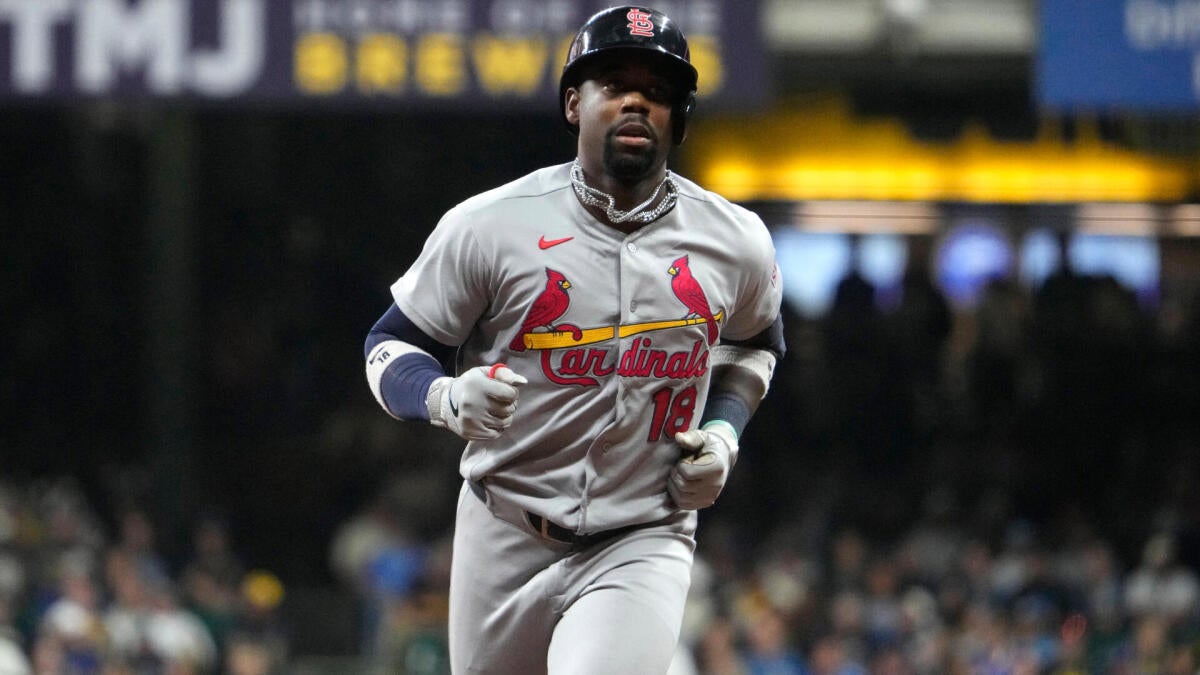
"Who is this year's Jordan Walker?"It's one of the most obvious questions everyone is going to be asking for the 2027 season, so we might as well try to answer it now. This happens every year, of course: The previous year's league-winning breakout becomes the blueprint for the next year's targets, so in today's newsletter, that's exactly what we're going to be looking for.But what does it mean to be "The Next Jordan Walker?" What are we looking for, exactly? Walker was a former top-five prospect in baseball who spent several disappointing years between the majors and Triple-A, trying to find a way to put his obvious physical gifts into action consistently enough to matter. He finally found a swing that worked for him last offseason and blossomed, becoming a top-20 player in Fantasy, and while it might be asking a bit much for him to repeat that breakout, the archetype we're looking for is clear. Can we find a good option? Let's take a look at the player pool to see who might fit the bill. Six candidates to be the next Jordan WalkerThe Likeliest Answer: Nobody.Let's be honest: The whole reason breakouts like Walker and Vargas are so stunning is that nobody saw them coming. Not literally nobody, but they were long shots with little to justify much present-day optimism. Walker has always had the physical tools to succeed the way he did, and it's not like last offseason was the first time he had ever tried to optimize those skills. It's just the first time it worked. But in the case of both Vargas and Walker, I do think they give us a good sense of what we should be looking for here. We want former top-prospect pedigree and a track record of production in the minors, but that's not all. We also want to see loud tools that have shown up in the majors. In Walker's case, it was elite bat speed and athletic markers that suggest he just needed to find the right approach to put it all in play; in Vargas' case, the physical tools weren't quite as obvious, but he had a great approach at the plate and added the physical tools, bumping his bat speed more than 3 mph from 2025 to 2026. You can't always bet on players in either category figuring it out; you should bet against it way more often than not, in fact. But it does happen, and being able to look at Walker and Vargas gives us a couple of archetypes we can try to identify for 2026. The Obvious Choice: Cam Smith.The comparisons to Walker are almost uncanny. Like Walker, Smith blazed through the minors on the strength of unusually impressive physical tools, but his lack of polish has held him back against the best pitchers in baseball. And like Walker in 2025, Smith isn't even close to a refined product. He swings and misses too much (29.1% whiff rate, 24th percentile) and doesn't have an ideal approach at the plate (47th percentile chase rate). When he does make contact, he hasn't quite figured out how to take advantage of his physical gifts, putting up a .391 expected wOBA on contact that was 58th among qualifying hitters last season. That's not bad – Randy Arozarena and Corbin Carroll were in the same vicinity, among other notable names – but without better contact skills or a more focused approach to tap into power, it hasn't been enough. But boy oh boy are the physical tools here very impressive. Smith's 77.9 mph average bat speed was fourth in the majors in 2026, behind Walker as well as Junior Caminero and Nick Kurtz. And Smith combines that with 92nd-percentile sprint speed and even 80th-percentile arm strength, checking several athletic indicator boxes. Like with Walker, it's all about finding the right approach to let those tools play up. We heard last offseason that Walker had gone to Driveline to work on his swing, and the adjustments spoke for themselves. Walker didn't need to work on his bat speed, but he needed to refine his swing to create a more direct path to the ball, while allowing him to drive it more consistently. Walker started hitting the ball in the air more consistently with more authority in 2026. While he still probably leaves some meat on the bones – his 15.9% pulled-air rate is actually a tick below the MLB average – he didn't need to fully overhaul his swing to become the player he did. He just had to put himself in the right position a bit more often to let the tools go to work. Just because Walker managed that trick doesn't mean Smith will. But it gives him a path to follow. Let's see if we hear anything about Smith trying to fix the flaws in his swing this offseason. If we do, expect his price to rise from his current 215.7 ADP in early drafts. My personal favorite choice: Curtis MeadMaybe this one doesn't count? Mead ticks off the "former top prospect who floundered for years" box, certainly, but didn't the breakout already happen? He hit .253/.353/.498 in 2026 and was impressive enough that the Red Sox gave up a potentially core rotation piece in Connelly Early to acquire him. Nobody was giving up a potential No. 3 starter for Jordan Walker in July of 2025, so it's fair to say Mead is already well ahead of where Walker was this time last year.But Mead's price in those too-early drafts is still sitting at 178.3, and while that isn't nearly as cheap as Walker was, it still points to quite a bit of skepticism. Mead doesn't have the foot speed of Walker or Vargas, but he showed a very, very strong skill set as a hitter otherwise in 2026. He doesn't have elite bat speed, but he hits the ball hard enough to at least creep toward average-ish raw power, and he does everything else well. That includes making contact (19.1% strikeout rate) and drawing walks (11.9% walk rate, with very good underlying plate-discipline indicators). It also includes optimizing his contact, as Mead hit 63% of his batted balls in the air, including 23% in the air to the pull side of the field.That combination of strong contact skills, average raw power, and well-optimized game power had him on something close to a 30-homer pace last season. We didn't even get a chance to see him taking aim at that short right field fence in Boston, as he got hurt in his second plate appearance with the team and never returned. He isn't quite the workout standout Walker is, but he fits in nicely as a Vargas archetype. There is some playing time concern in Boston, but Mead should get a chance to start at either third or second base, and as long as he hits, the playing time should be there. I wish he were just a little cheaper in drafts, but I'll say this: I'm going to rank him higher than his ADP anyway. The too-obvious choice: Henry BolteBolte checks a lot of the boxes for a "next Jordan Walker" candidate. He's got the elite physical tools, for sure – 100th percentile sprint speed, 95th percentile bat speed, and even 82nd percentile average exit velocity. He also has the "physical tools aren't remotely optimized" part of it down, as he posted a massive 62.1% groundball rate, the highest mark in baseball. It doesn't really matter how hard you hit the ball if you hit it on the ground that much; you aren't going to hit for power. So, why is he the "too-obvious" choice? Well, because while Walker was barely drafted in most 12-team leagues entering 2026, Bolte is going to have to be a core piece for your roster if you want to bet on the 2027 breakout. He carries a 113.1 ADP in early drafts, coming off a season where he hit .277 with 11 homers and 21 steals in 119 games. The appeal is clear, but it requires betting on improvements in his skill set we haven't actually seen yet. Consider this: Bolte's .341 wOBA outpaced his expected mark of .317 by the 33rd-highest mark in baseball. Bolte is a fine breakout pick, I suppose, but his price already accounts for a decent amount of improvement in his skill set, and I'm not sure we should be betting quite this much on that happening right away. But either way, he doesn't really qualify for this category. The one I wish I could believe in: Dylan CrewsCrews is a former top prospect who has largely floundered over the course of three and counting MLB seasons, so in that way, he definitely fits the bill here. He's also down to 240.7 in early ADP, the cheapest player we've discussed here so far, also fitting in with the Walker comp. So what's the problem? Well, it's Crews himself. He was one of the most highly regarded college hitters when the Nationals made him the No. 2 overall pick in 2023, but he really hasn't shown that kind of upside since he was in college. He has hit just .270/.347/.448 across 829 minor-league plate appearances, and even worse, hasn't really shown the kind of broad array of high-level skills we'd want to see him build upon.With Crews, we've never really seen signs of elite power. His average exit velocity of 90.3 mph in 2026 is the best he's ever managed in the majors, and that's a 71st percentile mark – not bad, certainly, but it's not the kind of building block we're looking for. Especially when it came with the worst plate discipline of his career and a swing that still isn't geared for maximizing pull-side power. He did start hitting the ball in the air a lot more, but fully 29% of his batted balls were in the air to the middle third of the field, the deepest part of the park. You can hit for real power that way if you just demolish the baseball, but Crews doesn't, really, and he doesn't have the other skills needed to overcome that. It's not impossible that this all ends up working out for Crews, but he just hasn't displayed the kinds of tools we're looking for here. If he hits .250 with 20 homers and 20 steals, that feels a lot closer to a ceiling outcome than anything you could reasonably expect at this point. My sleeper choice: Joshua BaezBaez only has 29 MLB games under his belt, but come on, how could I not include Walker's running mate in the Cardinals outfield? Baez struck out 31% of the time in his time in the majors, which actually wasn't that much more often than he struck out at Triple-A. It's probably too high for him to be a viable big-league hitter, but it's not so high that you can't squint and see it happening. He needs to make a bit more contact, and preferably shore up his swing decisions, with most of his plate discipline metrics ranking among the worst in baseball (if he had enough plate appearances to qualify for leaderboards, at least). But it was his first taste of the majors, and he still managed to showcase serious power in spite of it. I'm talking about a 92.1 mph average exit velocity and 47% hard-hit rate, both of which would have ranked at least in the 80th percentile among all hitters. His .408 expected wOBA when he made contact was right in the same neighborhood as names like Sal Stewart, Michael Harris and Miguel Vargas, so the thump is there. If he doesn't improve his contact skills, it likely won't matter much, but he already has so many of the skills we're looking for when it comes to power – he hits the ball hard, he hits it in the air, and he hits it to the pull side. Baez is also a plus athlete, so there's a path for him to make an impact on the bases, à la Walker, despite just two steals in 29 games in the majors. The ceiling outcomes here can get pretty bonkers – there is legit power and speed here to get to a 30-20 season, something he did in Triple-A in just 103 games last season. He has an uphill battle to overcome the swing-and-miss issues in his game, but that's really the only thing holding Baez back. One off-the-wall choice: Garrett MitchellNow we're talking. This is really in keeping with the spirit of the question. Mitchell is a former first-round pick who has been a decent but decidedly unspectacular big leaguer despite possessing some of the most impressive physical tools of any player. Because, like Walker, he's never figured out how to elevate the ball consistently or make enough contact for those gifts to matter. The limitations are apparent. He strikes out way too much; he hasn't hit lefties especially well, and in 2026, he struggled immensely with his efficiency on the bases, getting caught 10 times on 24 stolen base attempts. There are fairly obvious reasons to bet against him. But we're talking about a guy in the 98th percentile in bat speed and sprint speed, who also posts well-above-average barrel rates, doesn't chase out of the strike zone, and hits for power despite not elevating the ball much. If he manages to fix one of his flaws, especially his struggles against lefties, he could be a top-40 outfielder. If he manages to improve that while also making contact more consistently or elevating the ball more consistently? I really don't think it's a stretch to say Mitchell could be a top-20 outfielder.He probably won't be. He almost certainly won't be, in fact. But we would have said the same thing about Walker this time last year, and look what happened. It's incredibly unlikely, obviously. But Mitchell is the kind of late-round dart throw you should be making in the final rounds of drafts -- just in case.
Fantasy Baseball 2027: Searching for the next Jordan Walker among six potential breakout candidates
Full Article
Original Source
Read the full article at Cbssports →KhanList aggregates and links to publicly available news content. We do not host full articles from third-party sources. Always verify important information with original sources.