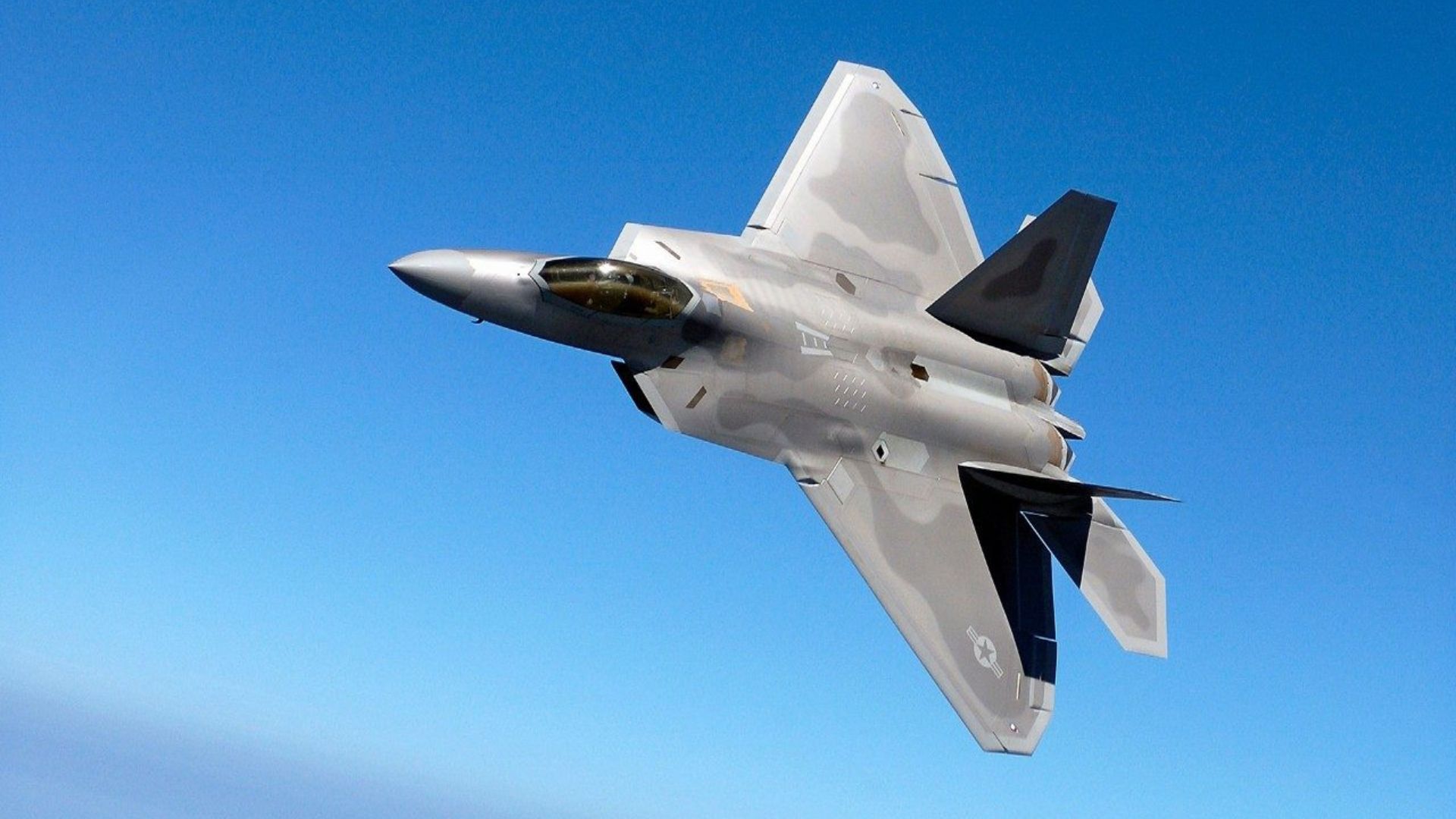
Texas based Qarbon Aerospace has been awarded a contract to produce composite structures for the F-22 fleet sustainment. The F-22 is the U.S. Air Force’s premier 5th gen air superiority fighter, currently numbering approximately 183 airframes. The award builds on Qarbon’s previous work on the Raptor, which included producing horizontal stabilizers during the aircraft’s development in the early 2000s. Michael Canario, CEO of Qarbon Aerospace said “the F-22 is one of the most capable aircraft ever flown, and we are proud to be manufacturing for the program again. Defense is a core part of who Qarbon is, and we are committed to being the Tier 1 partner the U.S. defense industry counts on for its most advanced programs.” Qarbon Aerospace is headquartered in Red Oak, Texas. It has vertically integrated manufacturing capabilities spanning component fabrication to large-scale assembly. It also has expertise in world-leading proprietary thermoplastics technologies. The company has an established history of supplying composite components for military and commercial fixed wing and rotary wing programs as well as for space programs. What the contract covers The announced contract does not specify a dollar value, contract duration, or the precise structural assemblies involved, but for Qarbon, the contract adds to the its growing defense aerostructures portfolio. The company has also expanded its manufacturing footprint to meet the growing demand. The Raptor has been in service with the USAF since 2005. The platform relies heavily on carbon-fiber-reinforced polymer structures for its low-observable characteristics and structural performance. Composite materials make up 25 percent of the F-22’s airframe by weight, and maintaining production capability for these composite parts is an ongoing logistical requirement for the U.S. Air Force. Why composite sustainment is technically demanding Sustaining composite structures on a mature military platform like the F-22 is not straightforward. The F-22 has more than 350 composite parts and unlike metallic parts, composite repairs and replacements require strict adherence to original material specifications, cure cycle parameters, and ply orientation data. Any deviation can affect structural integrity and, on a stealth aircraft, radar cross-section performance. The F-22’s outer mold line surfaces are particularly sensitive. Composite panels on the fuselage and control surfaces contribute directly to the aircraft’s radar-absorbent structure. Replacement components must meet tight dimensional tolerances and surface finish requirements to preserve low-observable performance. Supply chain continuity is an additional concern. As the F-22 program has not been in production since 2011, the manufacturing line closed after 187 airframes were built, well short of the originally planned 750. Contracts of this type help maintain manufacturing knowledge and tooling that would otherwise atrophy. Program context and fleet considerations The U.S. Air Force operates the F-22 exclusively, and the aircraft remains without a direct foreign sales counterpart, meaning the sustainment supply chain is narrower than that of platforms like the F-35. That concentration increases the importance of each supplier relationship. Securing a reliable composite parts suppliers in Qarbon also contributes in enhancing the broader platform readiness effort. Recommended ArticlesGet the latest in engineering, tech, space & science - delivered daily to your inbox.
F-22: Qarbon Aerospace wins Raptor’s composite structures sustainment contract
Full Article
Original Source
Read the full article at Interestingengineering →KhanList aggregates and links to publicly available news content. We do not host full articles from third-party sources. Always verify important information with original sources.