
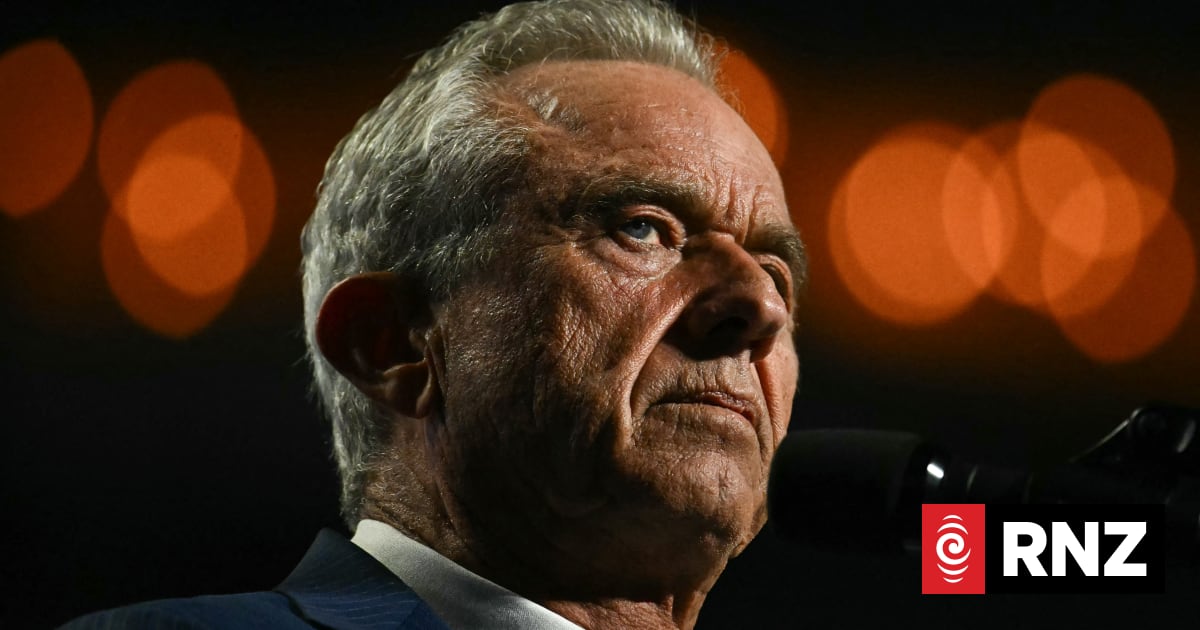
Explainer - More than 25 years ago, the United States effectively stopped measles transmission. This week, it lost its elimination status. How did this happen and could it happen here?Cases of measles,one of the most contagious viruses there is, have been surging in many countries since the Covid-19 pandemic.Despite several outbreaks of measles here in New Zealand the past few years, we achieved the elimination of endemic measles cases in October 2017.Supplied/ US CDC"Measles elimination status" doesn't mean the virus is completely absent, but that a country has interrupted continuous transmission and has a handle on keeping any smaller new outbreaks from spreading.But that could be at risk as on-time childhood vaccination rates with the MMR (measles, mumps and rubella) vaccine continue to fall in Aotearoa.What has happened in the United States?It was officially announced this week that the United States has lost the measles elimination status it achieved in 2000.The Pan American Health Organisation or PAHO, a division of the World Health Organisation or WHO, confirmed on Tuesday that the United States, along with Bolivia and Mexico, lost their status "as free from endemic measles transmission, as the virus had circulated continuously in each country for at least 12 months".Ambra Hawksley holds her son Andrik Hawksley, age 6, while his sister JaeLynn holds his hand as he prepares to get an MMR vaccine from Raynard Covarrubio, at a vaccine clinic put on by Lubbock Public Health Department on March 1, 2025 in Lubbock, Texas.JAN SONNENMAIR / AFP"My first reaction is that this was preventable," said Dr Heather Battles, a senior lecturer in anthropology at the University of Auckland who researches infectious disease, epidemics and pandemics."The Covid-19 pandemic did interrupt a lot of routine vaccinations, and not just in the US, so there's been a lot of catching up to do," she said."And perhaps there hasn't been the political will to invest in public health to do that work."Measles cases have been steadily on the rise in the US, with outbreaks in largely unvaccinated communities. The disease is highly contagious and can cause serious and life-long health problems.Some 7700 people in the US have been infected with measles and 13 have died since 2025, Reuters has reported.Among them were several children, including a child in New York who died this month and was the state's first death from the disease in 30 years."It's a giant stain on our reputation," Jennifer Nuzzo, director of the Pandemic Centre at the Brown University School of Public Health, told The New York Times."Everyone ought to be just utterly disgusted by the willing return back to an age of death and high cost."This picture released from UNICEF Samoa shows a girl receiving a vaccine during a nationwide campaign against measles in the Samoan town of Le'auva'a.ALLAN STEPHEN / UNICEF / AFPWhat does losing elimination status mean?If measles spreads continuously for at least 12 months, it meets PAHO's criteria for the return of endemic transmission.According to WHO, it doesn't mean that the US has lost "all capacity to control the disease" or that it's spreading in wild outbreaks throughout the country. But it is circulating widely.But it "is a significant public health setback because it means the virus has circulated for a prolonged period, putting families and communities at risk of preventable illness, hospitalisation and death," the Pan American Health Organisation said.The US isn't alone - Canada also lost its own elimination status in November 2025. Meanwhile, countries with wide endemic transmission including Bangladesh, Indonesia and Guatemala have seen the highest measles cases in 2026 so far, according to WHO data."Losing a measles elimination status has broader implications than losing a public health designation," Dr Jarbas Barbosa da Silva Jr, director of PAHO, told media."It means the virus has circulated for a prolonged period of time, putting families and communities at risk of preventable illness, hospitalisation, and death."Kollin Hilihetule getting vaccinated at a pop-up clinic in Manukau during a measles outbreak in 2025.RNZ/Jessica HopkinsCould the loss of measles elimination also happen in New Zealand?New Zealand has had several outbreaks of measles in recent years but managed to keep its elimination status - for now. But we've been warned.A 2024 report by the Public Health Communication Centre reported WHO officials saying "New Zealand is at risk of a large outbreak and losing its elimination status, unless immunity gaps are rapidly closed"."Anywhere where measles vaccination rates drop is potentially in danger of measles outbreaks," Battles said.New Zealand's childhood MMR coverage has deteriorated since before the Covid pandemic.On-time delivery of childhood MMR vaccine doses were "suboptimal", a Ministry of Health report on immunisation from 2015 to 2024 found.More than six in 10 Māori children and half of Pacific children were receiving their first MMR dose late, and the report noted "the risk of repeated outbreaks is concentrated in these populations".Measles has a devastating history in Aotearoa, Battles has written, with outbreaks that killed many in the 1800s, including thousands of Māori."New Zealand's worst measles year in the past century was 1938, with 375 deaths among both children and adults," she noted.Measles vaccination finally began here in 1969.There was a large outbreak of more than 2000 measles cases in 2019, and the latest outbreak in New Zealand ran from September 2025 to February 2026 after 48 connected cases were identified. According to the Immunisation Advisory Centre, the response included vaccine outreach with nearly 107,000 MMR doses delivered over four months.US President Donald Trump's Health Secretary Robert F. Kennedy Jr has long been sceptical of vaccines.SAUL LOEB / AFPHas Robert F Kennedy Jr made measles worse?A big reason for the change in the US status is falling numbers of those taking up the MMR vaccine. As measles is one of the most contagious viruses known to man, it requires about a 95 percent rate of "herd immunity" among the population to keep the spread of infection down.However, in many parts of America vaccine hesitancy has grown since the Covid pandemic. The spread of misinformation about vaccines has led to a loss of trust in health systems.US childhood vaccination rates have fallen by approximately 3 percent since 2020, from the 95 percent herd immunity threshold to an estimated 92.4 percent in 2025-2026, according to the American US Centers for Disease Control and Prevention (CDC).US Health Secretary Robert F Kennedy Jr has been a notable vaccine sceptic and repeatedly cast doubts on their effectiveness. He has also overhauled many of America's vaccine policies.Kennedy has publicly endorsed the MMR vaccine but also in a Fox News interview in 2025 made the unsupported claim that the vaccine leads to "deaths every year" and misleadingly said it causes "all the illnesses" of the disease. He has also called it a "leaky vaccine" that wanes and falsely stated it hasn't been "safety tested".A recent Reuters investigation found childhood vaccinations have sharply dropped during Kennedy's tenure.However, the CDC, which is overseen by Kennedy, did issue a statement this week that it is "committed to stopping measles outbreaks, protecting Americans, and regaining measles elimination status"."Together, we will encourage MMR vaccination, expand access to vaccines, and help communities close gaps in protection."A fact sheet for measles sits on a table at a mobile clinic offering free vaccinations on February 6, 2026 in Spartanburg, South Carolina. The clinic offered free MMR vaccinations as the South Carolina Department of Health reported 876 cases of measles earlier in the week, most centered in Spartanburg County.SEAN RAYFORD / AFP / GettyWhat can we do to ensure we don't lose elimination status?Vaccinate, vaccinate, vaccinate.Health New Zealand says that studies have shown the MMR vaccine is 95 percent effective with a single dose and 99 percent effective with two doses. Given in childhood, the doses should provide lifelong protection.The MMR vaccine is is free for everyone under the age of 18, and it does not matter what your immigration status is. It is also free if you are 18 and over and eligible for funded healthcare."NZ has been fortunate that recent importations have not resulted in significant outbreaks - but without high herd immunity, as long as measles is circulating outside NZ, that remains a risk," Battles said.Can a country get back to elimination of measles?It could take years for the US to regain its measles elimination status, health experts say."Losing measles elimination status is a setback, but it is reversible," PAHO says. Brazil, for instance, lost its status in 2019 but regained it in 2024 following extensive vaccination, surveillance and outbreak response efforts.The sweeping cuts of many health and science programmes in the US could be difficult to build back from."Trust takes a long time to build, or rebuild," Battles said."Rather than quick fixes, slow steady work of building and maintaining trust is needed. You don't want to have to try to build trust in the middle of a crisis."
Explainer: The US has lost its measles elimination status. Could New Zealand?
Full Article
Original Source
Read the full article at Rnz →KhanList aggregates and links to publicly available news content. We do not host full articles from third-party sources. Always verify important information with original sources.